Static Equipment Is the Foundation of Every Process Plant
In a process facility — refinery, gas plant, petrochemical complex, water treatment plant, or power generation facility — the operating equipment that most people immediately think of is rotating: pumps, compressors, turbines, fans. These machines move fluid through the plant and generate the mechanical work that drives processes forward.
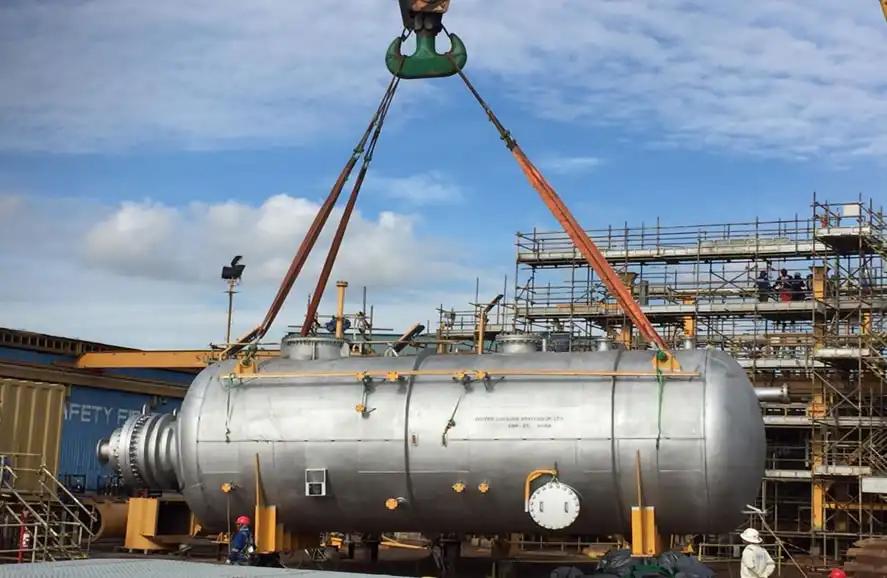
But the vessels, columns, exchangers, and tanks that hold, separate, react, and store the process streams — the static equipment — determine the plant's fundamental processing capability. A distillation column defines what products can be separated and at what purity. A reactor vessel defines what chemistry is possible and at what conversion rate. A heat exchanger defines how efficiently energy can be recovered or rejected. A storage tank defines operational flexibility and inventory buffering capacity.
A specialist Static Equipment Manufacturer who genuinely understands process requirements — not just the mechanics of pressure vessel fabrication — brings engineering value that commodity fabricators cannot. They ask the right questions about fluid properties, operating conditions, inspection access requirements, and future modification needs before the design is finalized. They make material selection decisions that balance cost and performance over the equipment's full service life. And they fabricate to the code and quality standard that the equipment's safety and regulatory compliance demands.
The Full Scope of Static Equipment in UAE Process Plants
Static equipment encompasses a broader range of process assets than the term might initially suggest. The category includes:
Pressure Vessels: The fundamental static equipment category — sealed containers designed to contain fluids at pressures substantially different from atmospheric. Applications include separators, accumulators, flash drums, absorbers, adsorbers, filter vessels, coalescers, and slug catchers across every sector of UAE process industry.
Storage Tanks: Atmospheric and low-pressure storage tanks for crude oil, refined products, water, chemicals, and LPG cover a wide range of capacities and construction standards from API 650 atmospheric tanks to refrigerated LPG storage.
Columns: Distillation and absorption columns are tall, vertically oriented pressure vessels containing internal trays or structured packing that enable vapor-liquid contact for separation processes. Their design requires coordination between process simulation results, tray or packing vendor data, and mechanical design calculations.
Reactors: Vessels in which chemical reactions occur — catalytic reformers, hydrotreaters, hydrodesulfurizers, and synthesis reactors — combine pressure vessel mechanical requirements with internal configuration requirements for catalyst loading, quench injection, and internal heat management.
Pressure Vessels: Engineering for the Complete Service Life
Pressure Vessels manufacturer in UAE capability encompasses the complete design and fabrication scope for code-compliant pressure vessels. The engineering scope — design calculations, material selection, nozzle configuration, support design, and connection to the applicable design code — determines the vessel's safety margin, its maintenance requirements, and its ability to continue operating safely as it accumulates service hours and corrosion progresses.
The fabrication scope — plate procurement, cutting and forming, fit-up and welding, heat treatment where required, inspection, and hydrostatic testing — determines whether the designed safety margins are actually achieved in the as-built vessel. A vessel whose design is correct but whose fabrication is deficient is not safe simply because the design would have been safe if correctly executed.
Heat Exchangers: Thermal Engineering Integrated with Vessel Fabrication
Heat Exchangers Manufacturer in UAE capability within the static equipment manufacturing scope brings thermal design competence alongside mechanical design and fabrication. For shell and tube heat exchangers — the most widely used type in UAE process plants — the thermal design determines tube count, tube length, shell diameter, number of tube passes, and baffle configuration. The mechanical design then sizes the shell and head wall thicknesses, designs the tubesheet, and specifies the nozzle arrangements.
In an integrated static equipment manufacturer, these two design streams are coordinated from the outset — ensuring that the vessel dimensions derived from the thermal calculation are compatible with the mechanical design requirements, and that the nozzle sizing serves both the process hydraulics and the code mechanical requirements.
Pig Launchers and Receivers: Pigging Infrastructure as Static Equipment
Pig Launcher & Receiver Manufacturer capability is naturally integrated with static equipment manufacturing — pig traps are pressure-containing assemblies that must be designed and fabricated to the same codes and quality standards as other process pressure vessels, with the additional mechanical design requirements of the closure door mechanism and the pigging operation valve arrangement.
A static equipment manufacturer who also designs and fabricates pig launchers and receivers provides a single-source option for the complete pigging facility — pig traps, separator vessels, slug catchers, and filter vessels — under a single quality management system and documentation framework.
Oil and Gas Shutdown Support: Static Equipment Expertise During Maintenance Windows
Oil and Gas Shutdown and Maintenance works create the most time-critical demand for static equipment expertise. When a vessel inspection during a shutdown reveals defects requiring repair, the repair scope must be defined, engineered, executed, and inspected within the shutdown window — without extending the outage if possible.
A static equipment manufacturer with shutdown response capability can provide rapid engineering assessment of inspection findings, develop repair procedures in accordance with the applicable design code, mobilize qualified welders and NDE personnel, and execute the repair with full documentation — all within the compressed timeframe that shutdown execution demands. This capability requires pre-existing qualification of welding procedures and welders for the material grades and weld types most commonly encountered in shutdown repair work — something that cannot be established from scratch when the finding is made during the outage.
Conclusion: Static Equipment Quality Is Determined at the Design and Fabrication Stage
The safety performance, operational reliability, and maintenance cost of a static equipment item over its 20 to 30-year service life are determined primarily by decisions made during its design and fabrication. An undersized corrosion allowance, a poorly executed tube-to-tubesheet joint, a material selection that doesn't account for the full range of operating conditions — these decisions create problems that become apparent years after the equipment is commissioned, when the remedies are expensive and disruptive.
BERG Industries' static equipment manufacturing capability is built on engineering rigor applied at the design stage, fabrication quality verified through inspection and testing, and a documentation standard that gives asset owners confidence in the equipment they receive and the data needed to manage it effectively throughout its operational life.
Frequently Asked Questions
Q1. What is the process for specifying static equipment for a UAE oil and gas project?
Static equipment specification begins with the process datasheet — a document defining the operating conditions (temperature, pressure, flow rates, fluid composition), the design conditions (design pressure and temperature with appropriate margins above operating values), the applicable design code, the material requirements, and any special requirements specific to the service. The datasheet is developed by the process engineer based on the process simulation and equipment sizing calculation. The mechanical engineer then develops the equipment specification, adding mechanical design requirements — nozzle schedule, insulation requirements, external loading conditions, vendor data requirements, and inspection requirements. Together, the datasheet and mechanical specification provide the manufacturer with the information needed to develop a compliant design. The client's review of the manufacturer's design documentation — before fabrication begins — is the opportunity to catch specification errors and design deficiencies while corrections are still inexpensive.
Q2. How does a static equipment manufacturer manage the interface between thermal design and mechanical design for heat exchangers?
In an integrated manufacturer with both thermal and mechanical engineering capability, the thermal design team and mechanical design team work from a shared project model — the thermal design provides vessel dimensions, tube count, and nozzle flow velocities that the mechanical team uses for pressure design calculations and nozzle reinforcement assessment. The mechanical team's findings — if nozzle reinforcement requirements suggest a different nozzle size or orientation — are fed back to the thermal team for verification that the hydraulic requirements are still met with the modified nozzle configuration. This iterative coordination is efficient when both disciplines are within the same organization and working from shared project information. When thermal and mechanical design are with separate organizations — common when the process licensor specifies the thermal design and the manufacturer does only mechanical design — this coordination requires more structured information exchange and is more prone to gaps.
Q3. When is post-weld heat treatment required for pressure vessel fabrication?
Post-weld heat treatment (PWHT) is required by ASME Section VIII Division 1 for carbon steel pressure vessels when the material thickness exceeds defined thresholds — typically 38mm (1.5 inches) for P-No. 1 carbon steel — and for certain material grades regardless of thickness. PWHT is also required for vessels in hydrogen service, certain corrosive services, or where the material is susceptible to stress corrosion cracking from residual welding stresses in the operating environment. The PWHT cycle — heating rate, soak temperature, soak time, and cooling rate — is specified by the applicable code and must be documented with calibrated recording equipment demonstrating that the specified thermal cycle was achieved throughout the vessel. PWHT records are part of the vessel's permanent documentation package.
Q4. What is the typical inspection frequency for static equipment in UAE oil and gas service?
Inspection frequency is governed by the applicable inspection code — typically API 510 for pressure vessels in refinery and oil and gas service — and by the risk-based inspection assessment that determines the appropriate inspection interval based on the vessel's corrosion rate, remaining corrosion allowance, consequence of failure, and operating history. A newly commissioned vessel with conservative design allowances and low measured corrosion rates might achieve a ten-year internal inspection interval. A vessel in aggressive service with elevated corrosion rates and approaching its minimum allowable thickness might require inspection every two to three years. The asset integrity management function is responsible for maintaining the inspection records and the risk-based inspection assessment that determines the required inspection intervals for each vessel in the inventory.
Q5. How should a static equipment manufacturer's quality management system be assessed before contract award?
The quality management system assessment should cover three areas: documentation review, reference verification, and production observation. Documentation review should examine the quality manual and procedures, the approved manufacturing procedure index, the weld procedure specification library and associated procedure qualification records, the welder performance qualification records, the calibration program for inspection and testing equipment, and the non-conformance management procedure. Reference verification should involve direct contact with recent clients for comparable equipment — asking specifically about documentation quality, inspection milestone management, and responsiveness to queries and non-conformances. Production observation during a workshop visit should assess whether the documented procedures are genuinely applied in production practice, or whether the documentation system exists independently of actual production activities. All three elements are necessary — documentation and references alone do not reveal the gap between documented procedure and actual practice that workshop observation can identify.