Fuel Safety Is Not an Option — It's an Obligation
In any industrial facility, fuel handling sits at the intersection of operational necessity and regulatory responsibility. A system that delivers LPG to a commercial kitchen, diesel to a generator room, or process fuel to an industrial burner must perform reliably every single day — and it must do so within a strict framework of civil defense approvals, pressure codes, and safety standards.
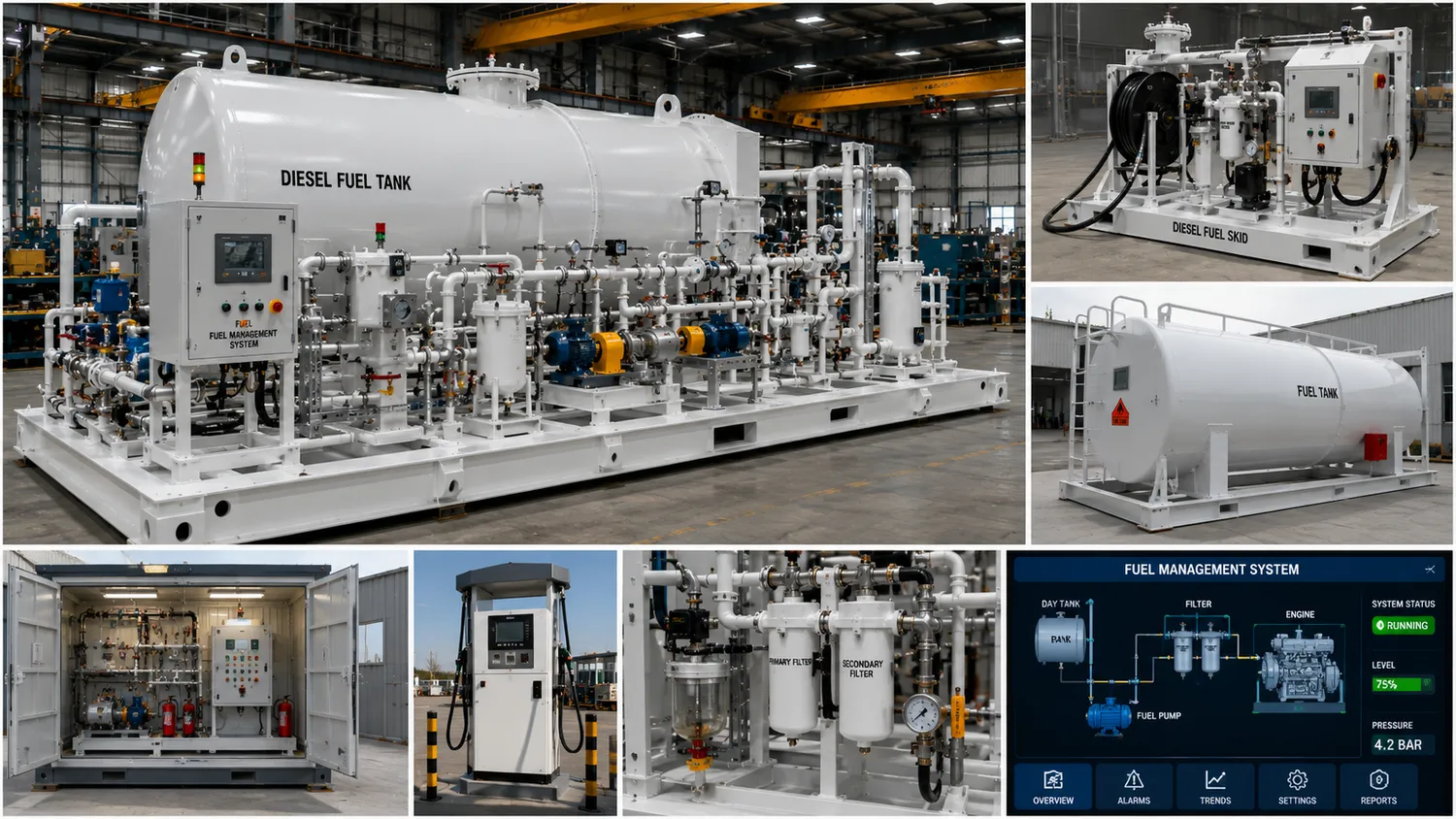
The UAE has one of the most structured regulatory environments in the region for fuel infrastructure. Civil defense authorities mandate compliance at every stage — from design and material selection to installation, testing, and commissioning. For project owners and facility managers, this makes the choice of Fuel system manufacturers one of the most consequential decisions in the project lifecycle.
BERG Industries has built a strong track record in this space, delivering civil defense-approved LPG and fuel systems across the UAE for commercial, industrial, and infrastructure clients.
What Civil Defense Approval Actually Requires
Getting a fuel system approved by UAE civil defense is not a rubber-stamp process. It demands a detailed technical submission that covers system design, safety relief provisions, material specifications, pipe routing, fire suppression integration, and emergency shutdown logic.
Manufacturers who have been through this process multiple times understand what reviewers look for — and more importantly, what causes submissions to be rejected or sent back for revision. This experience translates directly into shorter approval timelines for the client and fewer costly redesigns mid-project.
Key Technical Requirements
Every approved fuel system in the UAE must include properly sized pressure relief valves, leak detection provisions, earthing and bonding continuity, clearly marked isolation points, and compatible fire suppression interfaces. The piping and fittings must meet specified material grades, and all welded joints must be tested and documented.
The Role of Piping Fabrication in Fuel System Quality
A fuel system is only as reliable as its pipework. Poorly fabricated joints, incorrect material grades, or inadequate weld quality can result in leaks, pressure failures, or — in worst cases — catastrophic incidents.
This is why experienced fuel system manufacturers maintain in-house Piping fabrication capabilities rather than subcontracting this critical work. When design, fabrication, and testing happen under one roof, quality control is consistent, documentation is complete, and accountability is clear. There are no gaps between the engineering team's intent and the fabrication team's execution.
For UAE projects specifically, piping fabrication must account for thermal expansion in extreme heat, corrosion resistance in humid and coastal environments, and compatibility with the specific fuel being handled — whether LPG, diesel, natural gas, or a specialty chemical fuel.
Static Equipment: The Vessels Behind Fuel Storage
Bulk fuel storage — whether LPG bullets, diesel day tanks, or above-ground storage vessels — falls under the category of static equipment. These are non-rotating, pressure-containing assets that must be designed, fabricated, and inspected to recognized international codes.
Working with a qualified Static Equipment Manufacturer ensures that storage vessels are designed with correct pressure ratings, appropriate corrosion allowances, proper nozzle configurations, and full documentation packages. For fuel storage specifically, the stakes are high — an undersized relief device or a poorly welded seam is not a maintenance issue. It is a safety incident waiting to happen.
BERG Industries' static equipment capabilities cover storage bullets, process vessels, separators, and tanks — all fabricated with material traceability and third-party inspection as standard.
Pig Launchers and Receivers: Keeping Fuel Pipelines Operational
For larger fuel distribution networks and pipeline systems, pigging operations are a routine part of maintenance. Pipeline inspection gauges (pigs) are used to clean internal pipe surfaces, inspect for corrosion or buildup, and verify pipeline integrity — particularly in long-distance fuel transmission lines.
A well-designed Pig Launcher & Receiver Manufacturer provides equipment that integrates seamlessly with existing pipeline systems, operates at the correct pressure rating, and is designed for easy, safe pig loading and retrieval. In the UAE's oil and gas infrastructure, pig launchers and receivers are standard components on major fuel and product transmission lines.
Conclusion: One Partner for the Full Fuel Infrastructure Scope
The most efficient projects are those where a single, capable manufacturer handles the full scope — system design, vessel fabrication, piping, civil defense documentation, and site support. Fragmenting this scope across multiple vendors introduces coordination risk, documentation gaps, and potential conflicts between design intent and as-built reality.
BERG Industries' integrated capability across fuel systems, piping fabrication, static equipment, and pipeline accessories makes them a logical single-source partner for fuel infrastructure projects across the UAE. For facilities managers and EPC contractors alike, that breadth of capability — backed by civil defense approval experience — significantly de-risks project delivery.