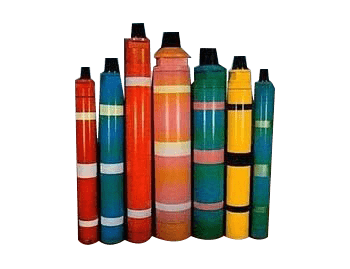
In mining, quarrying, water well drilling, and construction, the quality of drilling equipment has a direct impact on productivity, operational costs, and project timelines. Premium DTH (Down-the-Hole) hammers are designed to deliver exceptional drilling performance even in the toughest rock formations. Behind every reliable hammer is a carefully planned manufacturing process that combines engineering expertise, precision machining, and rigorous quality control. DTH hammer manufacturers invest in advanced production techniques to ensure every component meets strict performance standards and provides long-term durability in demanding applications.
Why Manufacturing Quality Matters
A DTH hammer operates under extreme pressure, high-impact loads, and continuous exposure to abrasive environments. Poor manufacturing practices can lead to premature wear, reduced drilling efficiency, and increased maintenance costs. On the other hand, premium manufacturing ensures:
- Higher drilling speed
- Longer service life
- Improved energy efficiency
- Reduced downtime
- Consistent performance in challenging geological conditions
These benefits make the manufacturing process one of the most important factors buyers should evaluate when selecting drilling equipment.
Step 1: Selecting High-Grade Raw Materials
The manufacturing journey begins with choosing premium-quality alloy steel. Since DTH hammers are subjected to repeated impact and heavy loads, the material must provide an ideal balance of hardness, toughness, and wear resistance.
Manufacturers carefully evaluate the chemical composition of steel to ensure it can withstand harsh drilling conditions. High-quality raw materials reduce the risk of cracking, deformation, and premature failure while increasing the overall lifespan of the hammer.
Material traceability also plays a significant role, allowing manufacturers to maintain consistent quality across production batches.
Step 2: Precision Engineering and Product Design
Every premium DTH hammer starts with an optimized engineering design. Engineers use advanced CAD software to develop precise dimensions, airflow channels, piston movement paths, and component tolerances.
The design stage focuses on achieving:
- Maximum impact energy
- Efficient air circulation
- Reduced internal friction
- Balanced component movement
- Better drilling accuracy
Continuous research and development helps improve hammer efficiency while adapting products to different drilling applications and geological conditions.
Step 3: CNC Machining for Dimensional Accuracy
Once the design is finalized, components are manufactured using Computer Numerical Control (CNC) machines. CNC machining delivers exceptional precision that traditional machining methods cannot consistently achieve.
Critical components such as:
- Cylinders
- Pistons
- Valve systems
- Chucks
- Wear sleeves
are machined with tight tolerances to ensure perfect alignment during operation.
Even small dimensional variations can reduce drilling efficiency, increase vibration, and shorten equipment life. Precision machining minimizes these risks and contributes to smoother hammer performance.
Step 4: Advanced Heat Treatment
Heat treatment is one of the most important stages in manufacturing premium DTH hammers.
After machining, components undergo specialized heat treatment processes that enhance:
- Surface hardness
- Wear resistance
- Fatigue strength
- Impact toughness
Controlled heating and cooling cycles improve the metallurgical properties of steel without making components brittle.
A properly heat-treated piston, for example, can withstand millions of impact cycles while maintaining consistent performance.
Step 5: Surface Finishing and Protective Treatment
Premium manufacturers also focus on surface finishing to improve durability and corrosion resistance.
Processes may include:
- Precision grinding
- Surface polishing
- Protective coatings
- Anti-corrosion treatment
- Deburring
Smooth surfaces reduce friction between moving parts, allowing the hammer to operate more efficiently while minimizing wear.
These finishing processes also improve the overall reliability of the product during transportation, storage, and field operation.
Step 6: Component Assembly
Assembly is far more than simply putting individual parts together.
Every internal component must be carefully fitted to ensure:
- Proper air sealing
- Smooth piston movement
- Accurate valve operation
- Balanced impact force
Technicians inspect each assembly stage to verify that components function together as intended.
Attention to detail during assembly helps prevent air leakage, excessive vibration, and uneven wear during drilling.
Step 7: Comprehensive Quality Inspection
Quality control is integrated throughout the manufacturing process rather than being limited to the final inspection.
Manufacturers typically perform:
- Dimensional inspection
- Material verification
- Hardness testing
- Surface finish evaluation
- Assembly inspection
Modern measuring equipment helps identify even minor deviations before products move to the next production stage.
This systematic inspection process ensures every hammer complies with internal quality standards.
Step 8: Performance Testing Under Realistic Conditions
Before reaching customers, premium DTH hammers undergo extensive performance testing.
Testing may include:
- Air pressure evaluation
- Impact energy measurement
- Operational efficiency testing
- Leakage inspection
- Endurance testing
These tests simulate actual drilling conditions to verify that each hammer delivers reliable performance.
Products that do not meet established standards are reworked or rejected, ensuring only dependable equipment reaches the market.
Continuous Research and Innovation
The drilling industry continues to evolve, requiring equipment capable of handling increasingly demanding projects.
Leading manufacturers invest heavily in research to improve:
- Airflow efficiency
- Impact performance
- Fuel efficiency
- Component durability
- Drilling productivity
Modern manufacturing technologies, automation, and advanced quality systems enable companies to produce more reliable and consistent products than ever before.
Choosing the Right Manufacturing Partner
When purchasing drilling equipment, evaluating the manufacturing capabilities of the supplier is just as important as comparing product specifications. Experienced DTH hammer manufacturers emphasize strict quality control, precision engineering, advanced machining, and continuous innovation to deliver dependable products that perform reliably across mining, quarrying, construction, and water well drilling applications.
Before selecting a supplier, consider factors such as manufacturing expertise, quality certifications, production infrastructure, testing procedures, technical support, and industry experience. A manufacturer with a well-established production process is more likely to provide equipment that offers long service life and consistent drilling performance.
Conclusion
Premium DTH hammers are the result of a carefully controlled manufacturing process that combines superior raw materials, precision engineering, advanced machining, specialized heat treatment, meticulous assembly, and comprehensive quality testing. Every stage contributes to creating equipment capable of delivering reliable performance in demanding drilling environments.
Businesses seeking long-lasting drilling solutions should work with experienced DTH hammer manufacturers that prioritize quality at every production stage. By partnering with a trusted manufacturer, contractors and drilling professionals can improve operational efficiency, reduce maintenance costs, and achieve better project outcomes with durable, high-performance DTH hammers.
Other Recommendations: Under Ground Mining drilling rig manufacturer