If you play crisis-heavy games, Polis is a very crisis-heavy game. If you don’t, then it’s extremely crisis-heavy. These are my first impressions of the euro-wargame Polis.
In short, you take part in the Peloponnesian War, playing as either Sparta or Athens. However, direct military confrontations are extremely risky, food is always scarce, and you’ll spend most of your time figuring out how to feed your people rather than waging wars—at least for the first two out of the game’s three Eras/Turns/Rounds.
In our first, long game, by the end of the second Era, Yulia and I spent 15 minutes just trying to figure out how she could get wheat. I really didn’t want her to end up yelling, “I’m not playing this crap!” before she even had the chance to fully experience it.
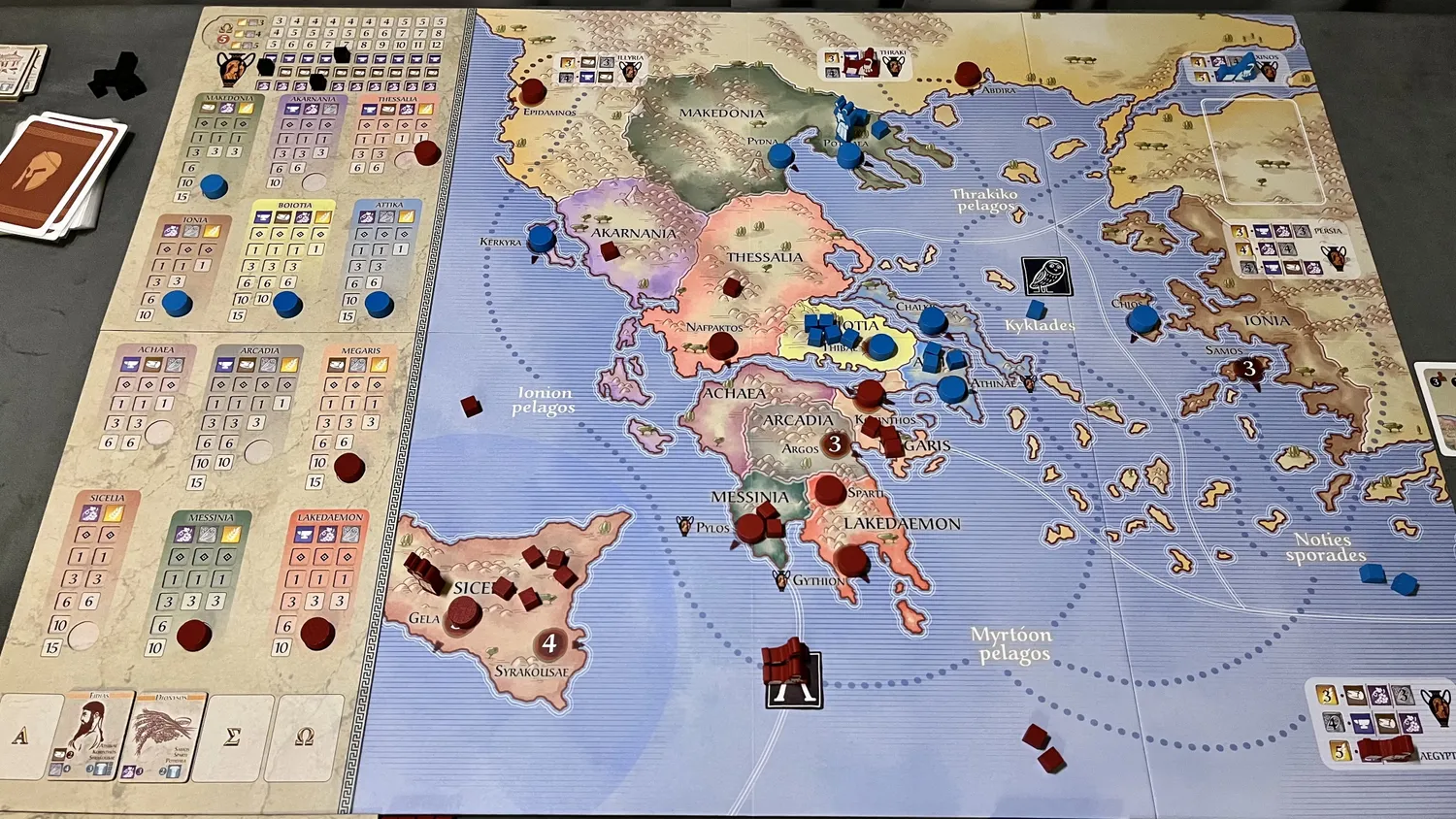
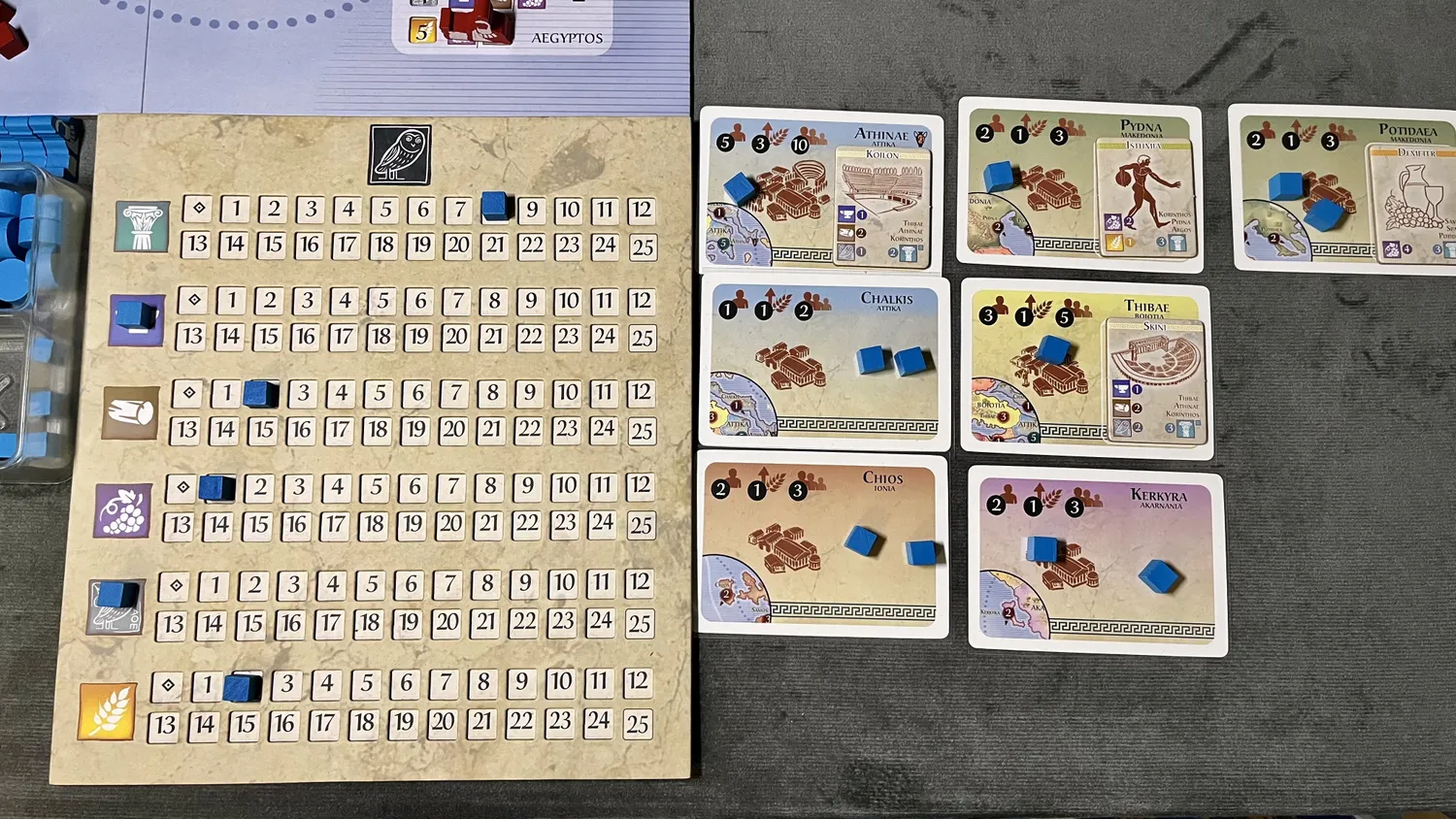
The game has resources—silver, iron, wood, and wine—that you use for trade, unit production (hoplites, galleys, merchants), and more. Your population size determines your final score, reflecting the prosperity of your civilization. You can construct projects in cities—Philosophers, Monuments, the Olympics, and so on—which also grant reputation points. And reputation is crucial for many game mechanics: movement, resource collection, and city sieges all depend on it.
Thematic Details I Loved
- Recruiting hoplites means removing population cubes from settlements.
- The market has a dynamic demand system—if you buy wheat with metal, demand decreases, so the next buyer will have to pay more.
- Your diplomat (the infamous proxenos) must pay bribes when passing through enemy-controlled territories. However, the money doesn’t go to the opponent—it’s lost in a shady “gray market” where the state sees nothing.
- If a city with your proxenos gets conquered, he can even be taken hostage.
Thematic Details That Felt Off
One way to reduce your food cost is by converting population into hoplites (removing cubes from cities). It would have made more sense to still pay for the army’s upkeep with food or silver. As it stands, it’s as if the army sustains itself—looting, hunting, and not burdening the city. It works mechanically, but it feels odd.
What do you think?
The Gritty Feel of Polis
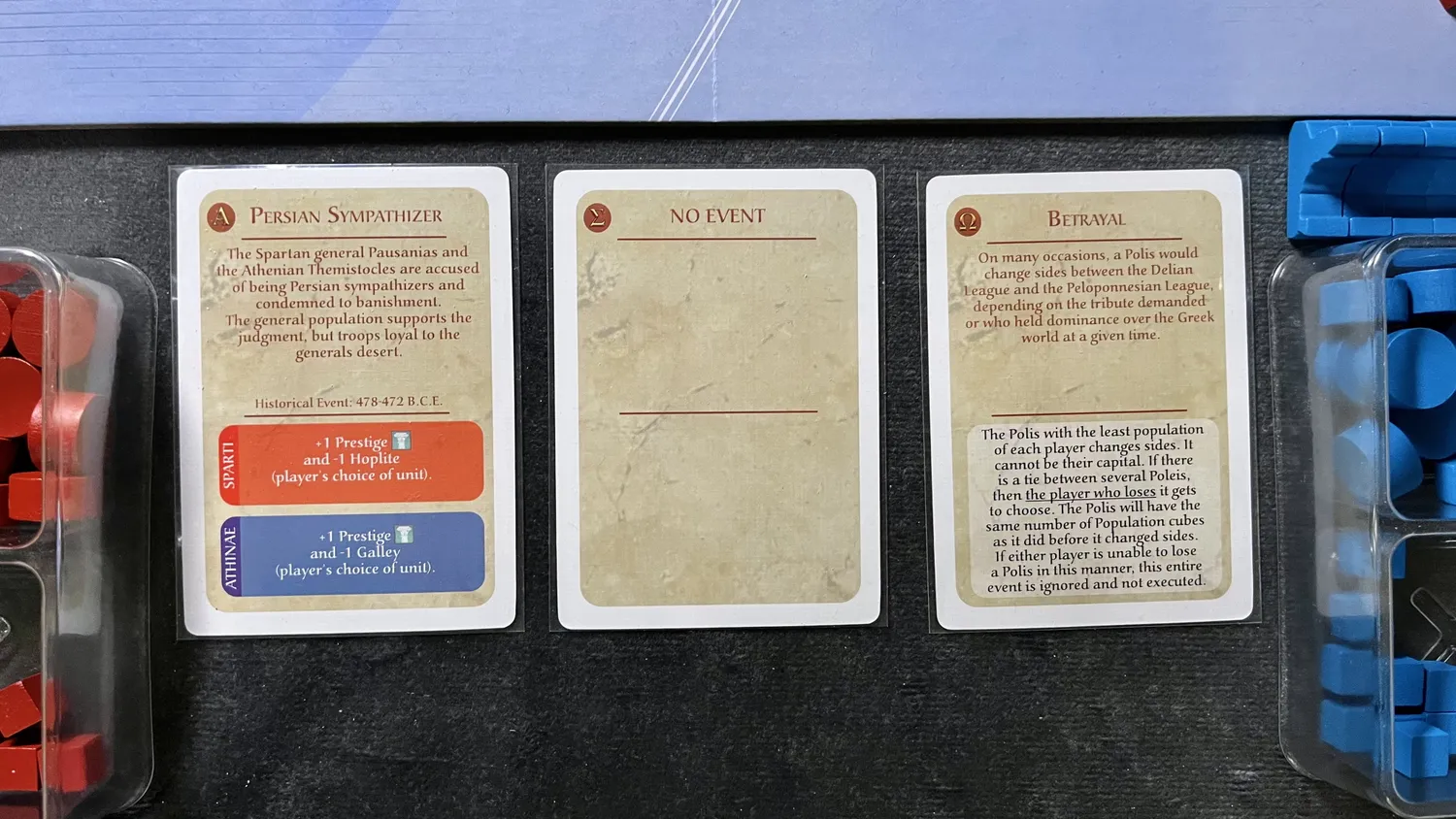
This game makes you feel like a thug. You go here—collect resources. Go there—collect more resources. And you pay for it all in reputation points. Sometimes, you conquer a city just to gain reputation, only to spend it on gathering more resources. But to conquer a city, you also need reputation—plus luck, since you roll dice to determine success.
The Combat System
Warfare isn’t the game’s strong suit. Battles play out like a simplified trick-taking game, where each side plays a hand of cards (based on their army size) and must respond with the correct type of unit. For example, if the attacker plays Phalanx and Archers, the defender must also play Phalanx and Archers. It’s abstract, random, and a bit odd—but not outright bad. Just something to accept.
Can Polis Be Played Peacefully?
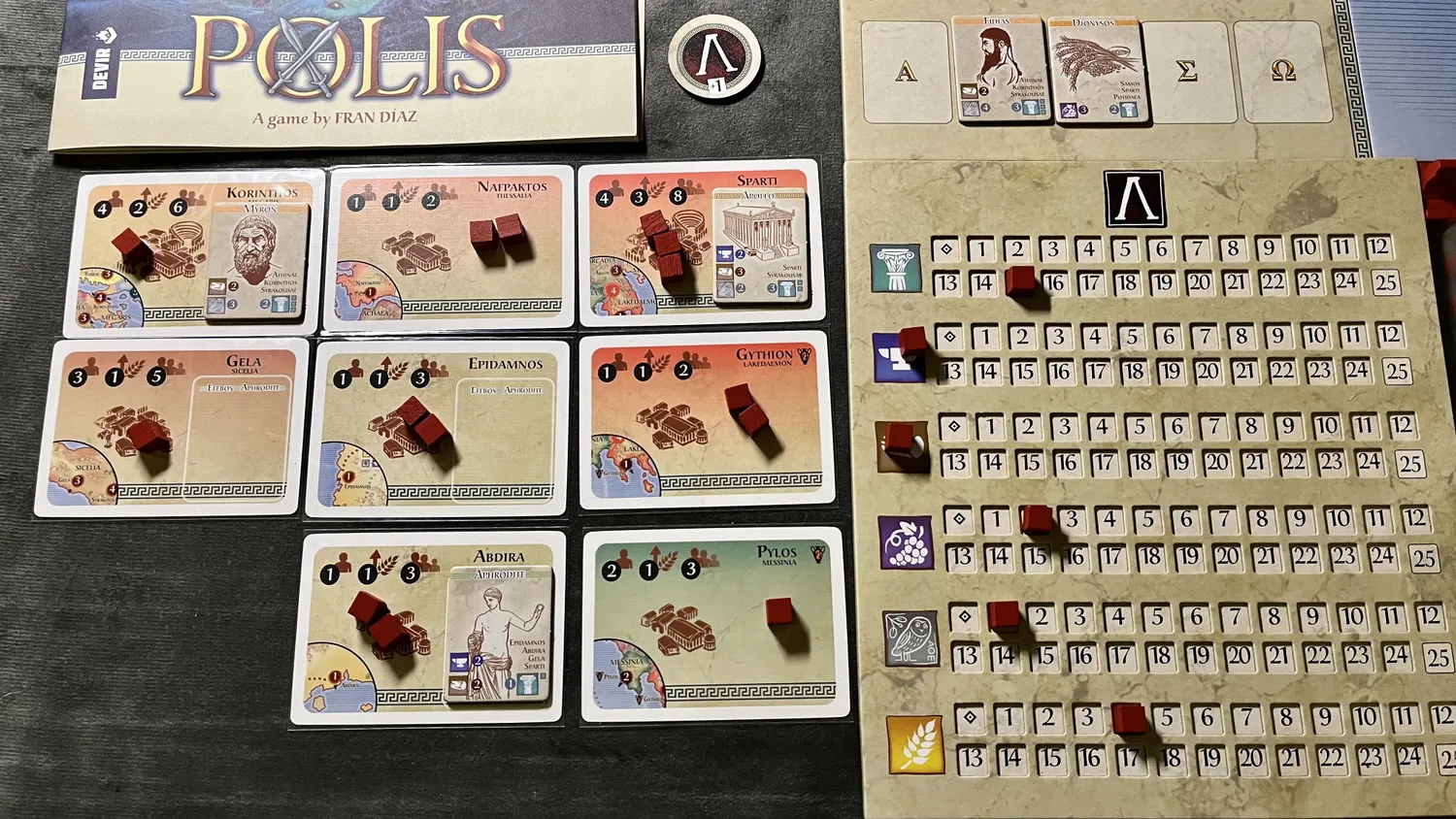
I doubt it. The game is far more engaging when players actively counter each other. But even without war, Polis will crush you. If you fail to secure enough wheat, your people starve, cities rebel, and you might even lose outright. This makes it vital to control key provinces, block trade routes, and set up merchants at the right time. There’s so much to track at once, and yet the game only has 11 actions, each straightforward but interconnected.
Final Thoughts
I’ve got nothing like Polis in my collection, and it’s a fantastic addition. If you love crisis-driven games, this is a must-try—though finding a dedicated opponent is crucial. An experienced player will obliterate a newbie. The game clearly requires time to study, as it has many hidden layers:
- Which territories to seize first
- Where to disrupt your opponent
- Always planning ahead—because “I’ll figure it out later” doesn’t work in Polis.
Every mistake, overconfidence, or careless move can lead to the total collapse of your empire.