I was lured into playing the now quite old Sid Meier’s Civilization: The Board Game (2010). So here are my impressions — and the big question: is it still worth playing in 2025?
Looks & Production
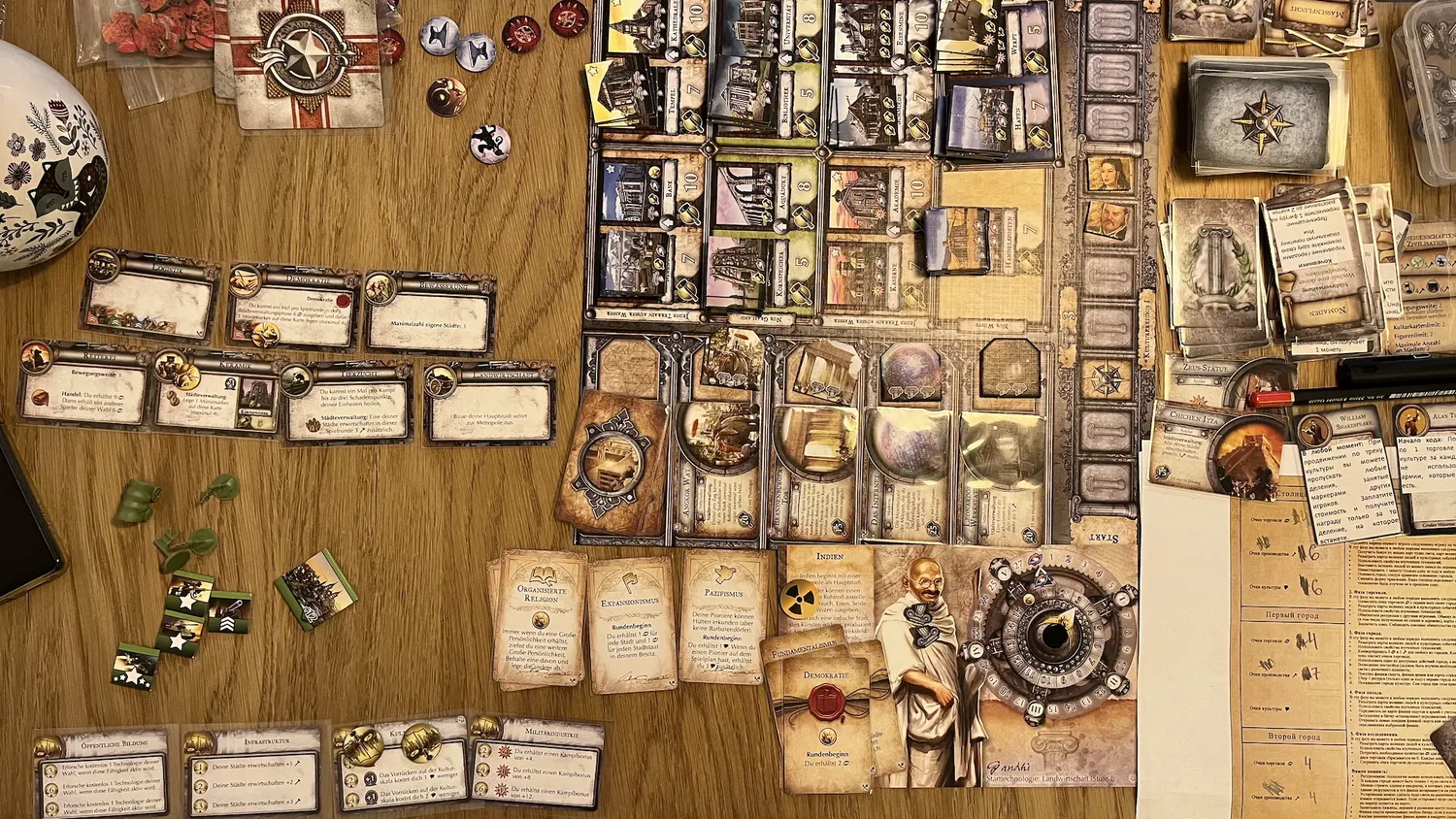
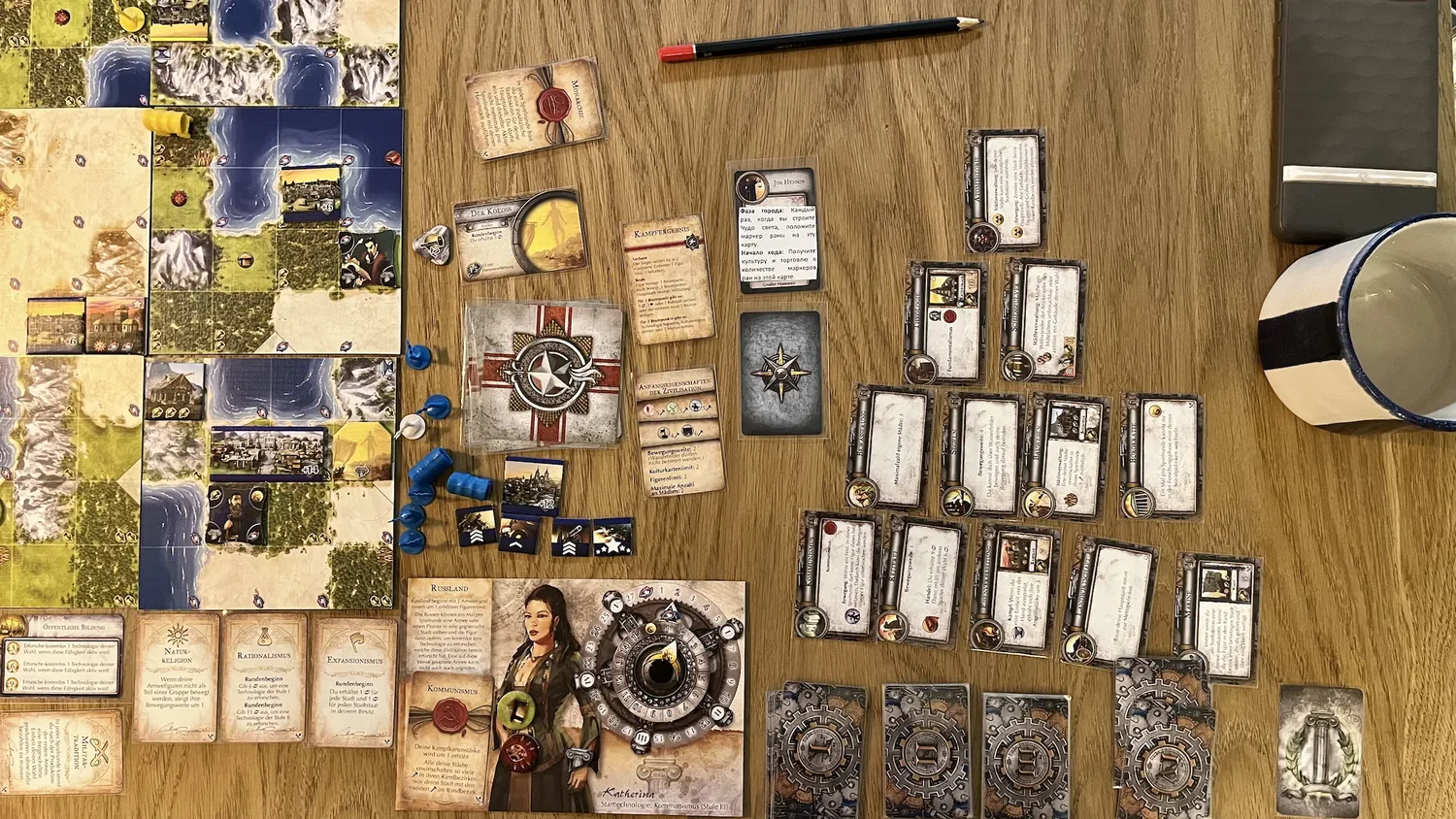
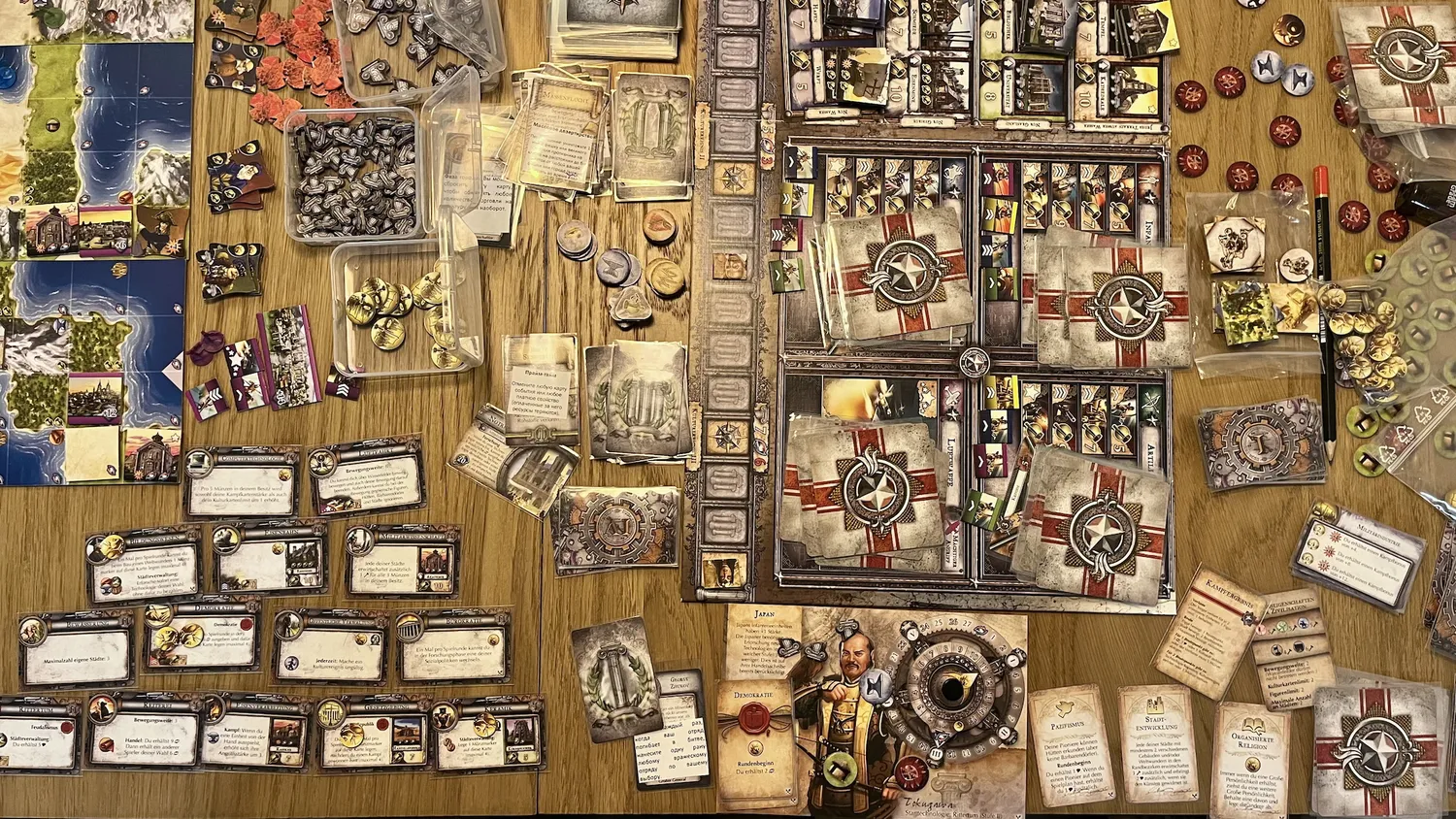
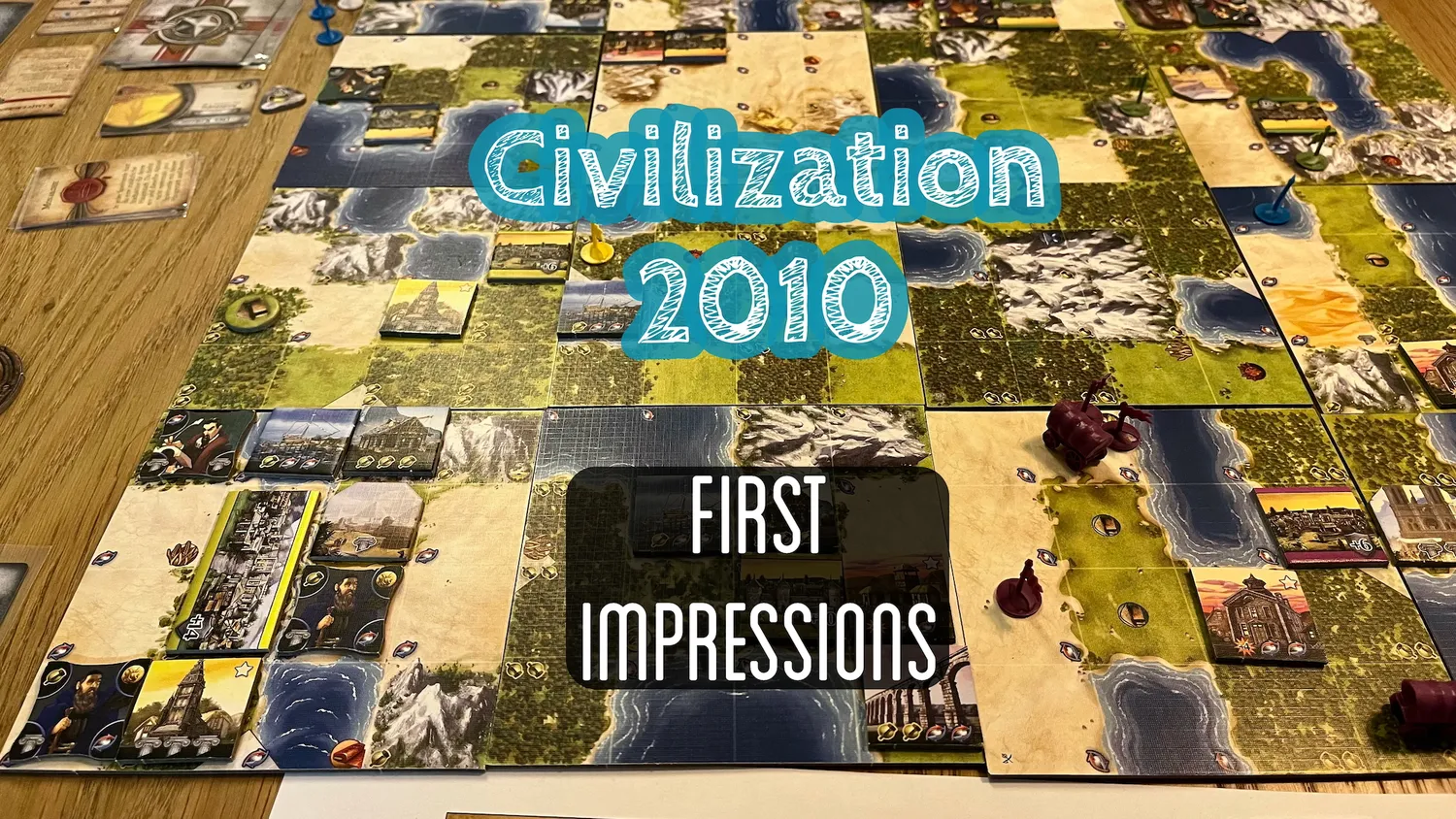
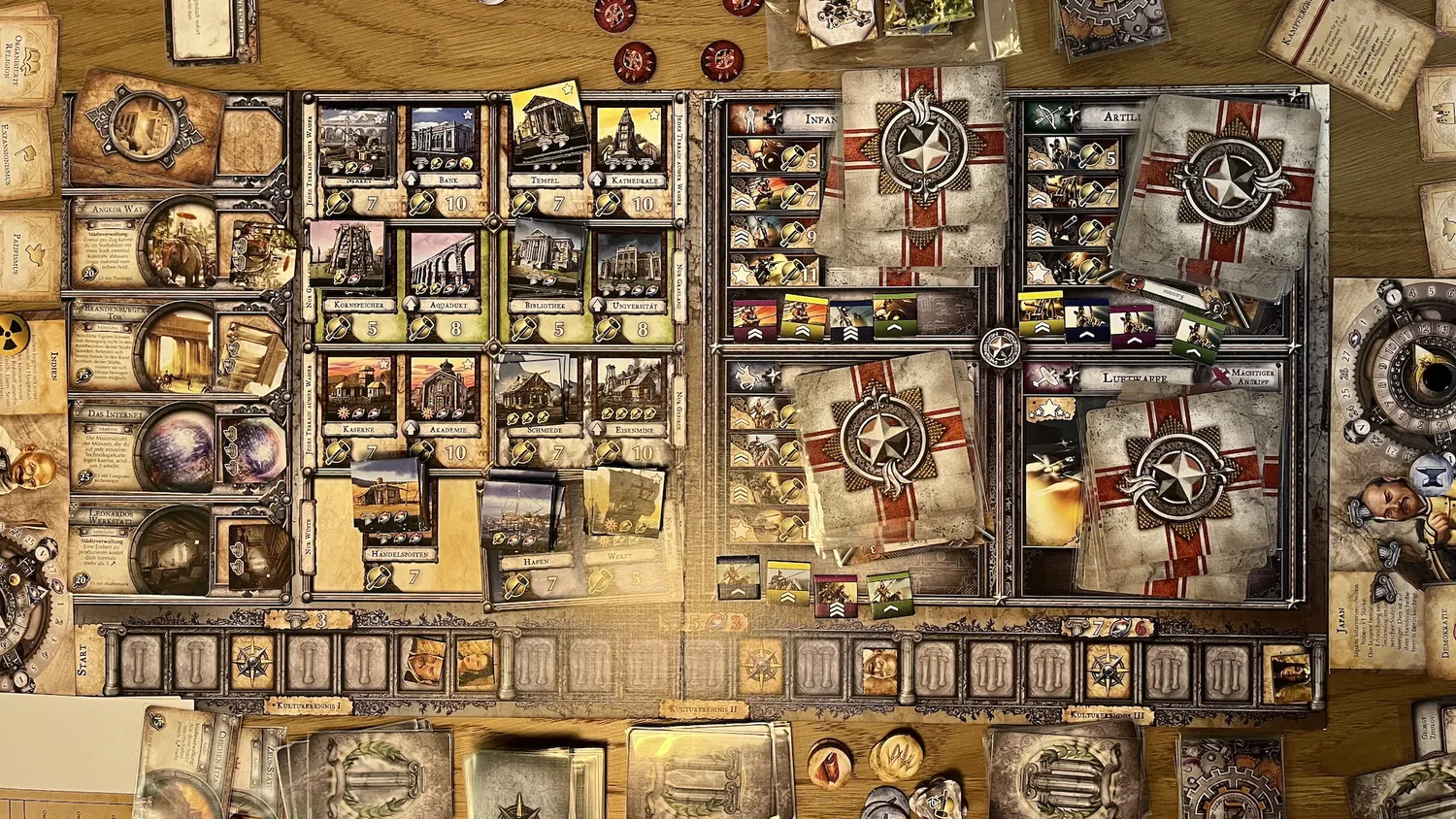
It’s obviously an older game, so I wasn’t expecting much. That said, the production isn’t all that bad — the cardboard is actually better than in many modern games. But the artwork and design? Definitely not up to today’s standards. The tokens could’ve been a bit larger — people with bigger fingers might struggle with grabbing coins or culture tokens. The map uses square tiles instead of today’s popular hexes, but I get that scaling would’ve been trickier back then. Also, the nation boards felt pretty flimsy to me — not a fan.
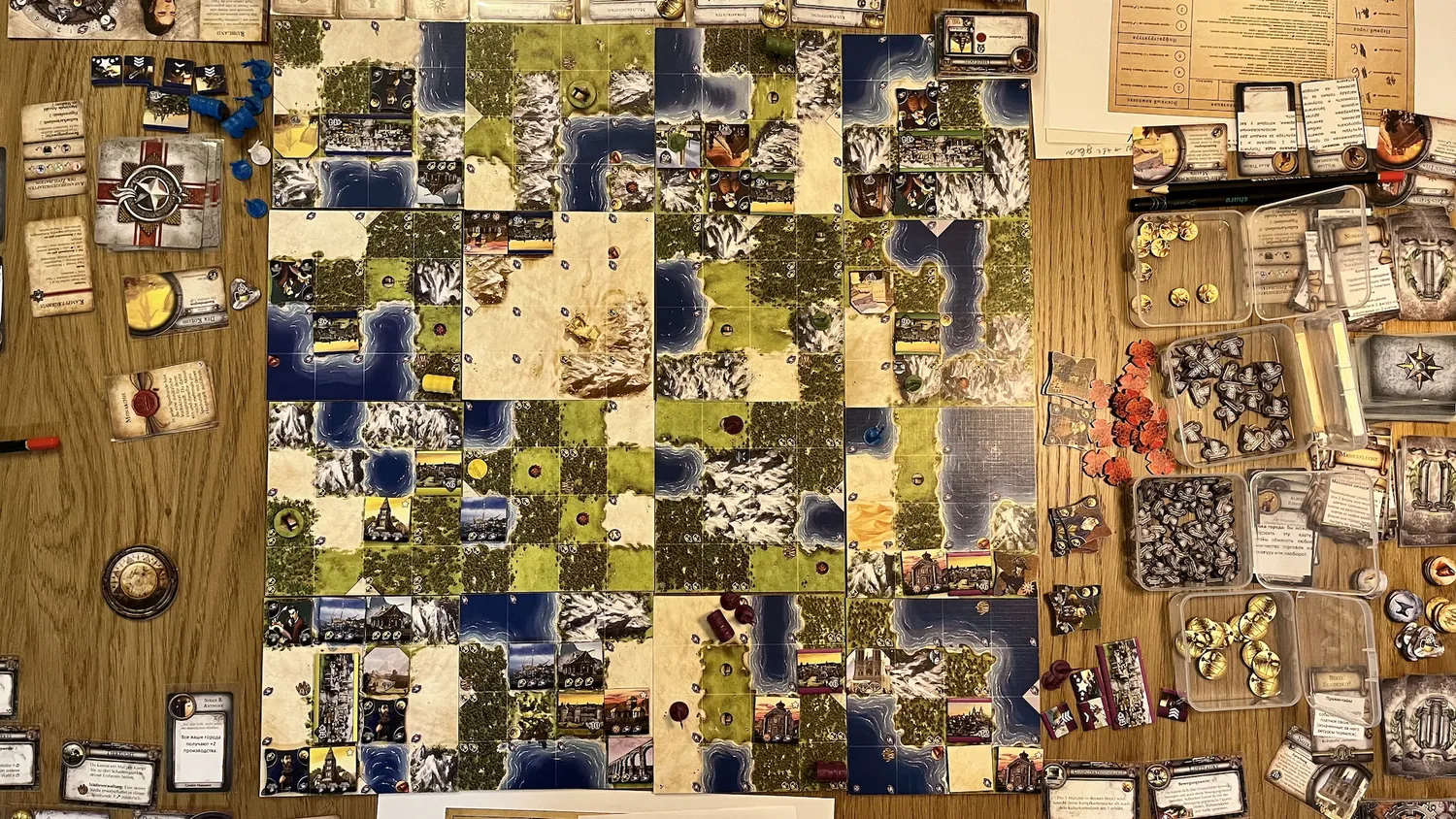
Let’s keep it simple: here’s what I liked and didn’t like. Totally subjective, of course.
What I liked:
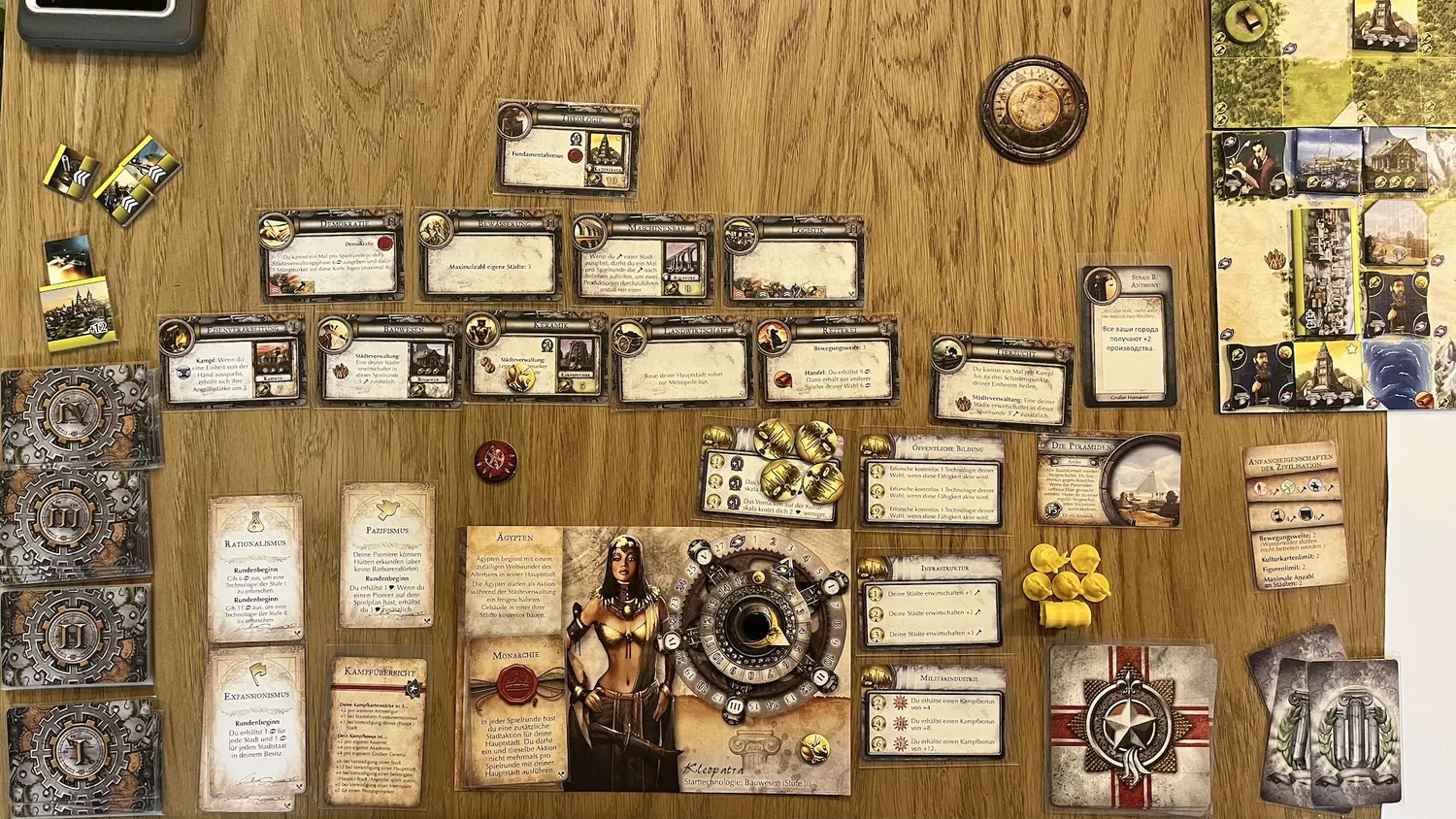
- Tons of tech cards — meaning you can build wildly different engines and adapt to whatever’s happening on the board.
- Multiple victory paths: culture, tech (spaceflight), military (capital conquest), and economic (money hoarding). You can explore a few strategies early on, then commit to one later. Without a clear focus, though, you’re unlikely to win.
- Loads of modifiers for your engine besides tech: nation traits, investments, government types, doctrines. They shape your civilization in unique ways.
- The map is full of “surprises” that motivate exploration — though sometimes the rewards feel way too strong for a single player.
- Combat has almost no randomness. Sure, there's a bit, but it’s manageable — you can prepare for battles and plan. No "lol dice hate me" moments here.
What I didn’t like:
- The looks. Nitpicky, I know.
- Fighting barbarians gets repetitive fast — it’s almost always the same grindy scenario.
- Downtime. There aren’t that many actions per turn, but you spend a lot of time checking techs, planning, counting stuff… Once you're done with your turn, you’ve got time to grab a coffee. Some phases could definitely be snappier.
- Techs sometimes make no thematic sense. Like, "Animal Husbandry lets you heal a unit in battle once" — wait, what? Shouldn’t that be Medicine or something? You can justify it if you try, but it feels off.
- The game flow is easy to forget. Even after playing a full game, I still struggled to remember the exact phase order. Only solves itself with repeated plays.
- My biggest issue: sometimes there’s nothing you can do to catch up. You're just slapping down cards, maybe kingmaking, maybe just waiting for it all to end. And the same can happen to others — everyone might know exactly who’s going to win and when. Cultural and tech victories are especially hard to stop. That’s why you really need to play this with a group on the same skill level.
Our Game
Quick summary: we played a fairly peaceful game — mostly just exploring the mechanics, but we still stayed somewhat cautious in defense. No free wins allowed.
By mid-game it was obvious the box owner was going to win. He was sprinting toward a tech victory, and the only thing slowing him down was the phase limit for inventing new tech.
As for me, I pivoted hard into culture. Once I realized I wasn’t catching up on tech and all felt lost, I just threw everything into culture generation. And surprisingly — I won! But let’s be honest: it was pure luck. I went first in the final round, and no one had a chance to stop me. I also picked up some pretty spicy culture track cards that let me fend off attacks and score big.
So… did I like the game?
I honestly don’t know. Mixed feelings. When it’s your game, you tend to be a bit more forgiving. But this wasn’t my box, so I let the negatives shine a bit brighter. Still, I couldn’t ignore the positives either.
The end.