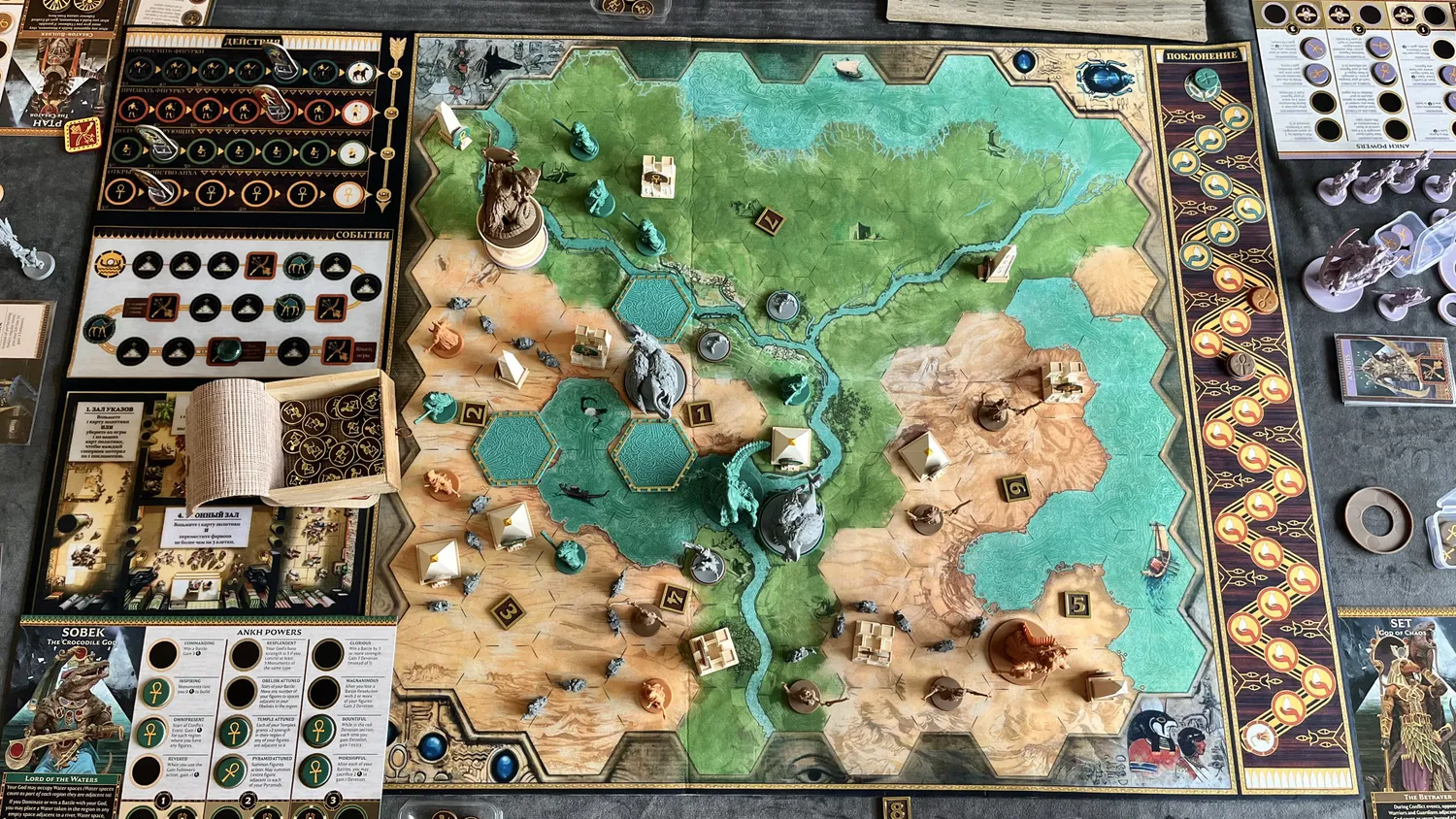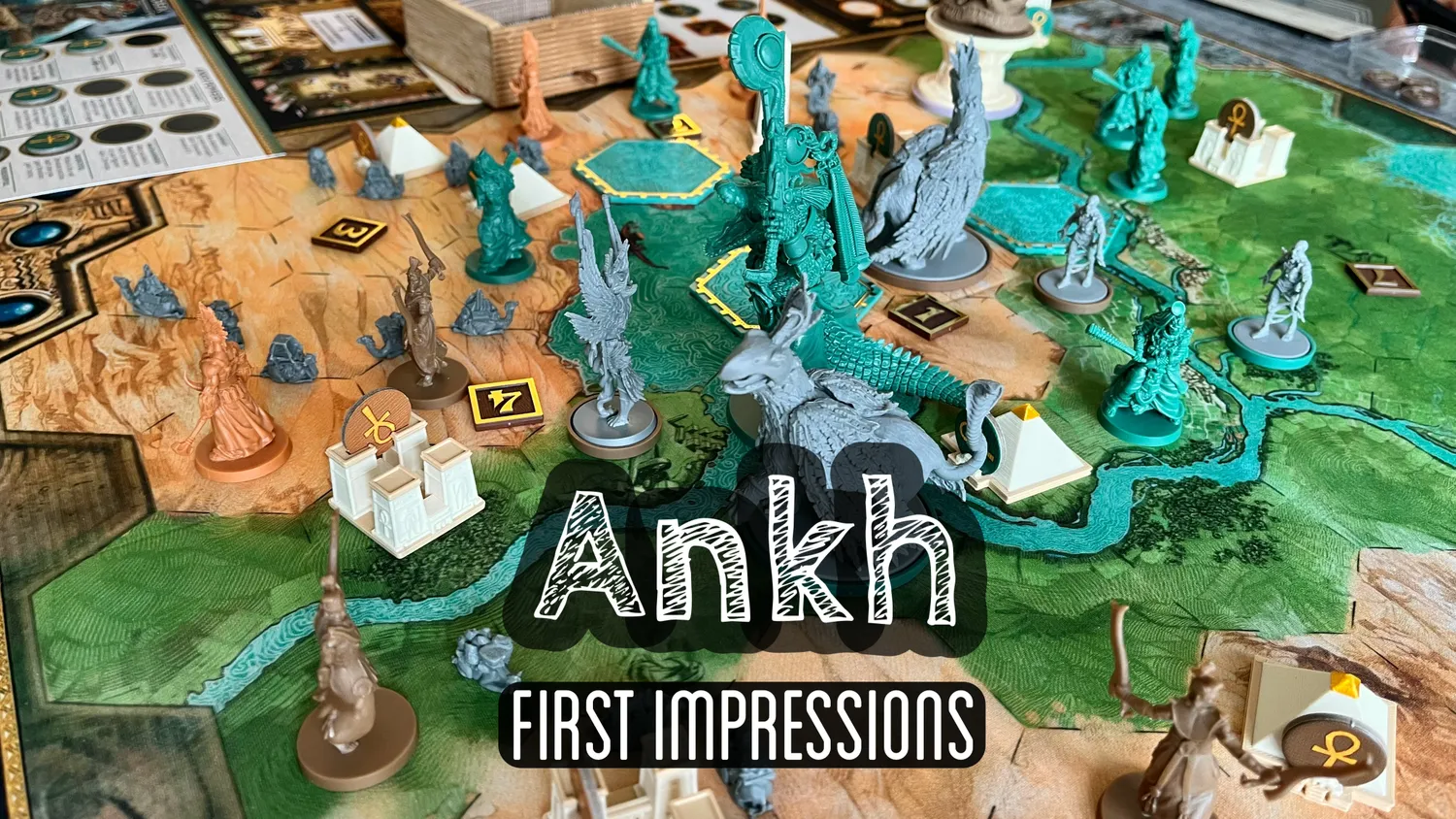
My wife got me Ankh: Gods of Egypt for my birthday — and of course, I couldn’t resist grabbing all the expansions. Yes, all of them. Even the infamous Tomb of Wonders (the Kickstarter exclusive that’s only available second-hand these days).
We’ve already played a few games with 2, 3, and 4 players. I wanted to get a solid first impression, so let’s call this an early review after four plays.
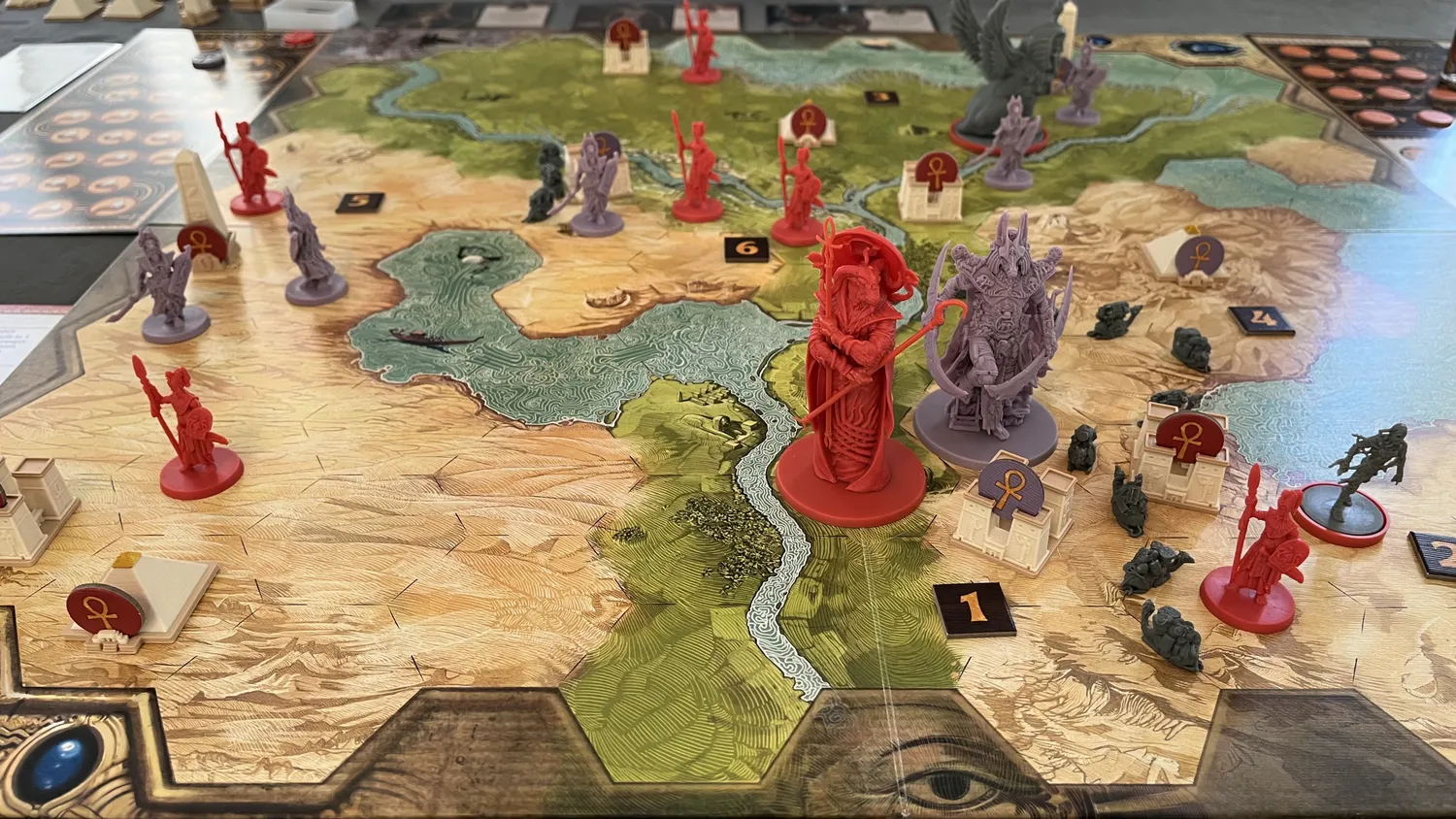
Overall? I’m loving it. After every game we ended up discussing it — sometimes even when Ankh just came up in casual conversation. The rules are simple, but the gameplay shifts a lot depending on player count and your group’s meta (player habits and behaviors).
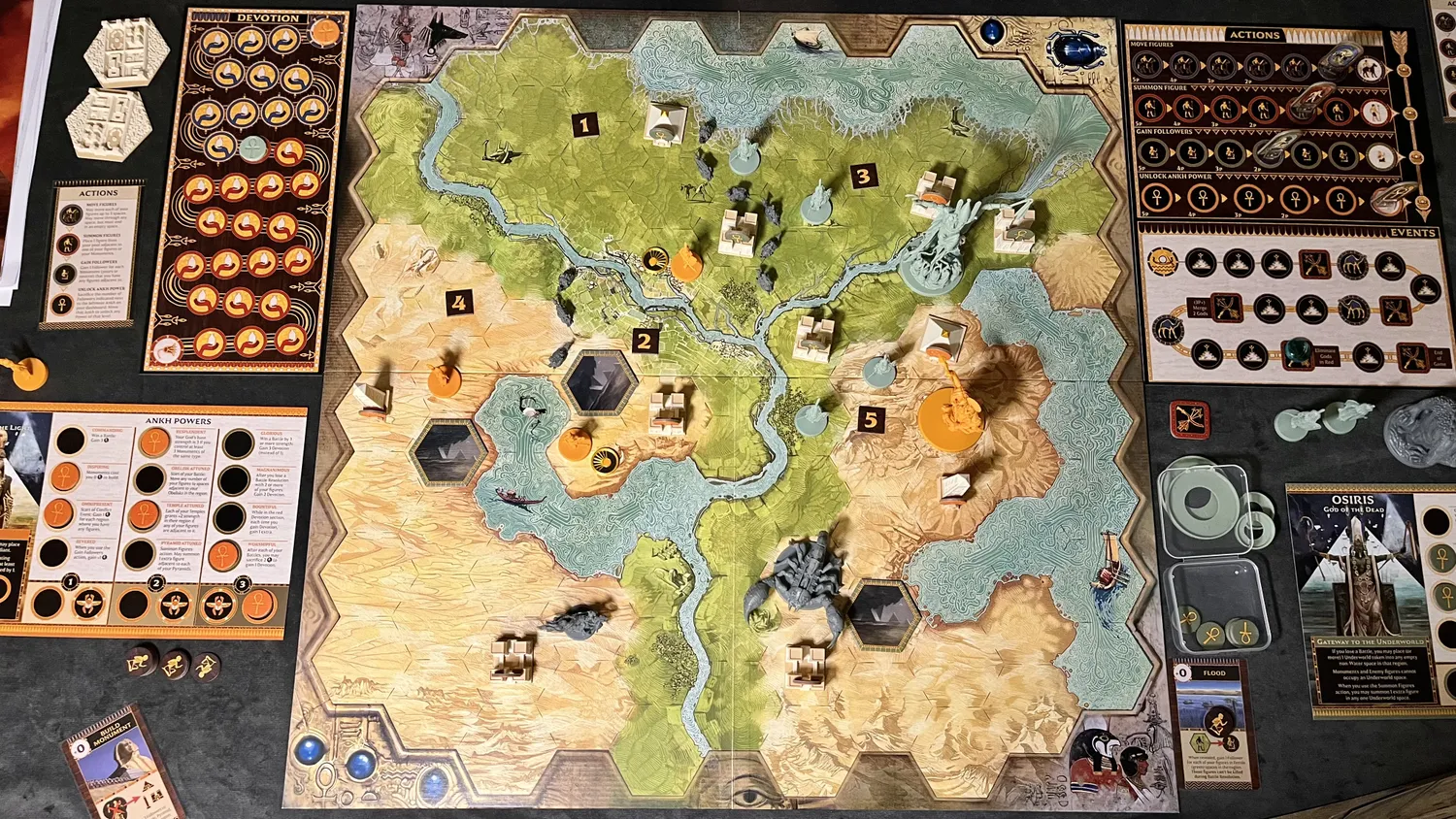
With all expansions, the game takes up a lot of space. One and a half Kallax shelves, to be exact.
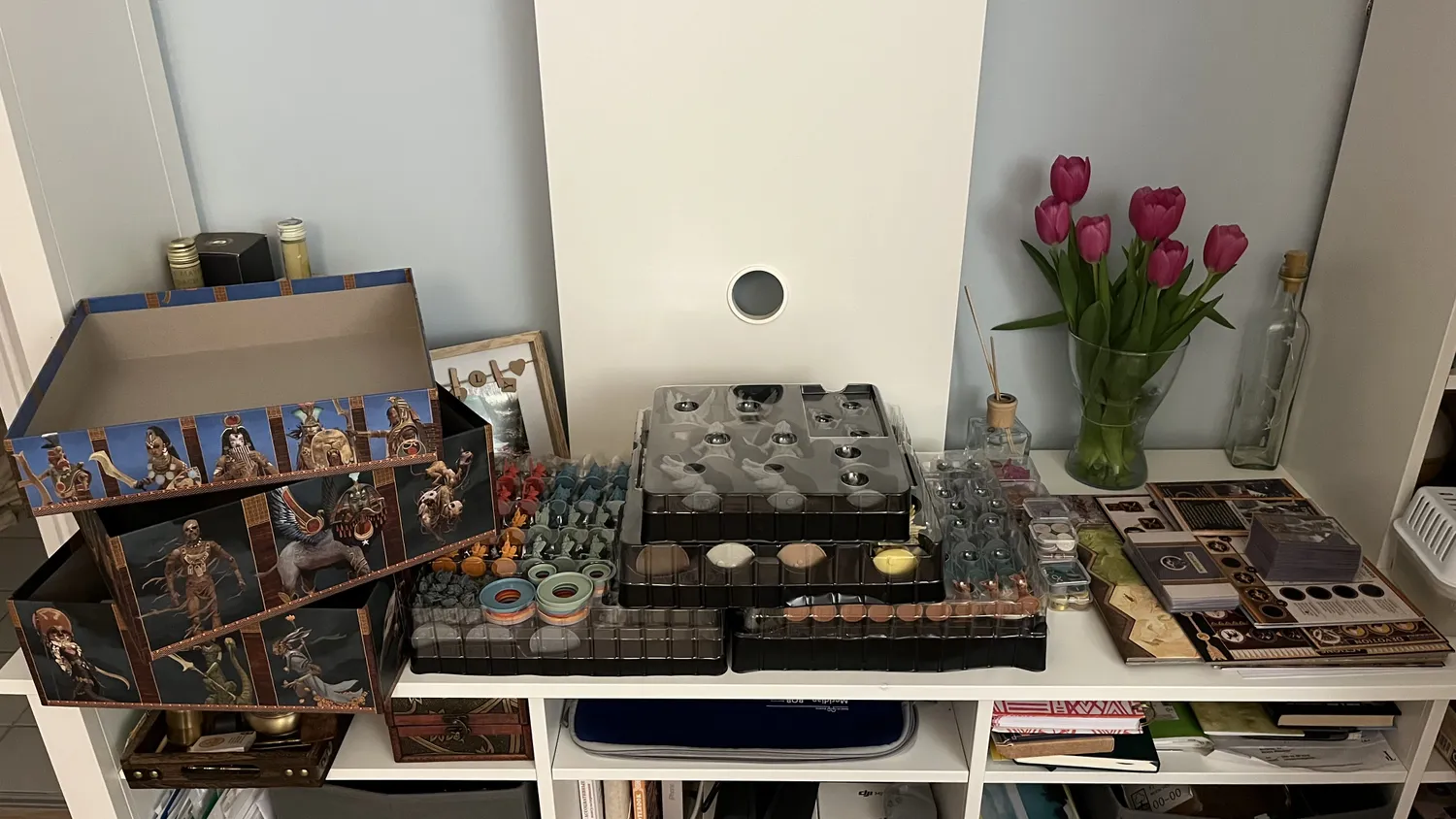
The in-box organizer? Honestly… it sucks. Everything’s scattered between the boxes, so a custom insert is basically a must. But those aren’t cheap. Unless you get crafty and DIY something.
On the plus side, the component quality is great. The minis are super detailed. Some may come bent, but hot water fixes that fast. The player boards from the retail box though? Total disappointment — just thin cardboard. Luckily, the Tomb of Wonders came with a couple of solid boards. Still, all god boards are that same thin material. Oh well.
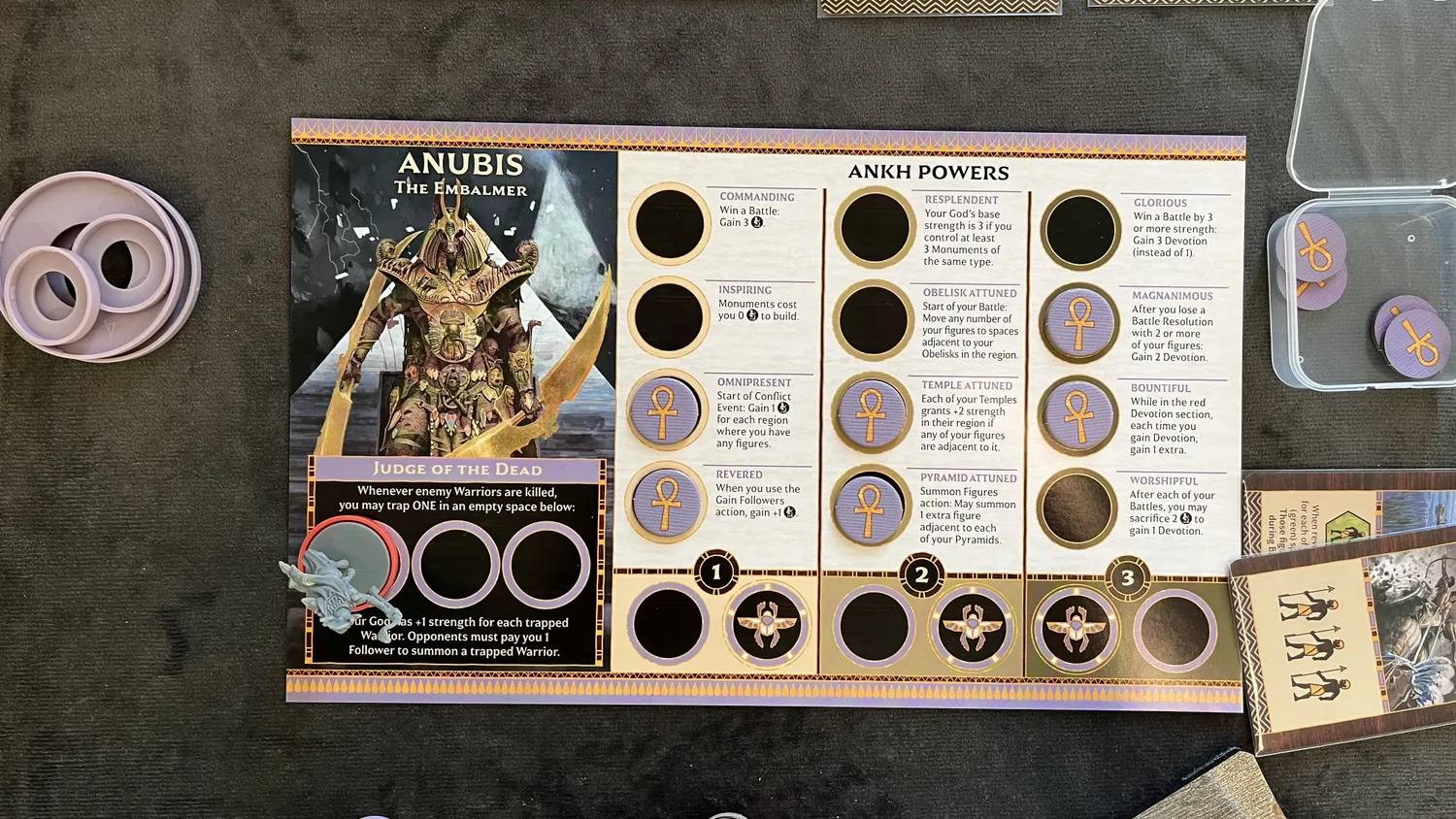
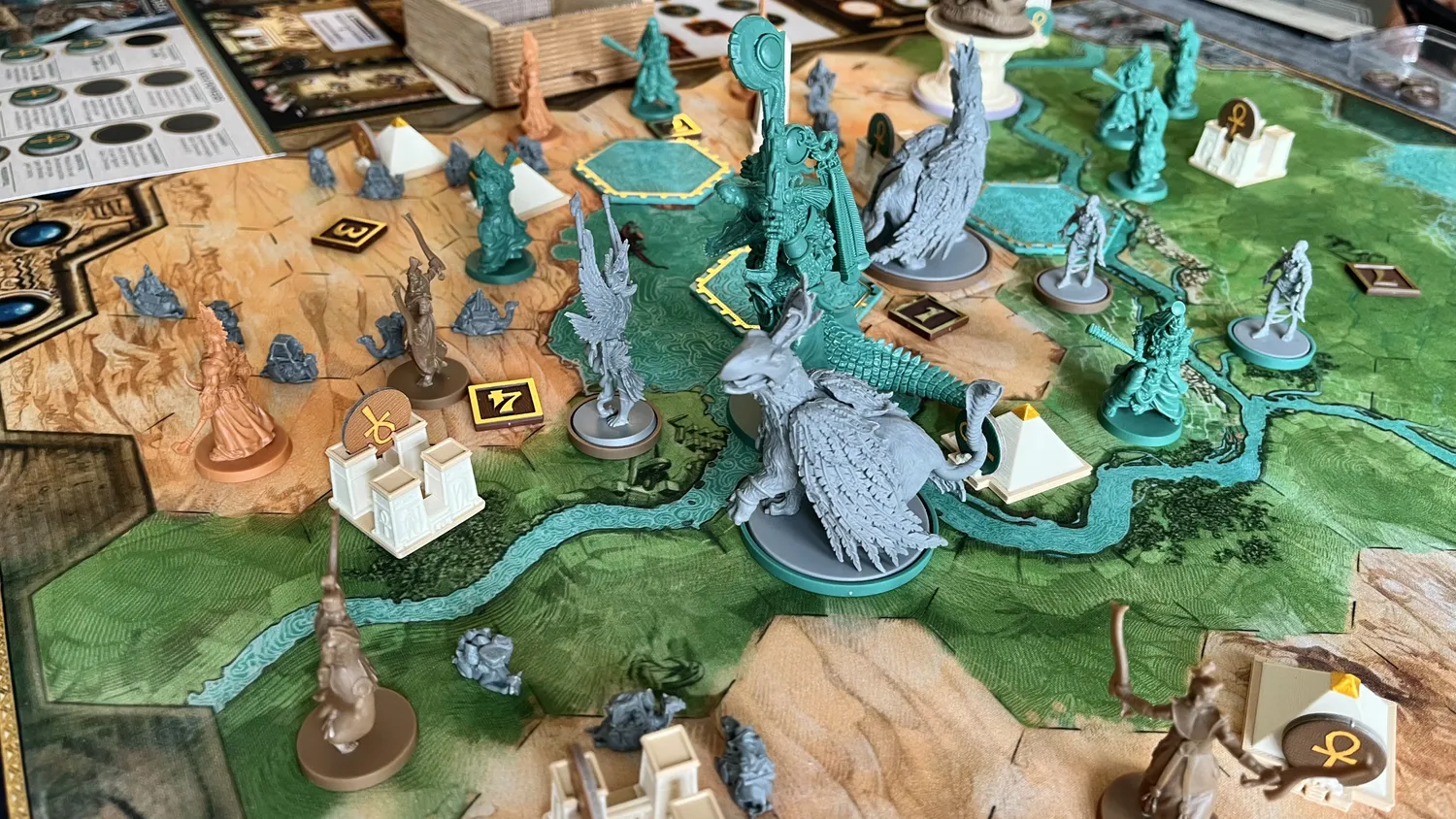
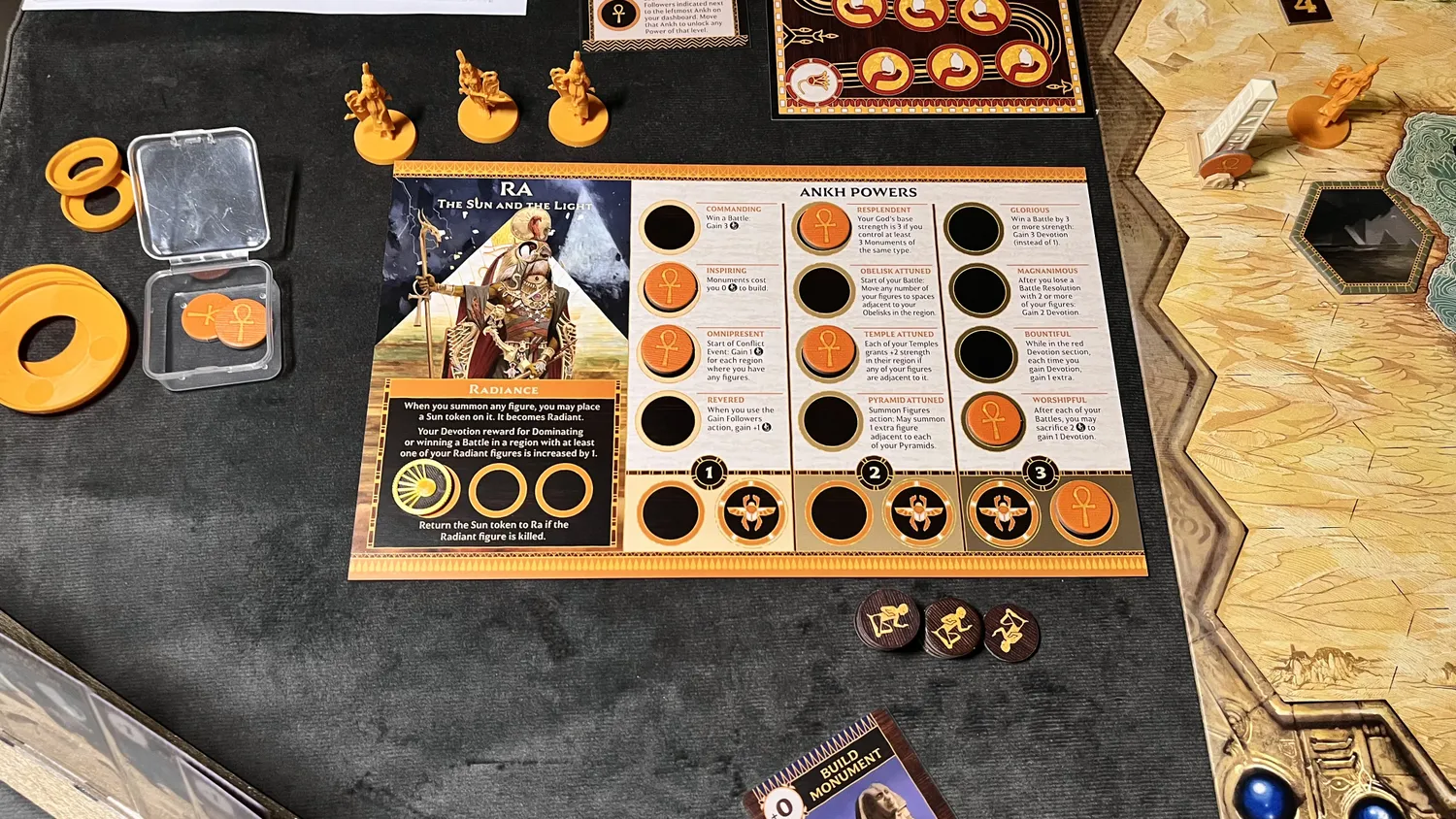
Each god feels unique — and I doubt they’re all 100% balanced (shoutout to Sobek). But everyone shares the same core abilities. The twist? You only get to pick 2 out of 3 upgrades in each category, and that leads to all sorts of combinations. The cool thing is, all abilities can be useful.
Then there’s the race for Guardians — powerful mythical creatures with unique effects. With all expansions, there are tons of them, but you only get to use three per game. It’s actually hard to try them all — and yet, I’ve already won a game without using a single Guardian. So they’re not essential, just fun.
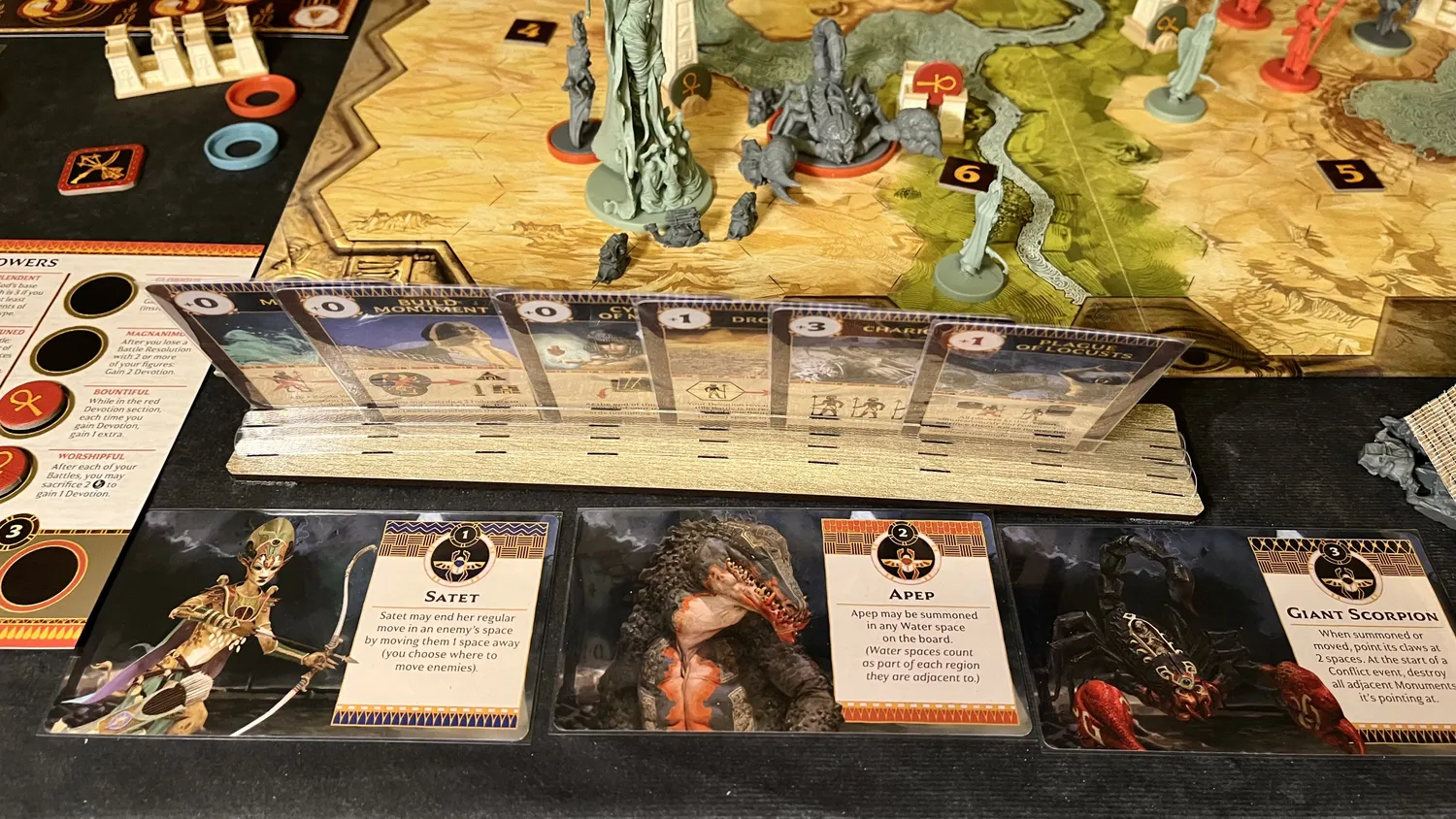
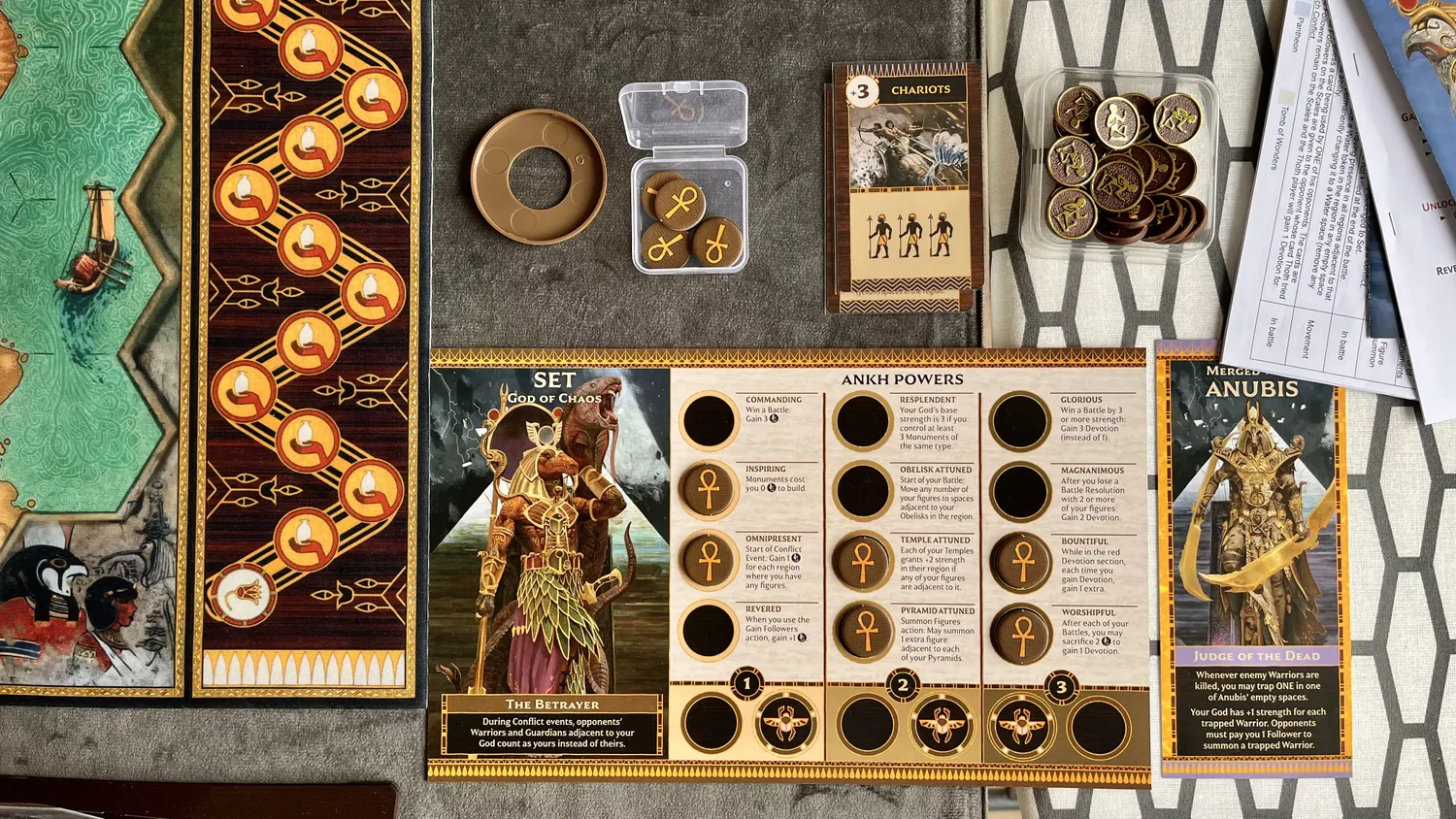
One of Ankh’s signature mechanics is the Merge. When two gods fall behind, they combine into a single entity, and those players start cooperating. It’s a very polarizing feature. Some hate it — either because it makes you fall even further behind, or because you just don’t want to share your god with someone else.
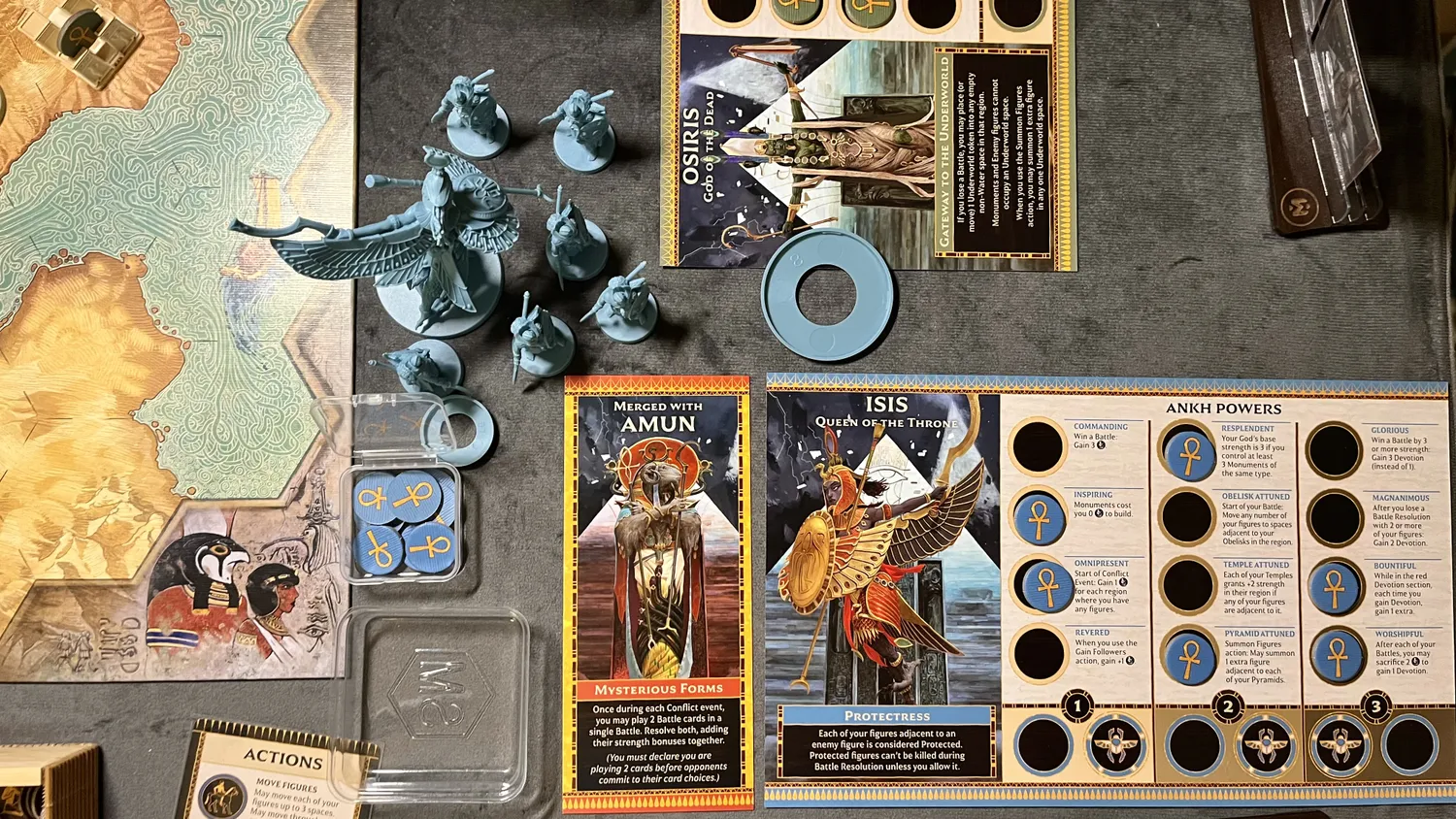
Personally, I like it. First off: if you don’t like it, go play Blood Rage. But seriously — it’s thematically on point. God mergers happened in Egyptian mythology (think Amun-Ra). It gives trailing players a second chance, as long as the gap isn’t too huge. It also adds a fun twist — the game becomes less cutthroat, and losing doesn’t sting quite as much since you’re kind of playing together.
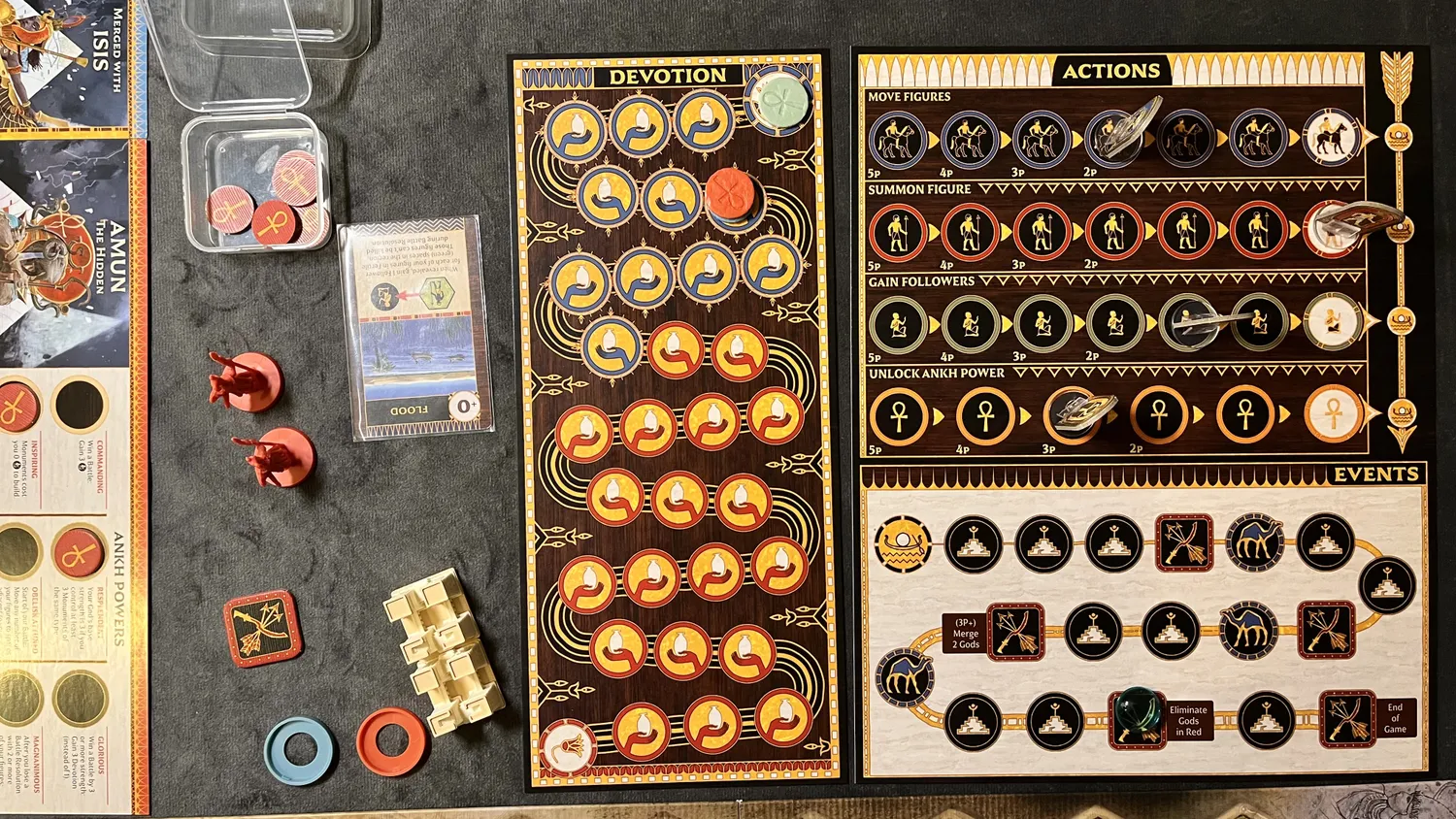
Still, it’s very easy to fall behind. Miss a moment, play the wrong battle card, and your opponent rockets ahead — and there’s not much you can do to stop them from scoring big. But that’s something experience fixes. And since Ankh doesn’t take that long to play, you can easily fit two sessions into one evening.
Next up: I’ll review the Pharaoh expansion, which adds even more depth to the gameplay. And I’ll keep posting session recaps — because there’s a lot of fascinating stuff going on in this game.