Internal audits are an essential component of ensuring a strong organizational foundation. They verify that activities are consistent with established standards, policies, and regulations. A well-structured audit checklist is one of the most important instruments for conducting an effective internal audit. This article discusses the elements, significance, and steps involved in developing an effective audit checklist for internal audits.
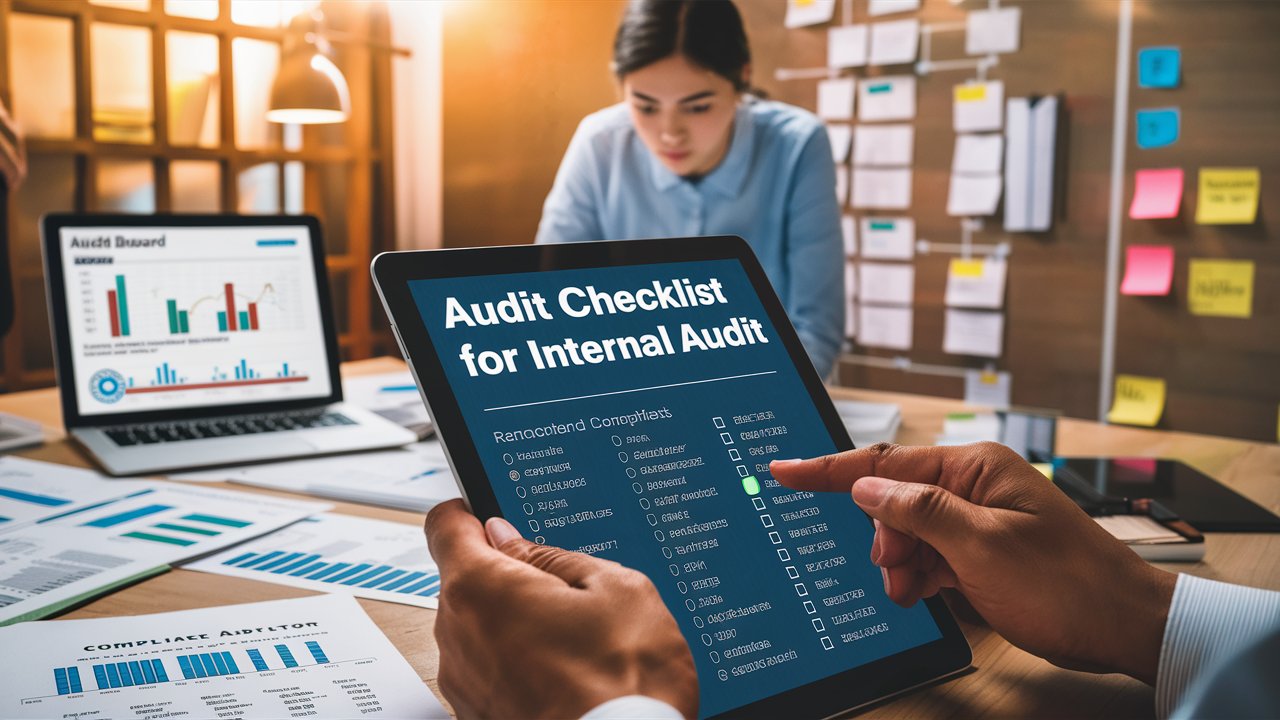
What Is an Audit Checklist?
An audit checklist is a systematic instrument that auditors use to examine and document processes, procedures, and compliance with internal and external standards. It serves as a road map, ensuring that no detail of the audit is ignored.
Importance of an Audit Checklist
- Consistency: Ensures uniformity in auditing processes across different departments.
- Efficiency: Saves time by providing a clear direction for auditors.
- Documentation: Facilitates detailed record-keeping for future reference.
- Compliance: Helps identify gaps and risks to maintain adherence to standards.
Key Components of an Audit Checklist
1. Audit Objective: Define the purpose of the audit (e.g., compliance, performance, or risk assessment).
2. Scope: Clearly specify what the audit will cover, such as departments, processes, or timelines.
3. Criteria: List the standards, policies, or regulations against which the audit will be conducted.
4. Checklist Items:
- Break down the audit into specific questions or tasks.Are all policies documented and accessible?
- Are financial records up-to-date and accurate?
- Are safety protocols being followed?
5. Evidence Collection: Specify the type of evidence required (e.g., documents, interviews, or observations).
6. Action Plan: Include recommendations for addressing non-compliance or risks.
Steps to Create an Audit Checklist
- Understand the Objectives
Identify the goals of the audit. Is it focused on compliance, operational efficiency, or identifying risks? The objectives will guide the checklist creation process. - Gather Input from Stakeholders
Collaborate with department heads and team members to understand potential risks and areas of focus. - Review Relevant Standards
Familiarize yourself with regulations, industry standards, and organizational policies to ensure the checklist is comprehensive. - Draft the Checklist
Develop a preliminary version of the checklist, organized by categories such as finance, HR, operations, and IT. - Test the Checklist
Conduct a pilot audit to identify any gaps or redundancies in the checklist. Refine it based on feedback. - Implement and Update
Use the checklist for routine audits and revise it periodically to align with changing regulations and organizational needs.
Try It Now – No Cost! https://axonator.com/request-for-demo/
Sample Internal Audit Checklist
Category: Financial Management
- Are financial reports prepared on time?
- Are invoices and payments appropriately authorized?
- Is there a system for tracking overdue payments?
Category: Human Resources
- Are employee files complete and up-to-date?
- Is the recruitment process in compliance with company policies?
- Are training programs documented and implemented?
Category: IT and Data Security
- Are cybersecurity protocols in place?
- Is data backup conducted regularly?
- Are access controls implemented for sensitive systems?
Tips for Using the Checklist
- Be Flexible: Adapt the checklist to the specific needs of each audit.
- Encourage Transparency: Foster open communication with auditees.
- Focus on Improvement: Use the findings to develop actionable solutions rather than assigning blame.
An audit checklist is an essential tool for streamlining the internal auditing process, assuring efficiency and completeness. Using the processes and components mentioned in this article, companies may construct a strong checklist that not only finds noncompliance but also fosters ongoing improvement.
Integrating an efficient audit checklist into your internal procedures allows you to improve transparency, manage risks, and maintain compliance with ease.