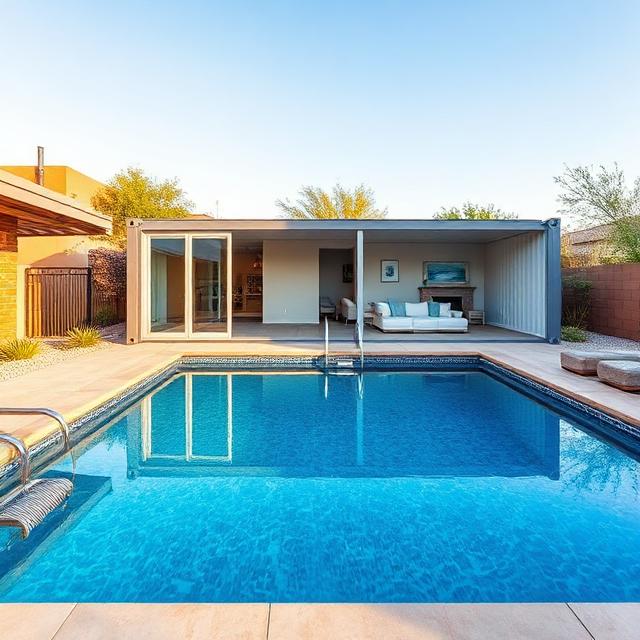
Owning a shipping container pool is a genuinely rewarding experience, but like any pool, it requires regular maintenance to stay clean, safe, and beautiful. The good news is that container pools are not dramatically more complicated to maintain than traditional pools. The main areas of attention are water chemistry, the filtration system, and the integrity of the container itself.
AM Shipping Containers helps buyers start their pool journey with a quality unit, which means less structural maintenance worry right from the start.
Water Chemistry Basics
Keeping your water chemistry balanced is the foundation of good pool maintenance. You will need to test the water regularly for pH levels, chlorine concentration, alkalinity, and calcium hardness. Most pool supply stores sell straightforward test kits that make weekly testing quick and easy.
A pH range of 7.2 to 7.8 is generally considered the sweet spot. Water that is too acidic can cause eye irritation for swimmers and can also potentially affect the waterproof coating inside a container pool over time. Water that is too alkaline leads to cloudy water and reduced effectiveness of chlorine sanitization.
Filtration System Maintenance
Your pump and filter system does the heavy lifting when it comes to keeping the water clear. Running the pump for an appropriate number of hours each day, cleaning or backwashing the filter regularly, and checking that all connections remain tight and leak free are all routine tasks that become second nature quickly.
Investing in a quality filtration system from the start pays off considerably in reduced maintenance effort and fewer water quality problems over the years.
Exterior and Structural Inspection
One aspect of container pool maintenance that differs from traditional pool ownership is periodic inspection of the container itself. The exterior steel should be checked annually for any areas where paint or protective coating has worn through to expose bare metal. Touching up these areas promptly prevents surface rust from becoming a larger problem over time.
Any shipping container for sale from AM Shipping Containers starts in good structural condition, which means your maintenance starting point is already much better than it would be with a lower quality unit purchased elsewhere.
Winterizing Your Container Pool
If you live in a climate where freezing temperatures are a winter reality, properly winterizing your container pool at the end of the swimming season protects both the water systems and the container structure itself. Draining the filtration plumbing, adding winterizing chemicals to the water if you leave any water in the pool, and covering the pool to keep debris out are all important steps.
Some container pool owners choose to keep the pool heated and open year round by investing in quality insulation and a reliable heating system. This approach works well in mild climates but is less practical where winters are genuinely harsh.
Interior Coating Inspection
The waterproof coating or liner inside the container is what keeps thousands of gallons of water from coming into contact with the bare steel beneath. Inspecting this coating or liner at least once a year for any signs of peeling, lifting, or cracking is important. Addressing small issues promptly prevents them from becoming large, expensive repairs.
Conclusion
Maintaining a shipping container pool is very manageable when you establish good habits from the beginning and address small issues before they escalate. Starting with a quality container from AM Shipping Containers means your structural foundation is solid, which makes the ongoing maintenance experience considerably more straightforward and enjoyable throughout the years ahead.