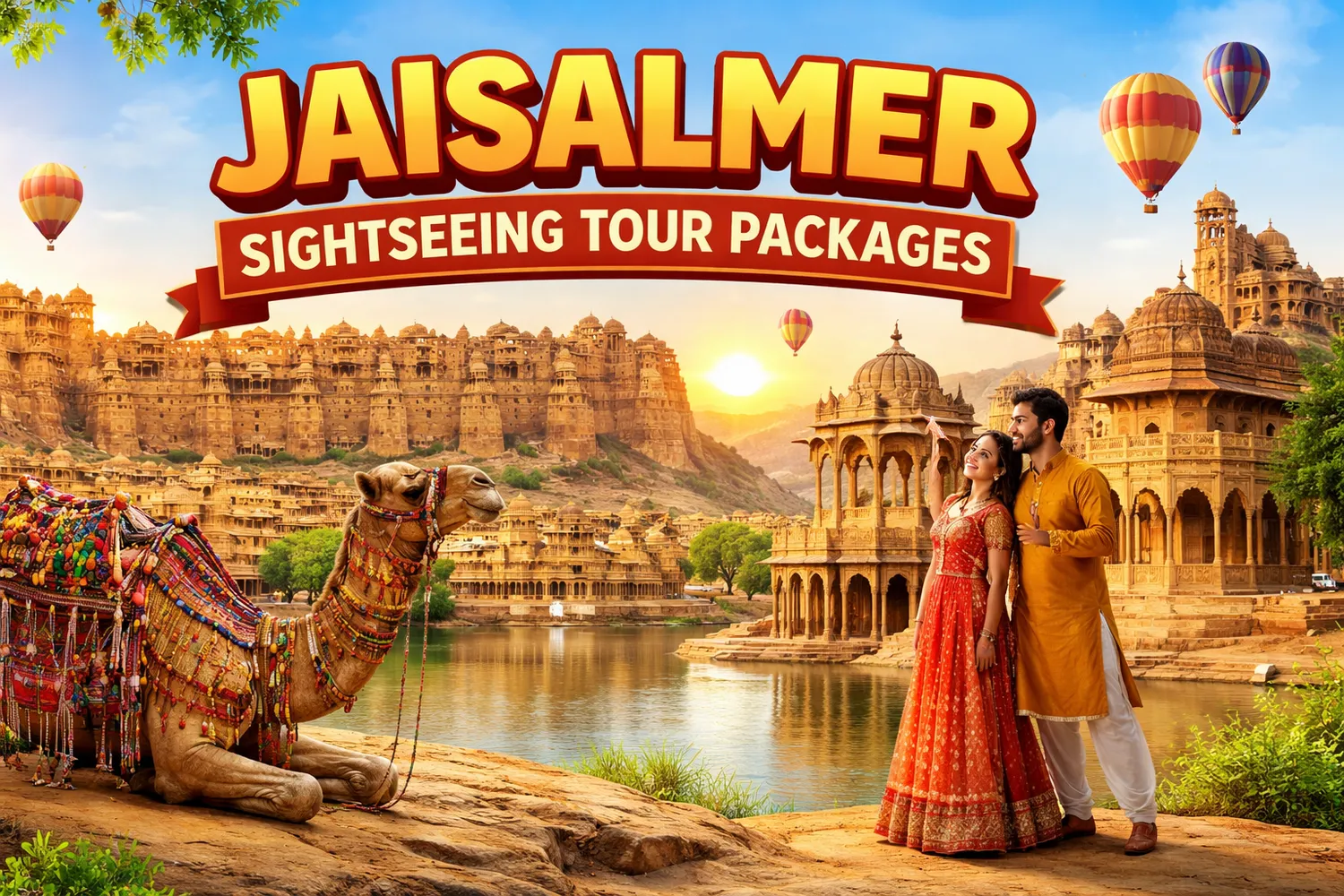
Jaisalmer, famously known as the "Golden City," stands as a breathtaking gateway to the Thar Desert. Its honey-hued sandstone architecture, sprawling forts, and rolling dunes create a landscape that feels like a scene from a historical epic. For travelers seeking an authentic Rajasthani experience, Jaisalmer offers a perfect blend of adventure, culture, and royal history. Whether you are exploring the narrow alleys of a living fort or watching the sunset over the desert, the city promises memories that last a lifetime.
The Majestic Jaisalmer Fort
Unlike most forts in India that serve as museums, Jaisalmer Fort is a "living fort." Nearly one-fourth of the city's population still resides within its massive walls. Built in 1156 AD by Rawal Jaisal, this UNESCO World Heritage site is famous for its yellow sandstone structure that glows brilliantly under the sun, earning it the nickname "Sonar Quila" or the Golden Fort.
Inside, you will find a labyrinth of narrow winding lanes, vibrant markets, and ancient temples. The Raj Mahal (Royal Palace) and the intricately carved Jain Temples are must-visit spots within the fort. Walking through these streets allows you to witness the daily lives of locals who have lived here for generations. To ensure you don't miss the historical nuances, many travelers opt for jaisalmer sightseeing tour packages which provide guided access to the fort's hidden corners and professional storytelling about its legendary past.
Architectural Wonders: The Havelis
Jaisalmer is renowned for its grand havelis—elaborate mansions built by wealthy merchants in the 18th and 19th centuries. The Patwon Ki Haveli is the most significant, consisting of a cluster of five small havelis featuring incredibly fine carvings and gold-colored lace-like stone work. Other notable structures include the Salim Singh Ki Haveli, known for its unique peacock-shaped brackets, and the Nathmal Ji Ki Haveli, which showcases a fascinating symmetry created by two architect brothers.
These architectural gems reflect the prosperity Jaisalmer once enjoyed as a major trading post on the Silk Road. The craftsmanship found on the balconies and windows (jharokhas) is a testament to the skill of the local artisans. Exploring these mansions gives you a deep insight into the luxurious lifestyle of the medieval merchant class in Rajasthan.
The Desert Experience: Sam and Khuri Dunes
No trip to the Golden City is complete without venturing into the Thar Desert. The Sam Sand Dunes, located about 40 kilometers from the city, are the most popular spot for desert activities. Here, you can experience the thrill of a camel safari as you ride across the shifting sands. For those seeking more adrenaline, jeep safaris and dune bashing in 4x4 vehicles offer a high-speed way to explore the terrain.
If you prefer a quieter, more secluded experience, the Khuri Sand Dunes provide a peaceful alternative to the bustling crowds at Sam. Both locations offer desert camping, where you can stay in luxury Swiss tents under a starlit sky. Evenings in the desert are typically filled with traditional folk music, Kalbelia dance performances, and authentic Rajasthani dinners around a bonfire. For those planning a multi-city Rajasthan trip, beginning your journey in the city of lakes is a great idea; you can easily book a taxi service in udaipur to reach Jaisalmer comfortably while enjoying the scenic desert highways.
Sacred Waters and Silent Ruins
A short distance from the city center lies Gadisar Lake, a man-made reservoir built in the 14th century. Surrounded by artistically carved shrines and ghats, it was once the only water source for the city. Today, it is a serene spot for boating, especially during the early morning or sunset when the golden light reflects off the water. The entrance to the lake is through the magnificent Tilon Ki Pol, a beautifully carved yellow sandstone gateway.
For a touch of mystery, visit the abandoned village of Kuldhara. Legend has it that the entire population of the village vanished overnight centuries ago to escape the oppression of a local ruler, leaving behind a curse that prevents anyone from resettling there. Walking through the silent, crumbling ruins of Kuldhara provides a hauntingly beautiful contrast to the lively atmosphere of Jaisalmer’s markets.
Cultural Immersion and Practical Tips
Jaisalmer is a hub for traditional crafts. While wandering through Sadar Bazar or Manak Chowk, you can shop for exquisite leather goods, hand-woven textiles, and silver jewelry. If your visit aligns with the months of January or February, you might witness the Jaisalmer Desert Festival, a vibrant celebration featuring camel races, turban-tying competitions, and folk performances that showcase the best of Thar culture.
When planning your journey, Atlas India Travel recommends visiting between October and March to avoid the intense summer heat. The winter months offer pleasant daytime temperatures, making it ideal for outdoor exploration. Always carry a scarf or hat for protection against the desert sun and stay hydrated. Whether you are a history buff, a photography enthusiast, or an adventure seeker, Jaisalmer offers a unique landscape that truly embodies the spirit of Rajasthan.