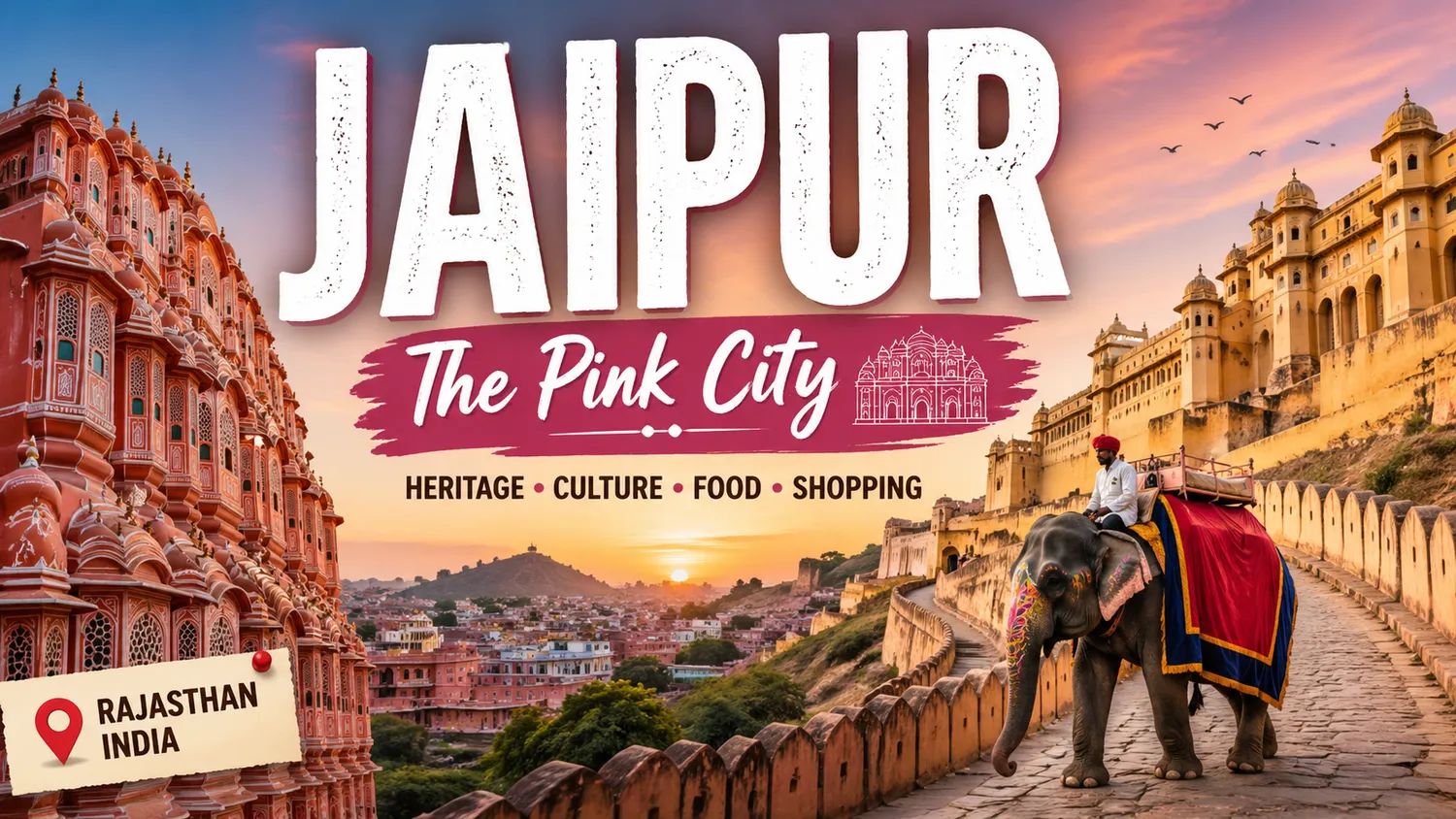
Jaipur, the capital of Rajasthan, is a city where the past and present coexist in a vibrant display of color and architectural brilliance. Known globally as the "Pink City" due to the distinct terracotta hue of its buildings, Jaipur offers a rich tapestry of royal history, bustling bazaars, and majestic forts. Whether you are a history enthusiast, a photographer, or a shopper, this desert jewel provides an unforgettable experience of Indian royalty.
The Regal Splendor of Amber Fort
The crowning glory of Jaipur’s architectural heritage is the Amber Fort, located high on a hill in the town of Amer. Built by Raja Man Singh I, this UNESCO World Heritage site is a stunning blend of Hindu and Mughal styles. As you ascend the fort, the intricate carvings on the Ganesh Pol and the shimmering glasswork of the Sheesh Mahal (Mirror Palace) transport you back to the era of the Maharajas. The Maota Lake at the foot of the fort reflects the golden sandstone walls, creating a picturesque setting that is best explored in the early morning hours.
Hawa Mahal and the City Palace
In the heart of the old city stands the Hawa Mahal, or the Palace of Winds. This five-story facade with its 953 small windows, known as jharokhas, was designed to allow royal ladies to observe street festivities without being seen by the public. Its unique honeycomb structure remains an iconic symbol of Jaipur. Just a short walk away is the City Palace complex, which continues to be the residence of the royal family. The palace houses museums displaying royal costumes and weaponry, and the famous Peacock Gate in the Pritam Niwas Chowk is a masterpiece of craftsmanship that draws visitors from across the globe.
Navigating the Pink City with Ease
Exploring the vast distances between these heritage sites requires reliable transportation. To make the most of your journey, booking a jaipur sightseeing taxi service ensures that you can move between the forts and palaces comfortably while avoiding the heat and local traffic. Atlas India Travel specializes in providing these specialized tours, allowing visitors to customize their itineraries according to their interests. Professional drivers often act as informal guides, sharing local anecdotes that you won't find in standard guidebooks.
The Astronomical Wonders of Jantar Mantar
Adjacent to the City Palace is Jantar Mantar, an astronomical observatory built by Maharaja Sawai Jai Singh II. This site features nineteen architectural astronomical instruments, including the world’s largest stone sundial. It is a testament to the scientific prowess of 18th-century India. The precision with which these structures can still calculate time and track celestial bodies is astounding. Walking through this forest of geometric shapes feels like stepping into a giant, open-air laboratory where ancient science meets artistic design.
Vibrant Markets and Traditional Crafts
No visit to Jaipur is complete without diving into its world-famous markets. Johari Bazar is the go-to destination for exquisite jewelry and precious gemstones, while Bapu Bazar is renowned for its leather products and traditional "Mojari" footwear. For those interested in textiles, the city is a hub for block printing and Bandhani (tie-dye) fabrics. These markets are sensory overloads of bright colors, the aroma of local street food, and the sounds of artisans at work. Supporting these local craftsmen is a wonderful way to take a piece of Rajasthani culture back home with you.
Expanding Your Rajasthan Itinerary
While Jaipur is a major highlight of the Golden Triangle, many travelers choose to extend their journey deeper into the desert state. If you are planning to visit the romantic lakeside settings of Southern Rajasthan after your time in the Pink City, consulting a reputable travel agency in udaipur can help streamline your logistics. Atlas India Travel offers comprehensive packages that connect these iconic cities, ensuring a seamless transition from the rugged forts of the north to the serene palaces of the south.
The Serenity of Jal Mahal and Galtaji
For a break from the city's hustle, a stop at Jal Mahal (Water Palace) is essential. Situated in the middle of Man Sagar Lake, the palace appears to float on the water. While the interior is not open to the public, the promenade offers a peaceful view, especially at sunset. Another hidden gem is the Galtaji Temple, often called the Monkey Temple. Nestled between mountain passes, this ancient Hindu pilgrimage site features natural springs and sacred kunds (tanks) where devotees bathe. The rugged landscape and the presence of playful macaques make it a unique spiritual and natural retreat.
Practical Tips for Your Jaipur Visit
The best time to visit Jaipur is during the cooler months from October to March. During this period, the weather is pleasant for outdoor exploration and attending various cultural festivals like the Jaipur Literature Festival. Always carry a hat and sunscreen, and be prepared to haggle in the markets to get the best prices for souvenirs. By choosing a dedicated partner like Atlas India Travel, you ensure a high standard of service and a deep dive into the authentic heritage of Rajasthan. Jaipur is more than just a destination; it is an experience that lingers in the heart long after the journey ends.