Scars on the upper lip can be difficult to hide, especially when they interrupt natural mustache growth. Mustache Hair Transplant in Dubai can be considered for people who have lost mustache hair because of burns, injuries, surgery, or other localized scarring. By placing carefully selected hair follicles into the scarred area, a transplant may restore hair coverage and make the scar less noticeable. However, scar tissue behaves differently from healthy skin, so the success of treatment depends heavily on scar maturity, blood supply, tissue quality, donor hair, and surgical technique.
Can a Mustache Hair Transplant Cover Facial Scars?
Yes, a mustache hair transplant can potentially cover areas of facial scarring where natural hair follicles have been permanently damaged. Facial hair restoration has been used to reconstruct beard and mustache areas affected by hair-density deficits, including scarring. Medical literature also describes hair transplantation as an option for selected facial scars when the recipient tissue is suitable.
The basic principle is straightforward. Hair follicles are usually taken from a donor area with suitable hair characteristics and transplanted into tiny recipient sites created within or around the scar. Once successfully established, the follicles can grow hair that blends with the surrounding mustache.
However, a transplant does not technically erase the scar. Instead, the new hair can provide scar coverage and reduce the visual contrast between the scarred and normal skin. This distinction is important when setting realistic expectations.
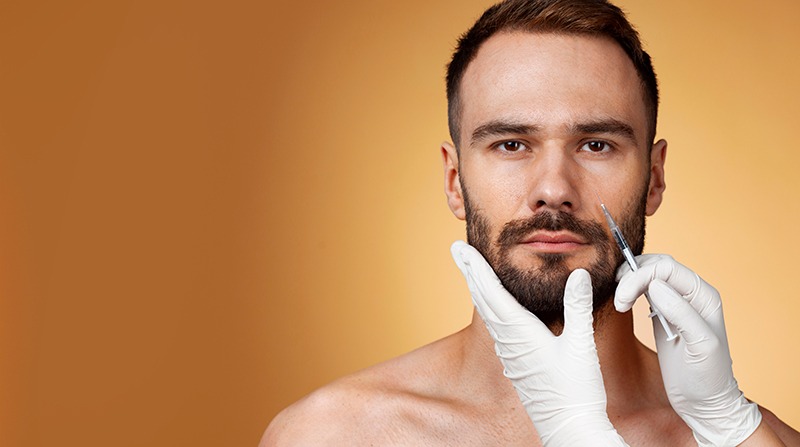
Why Scar Tissue Makes Mustache Transplantation More Challenging
Healthy skin generally provides a more favorable environment for transplanted follicles. Scar tissue, by comparison, may have altered structure, reduced elasticity, fibrosis, and poorer blood supply. These differences can make it harder for transplanted grafts to establish themselves.
Research involving burn-related facial scarring has specifically noted that poorly vascularized and fibrotic scar tissue can reduce graft viability. In one study involving beard-area burn scars, FUE transplantation combined with nanofat treatment produced reported follicular-unit survival rates ranging from 77.4% to 87.9%.
Another study involving post-burn scar alopecia affecting facial areas, including the mustache and beard, reported successful transplantation following preparatory treatments, with mean follicular-unit survival of approximately 85%.
These findings are encouraging, but they should not be interpreted as a guarantee for every patient. Scar thickness, age, location, vascularity, and the extent of follicle destruction can all influence the outcome.
Which Scars May Be Suitable for Facial Hair Restoration?
Not every scar is automatically appropriate for transplantation. A qualified specialist normally evaluates the scar and surrounding tissue before deciding whether grafts can be placed safely and effectively.
Potentially suitable situations may include:
- Mature burn scars that have caused permanent mustache hair loss
- Surgical scars crossing the mustache region
- Injury-related scars with localized hair loss
- Small areas of stable traumatic scarring
- Scars where the surrounding skin has adequate thickness and blood supply
The facial hair restoration approach may be particularly useful when the scar has already stabilized and the main concern is missing hair rather than an actively changing skin condition.
Scar maturity matters because recently formed scars may still be changing in color, thickness, flexibility, and vascularity. Literature on burn-scar transplantation recommends waiting until scars are mature, pale, soft, flat, and sufficiently supple before attempting hair restoration.
How Does a Mustache Hair Transplant Treat Scarred Areas?
A mustache transplant for scar coverage generally follows the same fundamental principles as other facial hair restoration procedures, but the recipient area requires additional planning.
The process commonly involves several stages:
1. Scar and Hair Assessment
The treatment area is examined to determine the size, depth, texture, and condition of the scar. The specialist also evaluates available donor follicles and the natural direction of existing mustache hair.
2. Donor Hair Selection
Hair follicles are selected from an appropriate donor region. For facial restoration, choosing follicles that can create a natural-looking texture and thickness is particularly important.
3. Graft Preparation
Individual follicular units are carefully prepared for placement. Facial hair restoration literature emphasizes the importance of appropriately prepared one- and two-hair grafts, small recipient sites, and accurate angulation for natural-looking results.
4. Recipient-Site Creation
Tiny openings are created in the scarred region according to the planned direction and angle of the mustache. This stage can be more technically demanding because scar tissue may not respond like normal skin.
5. Graft Placement
The prepared follicles are inserted into the recipient sites. Their position, angle, spacing, and direction are planned to blend with existing mustache hairs rather than appearing as isolated transplanted follicles.
The goal is not simply to place as many grafts as possible. Natural facial hair depends heavily on direction and distribution, so careful placement can be just as important as graft quantity.
What Results Can You Expect From Mustache Scar Coverage?
The expected result depends on how well the transplanted follicles survive and how closely the new hair matches the surrounding mustache. When successful, transplanted follicles can grow hair within the previously scarred area and make the scar considerably less obvious.
A case report involving facial scar management described hair transplantation as a potential solution for restoring hair in a scarred facial region, with visible improvement reported after treatment.
Still, expectations should remain realistic. Scar tissue can produce less predictable graft survival than healthy recipient skin. A systematic review of hair transplantation for primary scarring alopecia found encouraging outcomes in some patients but also emphasized the limited quality and quantity of available evidence.
For someone considering Mustache Hair Transplant in Dubai, an individualized assessment is therefore more useful than relying on a fixed percentage of expected growth.
Some people may achieve sufficient coverage after one procedure, while others may need additional sessions to increase density or improve blending. The condition and size of the scar are major factors in determining the likely treatment plan.
Factors That Influence Transplant Success on a Scar
Several factors can affect whether transplanted mustache follicles successfully establish themselves.
Scar Maturity
A mature scar is generally more suitable than an actively changing scar. Performing transplantation too early may compromise the recipient environment.
Blood Supply
Adequate circulation is essential because transplanted follicles require nutrients and oxygen while establishing themselves. Scar tissue with poor vascularity can therefore present an additional challenge.
Scar Thickness and Texture
Very dense, fibrotic, or deeply damaged scars may be harder to transplant than softer scars with better underlying tissue.
Donor Hair Quality
The available donor follicles need to provide enough suitable grafts for the affected area. Donor availability is an important consideration in facial hair reconstruction.
Surgical Technique
The direction and angle of facial hair are highly visible. Modern facial transplantation techniques emphasize precise recipient-site placement and careful graft preparation to achieve a natural appearance.
Patient Expectations
A transplant can add hair to a scarred region, but it cannot guarantee complete scar removal or perfectly uniform density. Understanding this difference helps patients make informed decisions.
Is FUE Suitable for Mustache Scar Coverage?
Follicular Unit Extraction, commonly called FUE, is frequently used for facial hair transplantation. In FUE, individual follicular units are extracted from the donor area and placed into the recipient region.
For scar coverage, FUE can offer precise placement because individual grafts can be distributed according to the shape of the scar and the surrounding mustache pattern. Beard and mustache reconstruction literature identifies FUE as one of the established approaches for harvesting grafts for facial restoration.
However, the technique itself does not eliminate the challenges associated with scar tissue. The condition of the recipient site remains a major factor. In some cases, specialists may consider preparatory approaches to improve the scar environment before transplantation, depending on the type and severity of scarring. Studies involving post-burn facial scars have investigated combinations of scar-conditioning treatments with FUE, with encouraging results.
How to Decide if You Are a Good Candidate
A consultation is essential because scar coverage is not simply a matter of transplanting follicles into any hairless patch.
A specialist may consider:
- How long ago the injury or surgery occurred
- Whether the scar has fully matured
- Whether the scar is flat, raised, depressed, or fibrotic
- The amount and quality of available donor hair
- The size and location of the hairless area
- The blood supply and thickness of the recipient tissue
- Whether the surrounding mustache has sufficient density for natural blending
If the scar is still inflamed, changing, painful, or otherwise unstable, transplantation may not be appropriate until the underlying issue has been assessed and controlled. Evidence from scarring-alopecia research also highlights the importance of ensuring that active scarring conditions are controlled before transplantation.
Conclusion: Can a Mustache Transplant Hide a Scar?
A mustache hair transplant can work for scar coverage in carefully selected cases. It can restore hair to areas where trauma, burns, or surgery have permanently destroyed facial follicles, potentially making the scar much less noticeable. Published research and case reports support the use of hair transplantation for selected facial scars, although graft survival can be less predictable when follicles are placed into fibrotic or poorly vascularized tissue.
For people exploring Mustache Hair Transplant in Dubai, the most important step is an individualized evaluation of the scar and donor area rather than assuming every scar will respond in the same way. A specialist can determine whether the tissue is suitable, how much coverage may be achievable, and whether additional preparation or sessions could be beneficial.
Ultimately, Mustache Hair Transplant Treatment may provide a practical way to restore hair over a mature facial scar when the recipient tissue and donor supply are appropriate. The best results come from realistic expectations, careful planning, and precise placement designed around the natural direction of the existing mustache.