When people explore modern skin-tightening treatments, they often come across two terms: Morpheus8 Treatment Dubai and radiofrequency (RF) treatment. Because Morpheus8 itself uses radiofrequency energy, it is easy to assume that both treatments are essentially the same. However, there are important differences in how the technology is delivered, how deeply it works, and the type of skin concerns it is designed to address.
Understanding these differences can make it easier to determine which treatment approach may be more suitable for your individual skin goals.
What Is Radiofrequency Treatment?
Radiofrequency, commonly known as RF, is an aesthetic technology that uses electromagnetic energy to generate controlled heat within the skin and underlying tissues. This controlled heating can encourage collagen remodeling and help improve the appearance of mild skin laxity and other signs of ageing.
RF treatments can be delivered in different ways. Some systems use an applicator that remains on the surface of the skin, while others use minimally invasive or specialized delivery methods. The exact depth, intensity, and purpose therefore depend on the particular RF device being used.
Non-invasive RF, for example, generally delivers energy through an external applicator without needles. The heat works within the targeted tissue while the skin remains intact.
Because "RF treatment" describes a broad category rather than one specific procedure, different RF technologies can produce different treatment experiences and results.
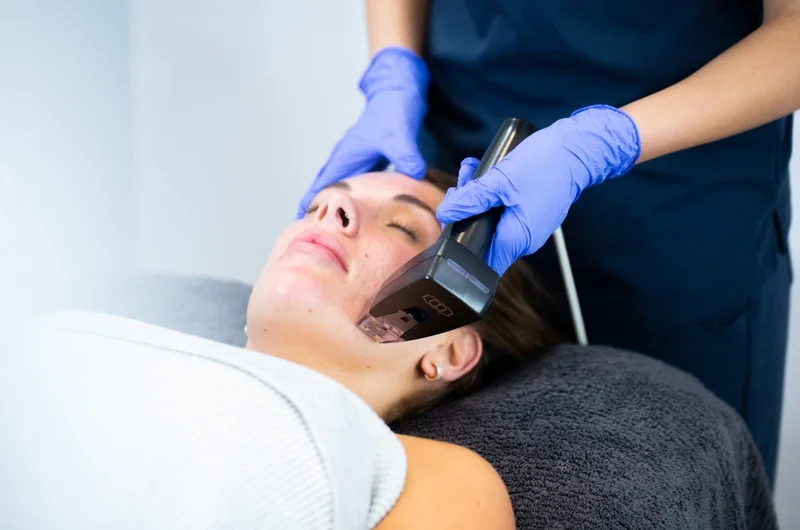
What Is Morpheus8 Treatment?
Morpheus8 is a form of fractional radiofrequency microneedling. Instead of relying solely on an external applicator, it uses tiny needles to reach targeted depths within the skin before delivering RF energy.
This combination of microneedling and radiofrequency allows energy to be deposited at controlled depths. Morpheus8 systems can use adjustable penetration depths and different needle configurations depending on the treatment area and desired outcome.
The technology is designed to address the skin at both dermal and, depending on the device and treatment protocol, subdermal levels. This makes it different from conventional surface-based RF treatments.
The Main Difference: How the Energy Is Delivered
The biggest distinction between traditional RF and Morpheus8 is the method used to deliver energy.
With many conventional RF treatments, an applicator is placed against the surface of the skin. Radiofrequency energy then creates controlled heating within the targeted tissue.
Morpheus8 takes a more targeted approach. Its microneedles penetrate the skin to a predetermined depth, allowing RF energy to be delivered directly into the tissue. The combination can create controlled thermal zones while the microneedling component also contributes to skin remodeling.
In simple terms:
Traditional RF: Primarily uses an external applicator to deliver controlled heat.
Morpheus8: Combines microneedling with fractional RF energy delivered through needles.
Traditional RF: Often focuses on heating and tightening tissue without intentionally creating microchannels.
Morpheus8: Combines controlled needle penetration with RF heating to target specific tissue depths.
This difference in delivery is one of the main reasons Morpheus8 is often considered a more targeted form of RF technology.
Morpheus8 Offers Adjustable Treatment Depths
Another important distinction is treatment depth.
Morpheus8 uses interchangeable needle tips and adjustable settings, allowing treatment parameters to be adapted to different areas of the face or body. The technology has been developed for fractional treatment at different tissue levels.
This versatility can be particularly useful when treating areas with different thicknesses of skin or different aesthetic concerns.
For example, the treatment approach for delicate facial skin may differ from that used on larger body areas. A qualified practitioner can select appropriate settings according to the treatment area, skin characteristics, and individual goals.
How Do the Treatments Affect Collagen?
Both RF and Morpheus8 can use controlled thermal energy to encourage collagen remodeling.
Collagen is an important structural protein that helps maintain skin firmness, elasticity, and smoothness. As natural collagen production declines with age, skin can gradually become less firm and develop fine lines and uneven texture.
RF-based treatments use controlled heat to stimulate tissue responses associated with collagen remodeling. Morpheus8 adds the microneedling component, creating controlled micro-injuries while delivering RF energy at targeted depths.
Research discussing fractional RF microneedling describes its potential for addressing concerns such as skin laxity, texture changes, wrinkles, and acne scarring.
Which Skin Concerns Can They Address?
Both approaches can be used for skin rejuvenation, but their applications can differ depending on the specific device and treatment protocol.
RF treatments may be considered for concerns such as:
Mild skin laxity
Loss of firmness
Early signs of ageing
General skin rejuvenation
Improving the appearance of loose or crepey skin
Morpheus8 may be considered when a more targeted approach is desired for concerns such as:
Skin laxity
Fine lines and wrinkles
Uneven skin texture
Acne scars
Enlarged-looking pores
Certain areas of body skin laxity
Morpheus8 can also be used on selected body areas with appropriate treatment settings. Manufacturer information describes fractional RF applications for both facial and body treatment.
Is Morpheus8 Better Than RF?
There is no universal answer to whether Morpheus8 is better than RF. The more useful question is which technology is better suited to a person's particular skin condition and treatment goals.
Someone seeking a non-invasive approach to general skin tightening may be a candidate for conventional RF. Someone looking for a treatment that combines microneedling with controlled RF energy at specific depths may consider Morpheus8.
The choice can also depend on the treatment area, degree of skin laxity, skin type, previous procedures, and desired downtime.
A professional assessment is important because "RF" includes many different technologies, and their energy delivery methods can vary significantly.
Why Is Morpheus8 Popular in Dubai?
Dubai has become a popular destination for advanced aesthetic treatments, with people increasingly interested in procedures that offer skin rejuvenation without traditional surgery.
Morpheus8 Treatment Dubai is often considered by individuals who want to address skin texture and firmness while using a minimally invasive technology. Its combination of microneedling and fractional RF allows practitioners to customize treatment according to different areas and skin concerns.
However, treatment suitability should always be determined following an individual assessment rather than simply choosing a procedure because it is currently popular.
What Should You Consider Before Treatment?
Before choosing between Morpheus8 and another RF procedure, consider:
What specific skin concern do you want to improve?
Is your main goal tightening, texture improvement, or overall rejuvenation?
Do you prefer a non-invasive treatment or are you comfortable with microneedling?
Which area of the face or body will be treated?
What level of recovery are you comfortable with?
Has your skin reacted to energy-based treatments in the past?
These factors can help a qualified practitioner determine which technology and treatment settings may be appropriate.
Final Thoughts
Morpheus8 and RF are closely related because both rely on radiofrequency energy, but they are not identical treatments. Conventional RF can deliver controlled heat through an external applicator, while Morpheus8 combines microneedling with fractional RF delivered at adjustable tissue depths.
The difference is primarily in how the energy reaches the tissue and how the treatment is customized. For people considering Morpheus8 Treatment Dubai, understanding this distinction can help them have a more informed conversation with a qualified aesthetic professional.
Rather than focusing solely on the name of a treatment, it is best to consider the technology, treatment depth, skin concern, and individual requirements. A personalized assessment can help determine whether Morpheus8 or another RF approach is the most suitable option.