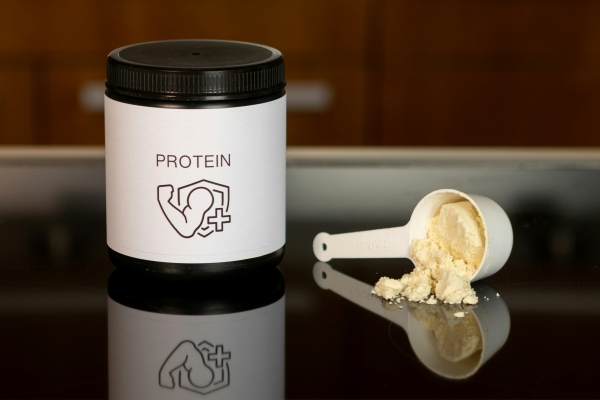
So, we all want to look a bit more youthful, improve our physical gains, enhance our energy reserves, and improve the overall health of our gut biome, right? But let’s be honest for one moment. We live stressful lives, and for many of us, the investment in supplements is the only viable way to keep our health in check and benefit from the internal resources to successfully complete daily activities.
Why should you invest in a probiotic collagen protein powder? Personally, I think a three-in-one product is one of the most intelligent ways to spend your hard-earned money. Are you trying to improve your physique and you find it hard to hit your daily protein target via nutrition alone? If so, a couple of protein powder scoops per day can be a quick and cost-effective way to fulfil your body’s protein requirements, without cooking.
Protein powder provides amino acids, which your body can utilise for muscle repair. It’s a fast and convenient way to supplement your daily nutritional intake, and it is a great choice if you find it hard to eat large quantities of meat or protein-rich vegetables every single day, and you want a helping hand. But, if you’re going for a protein powder, wouldn’t it also make sense to choose a product that’s rich in collagen and features gut-friendly probiotics?
Are There Genuine Benefits to a Three-in-One Product?
Yes, countless of them in fact. A high-quality probiotic collagen protein powder will provide you with multi-collagen peptides, amino acids, plus proteins, and spore-based probiotics in one single scoop. The collagen will support the health of your hair, skin, joints, and connective tissue, the protein powder will aid with recovery after gym sessions, while the probiotics will be helpful for maintaining optimum digestion.
Instead of going for three separate products, you could purchase a protein powder that will bring the same level of benefits in one single scoop. In fact, this is the reason why I’ve chosen a probiotic collagen protein mix for my personal after-workout supplementation. Why exactly would I pay extra for collagen and probiotics when I can just go for a protein powder that makes use of both?
I am over thirty now, and I am aware that the body’s natural collagen levels decrease with age. Plus, I suffer from ulcerative colitis, and therefore probiotics, for me, are something like my second nature. Finding a probiotic collagen protein powder represented a convenient way to protect my gut, my joints and skin health, and also provide a boost to my muscle gains. But, most importantly, it was also a more cost-effective purchase than going for three separate products, which, ultimately, will have the same effect.
Do You Really Need Collagen?
Yes, but the effects of collagen supplementation are moderate, and will be dependent on your age, diet and dosage. Collagen is a fibrous protein made of amino acids such as glycine and hydroxyproline, which is found in pretty much all the internal structures of your body, from blood vessels and bones to ligaments and skin. Without collagen, the internal structure of your body can become unstable and might begin to tear, as it will lose flexibility.
Your body’s production of collagen naturally starts decreasing as you age, but the process can also be accelerated by prolonged UV exposure, smoking, poor nutrition, or intensive training. Collagen peptides can:
- Improve skin elasticity after just a few weeks of use
- Positively impact joint health
- Provide ligament support and aid with post-injury protocols
- Support bone mineral density, especially in older adults
Who Benefits the Most from Collagen Supplementation?
In general, collagen is useful for pretty much anyone. Since it’s the most abundant protein in the human body, and it acts as the most important structural block of your connective tissue matrix, collagen has a key role in maintaining the structure and strength of your skin, muscles and bones. It accounts for around 30% of your body’s total protein levels, and supplementation with it is, in almost all cases, a good idea.
While a diet rich in high-quality proteins, Vitamin C and Zinc helps the body produce its own collagen, supplementation can be a good idea if:
- You are over the age of 35
- You suffer from early osteoarthritis
- You are involved in high-intensity exercise routines
- You have strict dietary restrictions and your daily protein intake is low
Collagen can help with aging skin, it can be a useful supplement after a certain age, and it’s more than recommended for athletes who want to preserve the health of their connective tissue. Now, is it a wonder protein that can prevent or cure long-term ailments and improve cognitive and physical performance in pretty much all scenarios? No. However, it can help with blood clotting, it contributes to the growth of new cells, and for women, it can be necessary for postpartum recovery.
What About Probiotics?
Pore-forming probiotics activate in the small intestine; they have no problem surviving stomach acid while in their dormant form, and when they reach the gut, they can support enzyme activity, improve the breakdown of food, help regulate the activity of the intestinal tract and also aid with nutrient absorption.
High-quality probiotics improve the integrity of the intestinal barrier, and they can even have an effect on the regulation of mood or improve cognitive function in Alzheimer’s disease. Why should you consider investing in a probiotic collagen-rich supplement with added probiotics? It’s simply a more effective way to collect benefits for your gut health and digestion.
Protein powders fortified with collagen and probiotics can, in some cases, cost more than conventional protein-rich supplements, such as pasteurised egg whites. That said, they are worth considering if you are experiencing frequent digestive issues, you want to support your intestinal lining integrity, and you are also likely to see benefits from collagen supplementation. Going for a three-in-one product will be more cost-friendly than purchasing protein powders, collagen supplements and probiotics separately. Plus, a probiotic collagen protein powder will also be significantly more convenient.