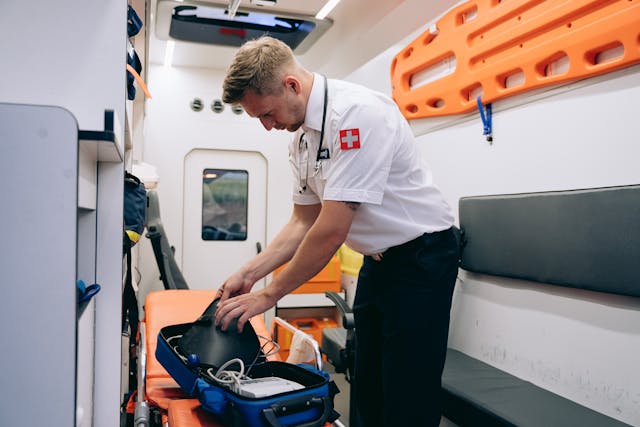
Hospital security is often associated with main entrances, emergency departments, and patient wards, but one of the most overlooked yet high-risk areas is the ambulance bay. This space serves as a direct entry point for patients arriving in urgent or critical condition, often accompanied by first responders, medical personnel, and sometimes law enforcement. In these fast-paced situations, there is little time for traditional screening, which can create vulnerabilities.
An ambulance bay weapons detection system is designed specifically to address this challenge. It provides a layer of protection that works seamlessly within emergency workflows, allowing hospitals to maintain rapid patient intake while still identifying potential threats before they enter the facility. The goal is not to slow down care, but to enhance safety without disrupting life-saving operations.
The Unique Risk Profile of Ambulance Bays
Unlike controlled entrances where visitors can be screened through standard check-in processes, ambulance bays operate under entirely different conditions. Patients arrive unexpectedly, often in distress, and require immediate medical attention. The urgency of these situations means that security checks must be quick, non-intrusive, and highly reliable.
At the same time, the nature of emergency cases can introduce unpredictable risks. Patients or accompanying individuals may carry concealed items, whether intentionally or unknowingly. In high-stress scenarios, tensions can escalate quickly, making it essential to have systems in place that can identify potential threats without adding delays.
How Weapons Detection Systems Fit Into Emergency Workflows
An effective ambulance bay weapons detection system is designed to integrate into the natural flow of emergency operations. Instead of requiring individuals to stop for manual screening, these systems are often positioned in a way that allows continuous movement through the entry point.
As stretchers, personnel, and accompanying individuals pass through the designated area, the system scans for potential threats in real time. If a suspicious item is detected, security personnel are alerted immediately, allowing for a controlled and focused response. This approach ensures that only flagged cases require additional attention, while the majority of patients continue through the process without interruption.
Balancing Speed and Security
One of the most important challenges in ambulance bay security is maintaining the balance between speed and protection. In emergency medicine, every second counts, and any delay in patient care can have serious consequences.
Weapons detection systems used in these environments are designed with this reality in mind. They operate quickly and unobtrusively, allowing medical teams to focus on patient care while still maintaining a level of security oversight. This balance is essential for ensuring that safety measures do not interfere with critical medical procedures.
Supporting Staff Safety in High-Stress Situations
Healthcare workers in emergency departments often face unpredictable and high-pressure situations. The presence of a weapons detection system adds an additional layer of protection, helping to identify potential risks before they reach patient care areas.
This contributes to a safer working environment for doctors, nurses, and support staff who must remain focused on providing care under demanding conditions. Knowing that screening is taking place at entry points can provide an added sense of security for those on the front lines.
Enhancing Situational Awareness for Security Teams
Real-time alerts are a key feature of modern weapons detection systems. When a potential threat is identified, security personnel receive immediate notification, allowing them to respond quickly and appropriately.
This level of awareness is critical in ambulance bay settings, where situations can change rapidly. By having access to timely and accurate information, security teams can take action without causing unnecessary disruption to medical operations.
Integration with Hospital Security Infrastructure
Ambulance bay weapons detection system are most effective when integrated with the broader hospital security framework. This may include surveillance cameras, access control systems, and communication networks that work together to provide a comprehensive view of activity within the facility.
When integrated, these systems allow for better coordination between security personnel and medical staff. If a threat is detected, the response can be managed in a way that prioritizes both safety and patient care.
Maintaining a Non-Intrusive Environment
Hospitals are environments where compassion and care must remain the priority. Security measures, while necessary, should not create unnecessary stress or discomfort for patients and their families.
Weapons detection systems designed for ambulance bays are built to be as unobtrusive as possible. They operate in the background, allowing patients to receive care without feeling subjected to intrusive screening processes. This helps maintain the dignity and comfort of those entering the facility during vulnerable moments.
Preparing for a Range of Scenarios
Emergency departments must be prepared for a wide range of situations, from routine medical cases to high-risk incidents. Having a weapons detection system in place ensures that the facility is better equipped to handle unexpected threats without compromising care delivery.
Preparation is not about expecting the worst but about being ready for any possibility. By incorporating advanced screening technology into critical entry points, hospitals strengthen their ability to respond effectively under any circumstances.
Long-Term Impact on Hospital Security Strategy
Over time, the inclusion of weapons detection systems in ambulance bays contributes to a more comprehensive and resilient security strategy. It closes a gap that has traditionally been difficult to address and ensures that all entry points are accounted for in safety planning.
As healthcare facilities continue to evolve and adapt to new challenges, these systems play an increasingly important role in maintaining both security and operational efficiency.
Conclusion
An ambulance bay weapons detection system is a vital addition to modern hospital security, addressing one of the most complex and sensitive entry points in healthcare environments. By combining real-time screening with minimal disruption, it enhances safety while preserving the speed and efficiency required for emergency care.
In a setting where every second matters, having the right balance between protection and performance is essential. These systems help ensure that hospitals remain places of healing while also being prepared to manage the realities of today’s security landscape.