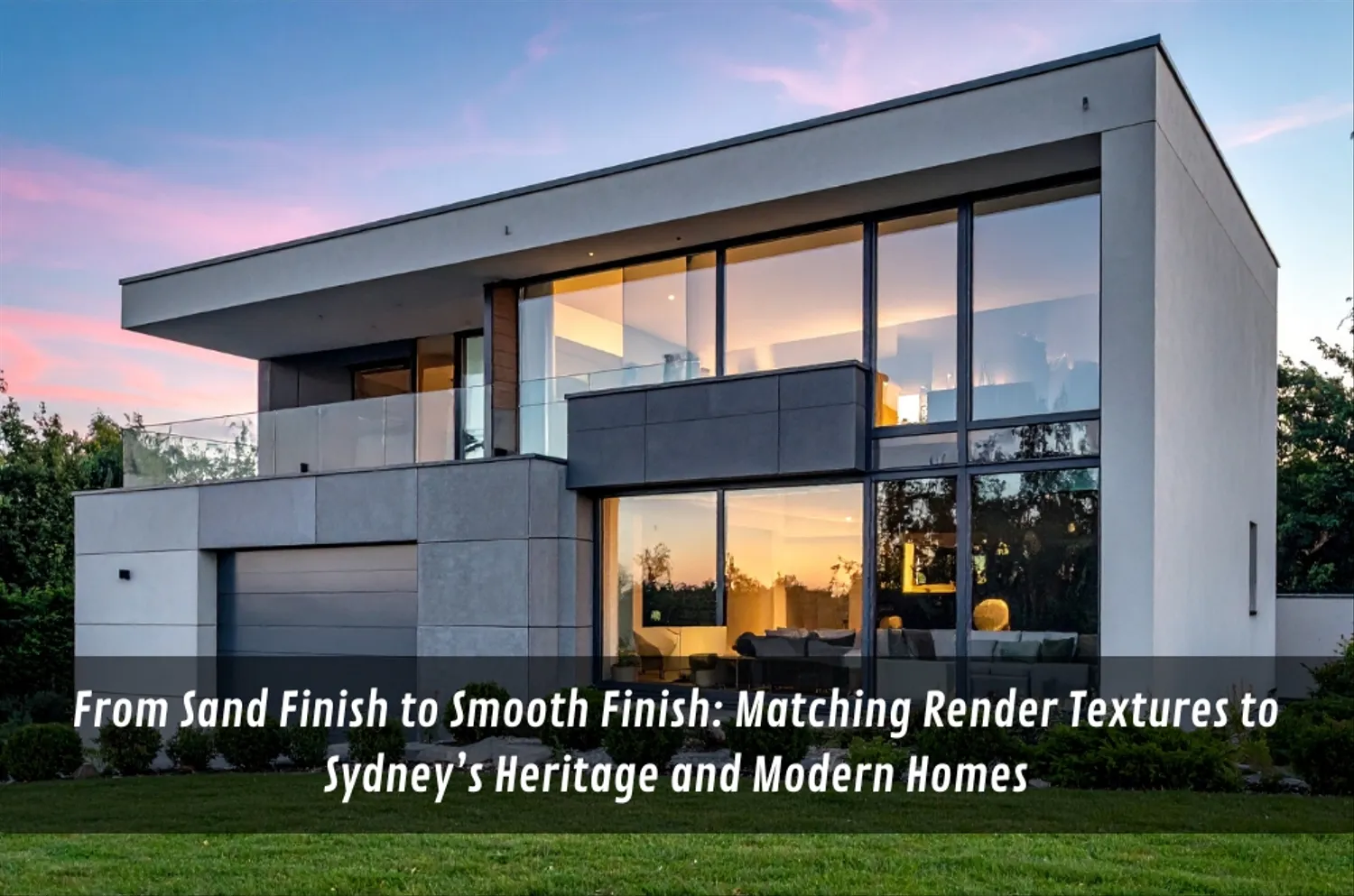
Picking a render texture is a lot like choosing a pair of shoes for a big event: the wrong style can draw the eye for all the wrong reasons, while the perfect match feels “meant to be” and lasts the distance. For Sydney homeowners juggling heritage guidelines, coastal weather, ever-evolving design trends, and complete house rendering services, the decision can feel even trickier.
This guide unpacks the most common render textures—sand, smooth and bagged—explains where each shines, and shows how to line up aesthetics with performance so your façade looks right at home in its street for years to come.
Why Texture Choice Matters
Texture is more than surface-level style. It influences:
- How faithfully a renovation respects heritage controls
- How modern a knock-down rebuild can look without feeling out of place
- How much ongoing maintenance is needed in Sydney’s sun-and-salt climate
- Whether small cracks or repairs will stand out or blend in
For homeowners weighing up options, this quick guide on achieving quality house render finishes provides extra context on finish durability and workmanship standards.
If your property sits in a conservation zone, you’ll also need to keep an eye on official requirements. Heritage NSW maintenance guidelines offer clear direction on sympathetic repairs, compatible materials and approvals for listed façades. Choosing a texture that aligns with these rules early can save weeks of paperwork and potential rework.
Snapshot of Sydney Home Styles and Typical Render Pairings
Sydney’s streetscapes are a patchwork of periods and personalities. Below are common house types and the render textures usually specified:
- Victorian & Federation terraces (Inner West, Paddington, Surry Hills) – Traditionally feature a sand or lightly bagged finish that highlights mouldings without looking too slick.
- Post-war red-brick cottages (Ryde, Strathfield) – Often refreshed with bagged or sand-finish render to soften mismatched brick patches.
- Contemporary duplexes (Parramatta, Kellyville) – Favour smooth acrylic renders for clean lines, contrasting cladding and bold colour blocks.
- Coastal homes (Cronulla, Northern Beaches) – Lean toward fine sand or smooth acrylic with higher salt resistance and easier wash-downs.
Understanding these neighbourhood cues can steer you toward a texture that feels authentic rather than forced.
Common Render Textures Explained
Before deciding, it helps to know what sets the big three textures apart.
Sand Finish Render
A sand (or sponge) finish leaves an even, fine-grit surface. The result is subtly textured—enough to catch light and mask hairline imperfections but not so rough that it traps grime.
- Suits: Period terraces, Federation cottages, coastal cottages needing low-sheen charm.
- Material options: Cement-based or polymer-modified render, topped with breathable paint or coloured finish coats.
- Pros: Hides minor substrate defects, blends well with decorative mouldings, less glare than smooth acrylic.
- Considerations: Can hold dust in high-traffic areas; technique sensitive—uneven sponging shows up under side lighting.
Smooth Finish Render
A smooth (steel-trowelled) finish is almost glassy to the touch. Acrylic products dominate this look, offering flexible, hairline-resistant coats in a vast colour range.
- Suits: Modern builds, minimalist extensions, accent bands against timber or stone cladding.
- Pros: Contemporary appeal, easy to wipe clean, sharp shadow lines, wide colour palette.
- Considerations: Any bumps or substrate movement telegraph through; requires experienced applicators to avoid trowel marks; can show efflorescence if moisture isn’t managed.
Bagged Finish (Bag Render)
Created by rubbing a thin slurry over brick or block with a hessian bag or sponge float, bagged render leaves a rustic, hand-finished look between sand and paint-washed brick.
- Suits: Mid-century or boho renovations wanting texture without full render thickness.
- Pros: Cost-effective, breathable, softens mismatched brick without hiding it completely.
- Considerations: Provides limited weather protection; needs sealing or paint; texture is harder to replicate perfectly in future patching.
Quick Comparison
Render Texture
Visual Impact
Heritage Compatibility
Maintenance Needs
Ideal Application Thickness
Sand Finish
Subtle grain, low sheen
High — matches period façades
Moderate (may trap dust)
8–12 mm
Smooth Finish
Sleek, reflective
Low–medium (often too modern for strict conservation zones)
Low (easy wipe-down)
2–8 mm (acrylic)
Bagged Finish
Rustic, uneven
Medium — sympathetic but informal
Moderate to high (requires seal/paint)
3–5 mm
Choosing the Right Finish for Your Home Style
With texture fundamentals in mind, ask these three questions before signing off on a specification:
- What does the existing architecture “ask” for?
A 120-year-old terrace with ornate cornices usually looks strange wrapped in a high-gloss smooth coat. Conversely, a box-form duplex can feel undercooked with a heavy sand texture. - How much time can you realistically give to upkeep?
Smooth acrylic washes down easily after a dusty summer, while a porous bagged finish may need re-painting sooner. Balance lifestyle with aesthetics. - Is movement or salt exposure an issue?
Homes near rail lines or the coast benefit from flexible acrylics that resist cracking and salt crystallisation.
Answering honestly often nudges homeowners toward one choice. Where the answer still feels fuzzy, consulting a team experienced in professional exterior house rendering can clarify the technical trade-offs between look, longevity and budget without locking you into a single product brand.
Common Mistakes to Avoid When Selecting a Render Texture
Even the best-researched project can stumble on these avoidable pitfalls:
- Ignoring substrate preparation. A flawless smooth finish over crumbly old mortar will fail fast—texture can’t mask structural defects.
- Mixing incompatible textures on the same façade. Combining coarse bagged areas with ultra-smooth bands creates visual “noise” and can highlight alignment flaws.
- Skipping mock-ups. A small sample board viewed in natural daylight reveals colour shift, shadow depth and how texture reads from the kerb.
- Overlooking drainage details. Even a durable sand finish can discolour if splash-back zones aren’t detailed with drip edges or adequate fall.
- Forgetting future patchability. Bagged renders are harder to colour-match when repairs pop up years later; factor this into long-term plans.
Care and Maintenance Tips for Long-Lasting Results
Once the texture is on, preserve its good looks with these simple habits:
- Gentle annual wash-down. A low-pressure hose and soft brush remove airborne pollution without driving water into hairline cracks.
- Inspect high-risk zones. Parapet walls, window heads and downpipe fixings can harbour moisture. Early sealant touch-ups prevent larger blistering.
- Re-paint before paint fails. Most acrylic topcoats last 10–15 years in Sydney’s climate; re-coating on schedule costs less than repairing UV-damaged substrate later.
- Keep soil and mulch clear of walls. Constant damp at the base can discolour bagged or sand finishes.
- Log small cracks. Photograph and date fine lines; if they widen, call a professional to assess movement rather than just filling gaps.
Final Thoughts
Render texture quietly sets the tone for a home—hinting at its era, its owners’ tastes and even the care hidden behind the façade. Whether you lean toward a heritage-friendly sand finish, a crisp modern smooth coat, or a character-rich bagged look, matching texture to style, environment and maintenance appetite is key. By checking local guidelines, comparing options side-by-side and seeking qualified advice where needed, Sydney homeowners can land on a finish that feels authentic today and still earns admiring glances in a decade’s time.