In this guide, I’ll reveal the best practices for elevating your business-to-business (B2B) email marketing strategy. You’ll learn how to design high-performing campaigns, optimize deliverability, and capture the attention of decision-makers for maximum impact.
Let’s dive in!
B2B email marketing best practices: a snapshot
- Maintain a clean and active email list. Use quality, verified email addresses and remove inactive ones to reduce bounces and protect your sender’s reputation.
- Deliver hyper-relevant content. Tailor your emails to match recipient interests and buyer journey stages for maximum engagement.
- Build and protect your sender’s reputation. Send to opted-in addresses and avoid spam triggers to ensure your emails consistently reach inboxes.
- Prioritize data compliance and privacy. Adhere to GDPR, CAN-SPAM, and other regulations to protect customer trust and avoid penalties.
- Optimize for mobile and cross-client compatibility. Design responsive templates and test emails across devices and clients to ensure flawless rendering.
Email list management best practices
A clean, accurate, and engaged email list ensures that your campaigns reach the right audience, drive better engagement, and deliver higher ROI.
On the other hand, neglecting your email list can lead to issues like poor deliverability, wasted resources, and potential damage to your sender reputation.
Here are a few email marketing best practices to keep your contact database clean, organized, and effective for driving results:
Think quality, not quantity
Focus on building a list of high-quality leads who are genuinely interested in what you have to offer.
A small, engaged list will always outperform a large, unresponsive one. For example, 100 active and qualified B2B subscribers can generate more conversions and revenue than 1,000 unengaged general contacts.
When starting, prioritize organic list-building using ethical and effective strategies. Avoid purchasing email lists, as they can harm your sender reputation and overall marketing efforts.
The goal is to focus on sources that attract your desired B2B audience. Here are some options to get you started:
- Offer free resources like whitepapers, case studies, or templates.
- Promote your brand on LinkedIn through posts, groups, and ads to attract sign-ups.
- Collect emails through webinar registrations or virtual event sign-ups.
- Use exit-intent pop-ups with gated content on your website.
- Create referral programs offering business incentives.
- Gather emails at industry events or trade shows through QR codes or sign-up forms.
- Include a subscription checkbox during account creation or contact form submissions.
- Provide early access to reports or tools in exchange for an email address.
Remember to use a double opt-in process to reduce fake sign-ups and confirm their intent.
Target smarter, not harder
Effective targeting starts with breaking your B2B audience into smaller, focused groups based on their buyer personas, engagement level, job title, etc . This way, you can send content that actually speaks to their specific needs and interests.
For instance, new subscribers will appreciate a welcome email with tips on how to start, while repeat customers are more likely to engage with emails suggesting complementary products or new features.
Take a look at this welcome email from Coda, a collaborative productivity tool.
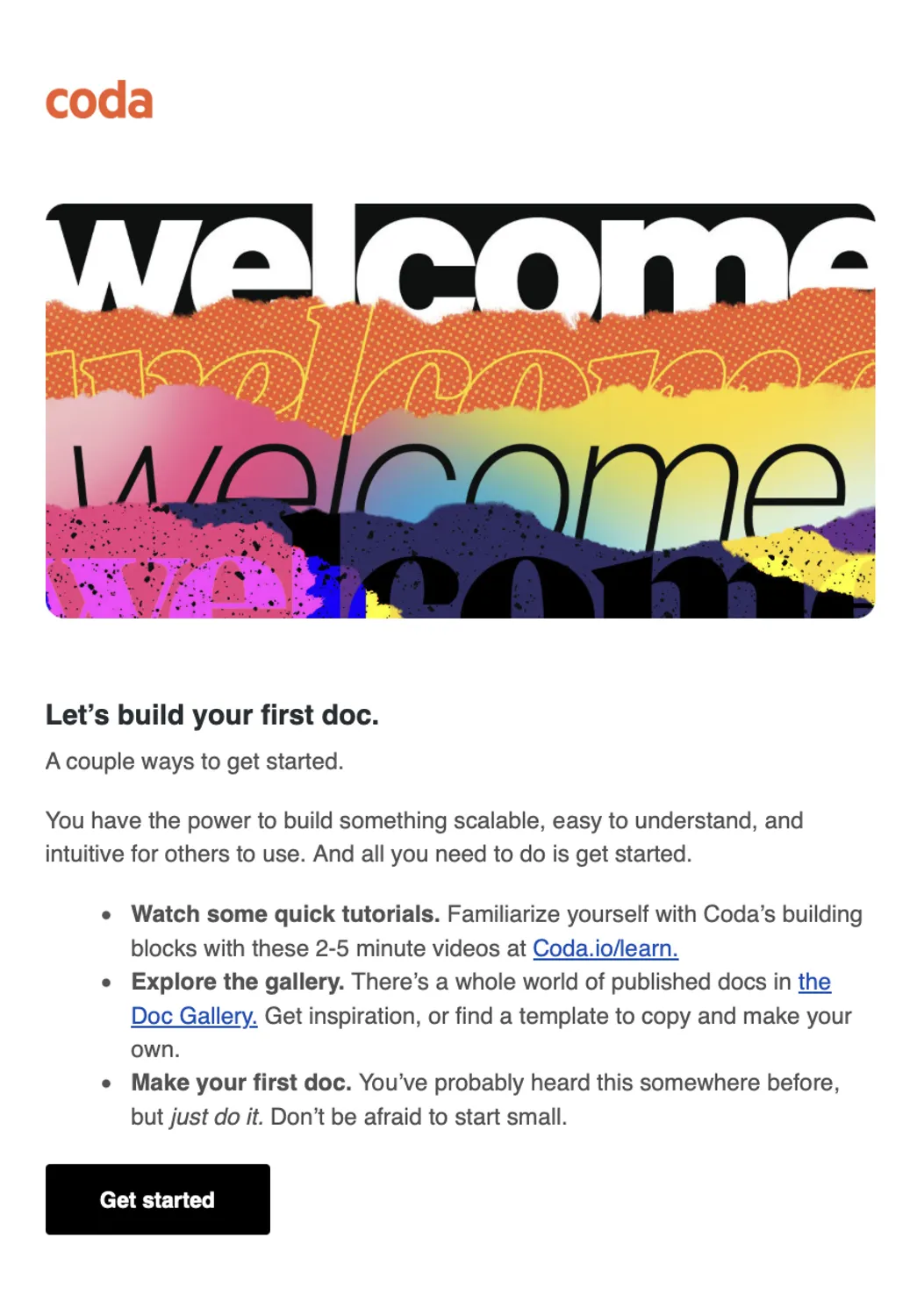
The email explains how to get started with the product without overwhelming a newbie with too many feature details.
You can segment your B2B audience in a variety of ways, like:
- Firmographics: industry, company size, and job role/title.
- Geography: country, region, language, and time zone.
- Behavior: website visits, content downloads, webinar attendance, and email engagement.
- Customer journey stage: new leads, qualified prospects, active clients, or lapsed clients.
- Technographics: tools and software a company uses, such as CRM systems, marketing automation platforms, or email providers.
- Pain points: challenges faced by the company, like compliance, security, or scalability.
- Engagement level: highly engaged, moderately engaged, or inactive prospects.
- Intent: buying signals like visiting your pricing page, requesting a demo, or downloading a whitepaper.
- Referral source: organic search, paid ads, social media, or partner referrals.
- Contract renewal date: segment customers based on upcoming renewals or expired contracts.
The key to smart targeting is to gather solid data about your potential customers. The more you know about your audience, the better you can tailor your messaging to their needs.
However, you don’t need to collect all this information at once and from the beginning. Start with the data that is most important for your business. As you learn and test your ideas, you will gradually collect more details about your users.
Keep your list clean
A clean email list improves deliverability and enhances every aspect of your email marketing, especially engagement.
And the truth is that engaged email subscribers are more likely to open your emails, click through, and take action, which means better results and a higher ROI.
Plus, a healthy list improves inbox placement by protecting your sender reputation, reducing spam complaints, and keeping you compliant with privacy laws.
Here are some easy ways to keep your list in a good shape:
- Identify and delete inactive subscribers who haven’t engaged in a specific time frame.
- Move unengaged subscribers to a separate list for targeted re-engagement campaigns.
- Remove or merge duplicates.
- Correct typos in email addresses to avoid undeliverable messages.
- Use double opt-in to confirm a subscriber’s intent and verify their email address.
- Monitor bounce rates and remove invalid or hard-bounced email addresses.
Learn other vital steps to keep your email list up-to-date and which tools to use for that in our dedicated guide.
We apreciate you chose this part of the article to know about email list management best practices. To know about email deliverability, content and design practices click here and read the full article.