What is Barbed Wire ?
Barbed wire is a type of fencing material that is made up of steel wires twisted together with sharp barbs at regular intervals. It is commonly used for security and containment purposes, serving as an effective deterrent to prevent unauthorized entry or exit. The sharp barbs on the wire make it difficult for humans and animals to pass through without the risk of injury.

Key characteristics and aspects of barbed wire
Composition
Barbed wire is typically made from high-tensile steel, which provides strength and durability.
The sharp barbs are usually made by cutting and then twisting the wire during the manufacturing process.
Design
The most common design consists of a single strand of wire with barbs spaced at regular intervals.
Variations include double-strand barbed wire, where two strands are twisted together, and other specialized designs for specific purposes.
Uses
Barbed wire is widely used for various applications, including agricultural fencing to contain livestock, security fencing to deter trespassers, and military installations for perimeter defense.
It is also employed in prisons, industrial facilities, and residential areas where a physical barrier is needed.
Types
Different types of barbed wire exist to suit specific needs, such as concertina wire (coiled for easy deployment), razor wire (with sharp blades), and electrified barbed wire (incorporating an electric charge for added deterrence).
Installation
Barbed wire is typically installed on fence posts and supported by tension wires to maintain its structure.
Proper installation is crucial to ensure the effectiveness and safety of the fence.
Controversies
The use of barbed wire has been a subject of controversy, especially regarding its potential to cause harm to animals and people.
Some jurisdictions have regulations governing its use to minimize risks and ensure responsible installation.
Maintenance
Regular maintenance is important to check for any damage, ensure tautness, and address any issues that may compromise the effectiveness of the fence.
Barbed wire has been a historically significant invention, playing a crucial role in shaping landscapes, controlling access, and providing security. While it remains a widely used fencing solution, its implementation requires careful consideration of ethical, safety, and environmental factors.
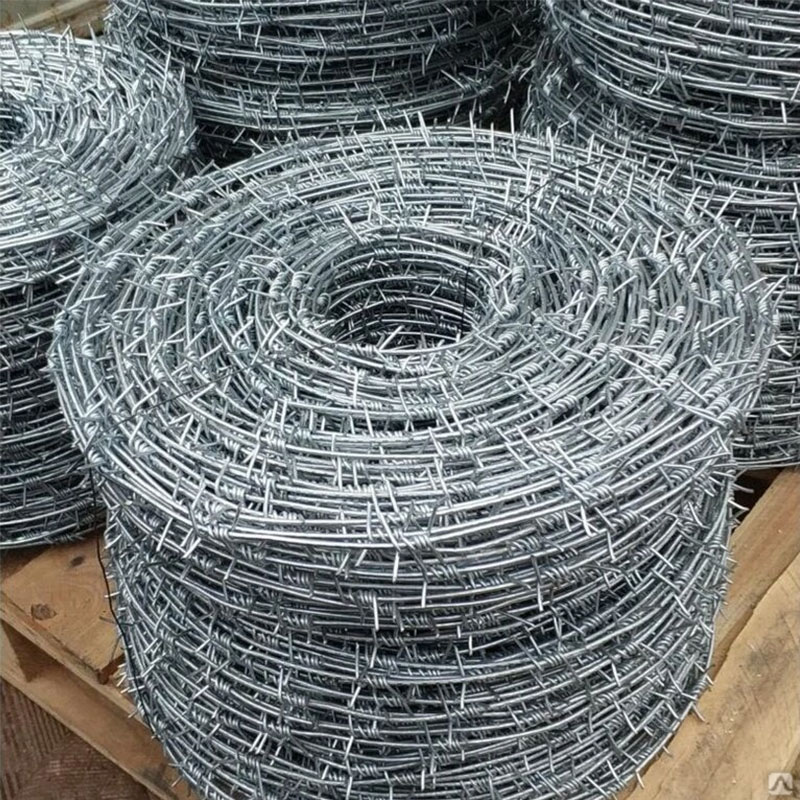
There are several types of barbed wire, each designed for specific purposes. Some common types include:
Single Strand Barbed Wire
- Consists of a single strand of wire with evenly spaced barbs.
- Used for basic fencing and as a deterrent.
Double Strand Barbed Wire
- Two strands of wire twisted together, with barbs on both strands.
- Provides additional security compared to single strand wire.
Concertina Barbed Wire
- Features loops of barbed wire at regular intervals, forming a coiled pattern.
- Often used for military and high-security applications.
Razor Wire
- Consists of sharp blades or razors instead of traditional barbs.
- Provides increased security and is commonly used in prisons and high-security areas.
Reverse Twist Barbed Wire
- The barbs are twisted in the opposite direction to the main wire.
- Offers enhanced strength and durability.
Electrified Barbed Wire:
- Integrates an electric charge to further enhance security.
- Used in areas where a higher level of deterrence is needed.
High Tensile Barbed Wire:
- Manufactured with high-strength steel for increased durability.
- Suitable for areas where the fence may experience tension or stress.
Barbed wire is widely used in agriculture, ranching, military installations, prisons, and various other applications where a cost-effective and reliable fencing solution is required. The specific type of barbed wire chosen depends on the intended use and the level of security needed for a particular application.
Source : فولکا