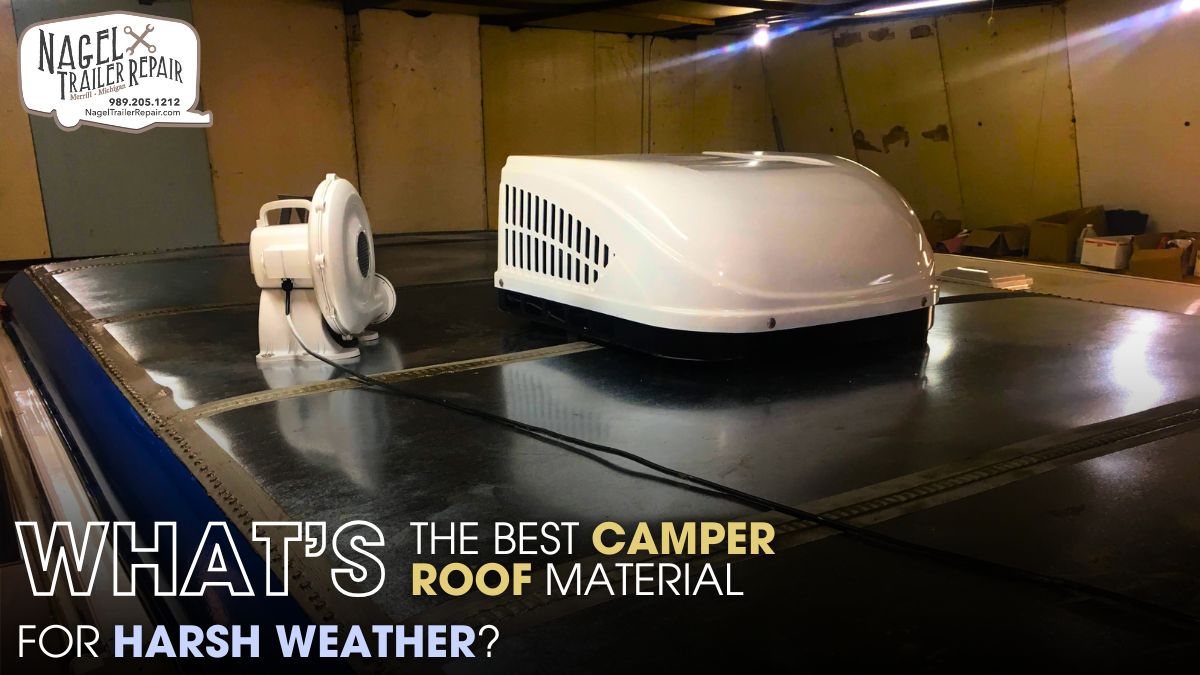
Choosing the right roof material for your camper is critical, especially if you spend a lot of time in regions with harsh weather. From icy Michigan winters to scorching summer sun and high winds on the open road, your camper roof needs to be able to withstand a full range of weather conditions without compromising the integrity of the entire vehicle. A good roof can mean the difference between years of leak-free camping and constant water damage repairs. In this blog, we’ll go over the most popular camper roof materials and discuss which one stands up best to nature’s toughest challenges.
The Role of Roof Material in Camper Longevity:
The roof isn’t just another part of your camper. It acts as a shield, protecting the interior from rain, UV rays, wind, debris, and even heavy snow accumulation. Roof failures are among the most expensive repairs for RV owners. When choosing a camper or considering a roof replacement, it’s essential to know how different materials perform in extreme weather conditions. This includes their ability to resist punctures, endure temperature fluctuations, and handle long-term exposure to moisture.
EPDM Rubber Roofing: Flexible but Vulnerable
EPDM (Ethylene Propylene Diene Monomer) rubber roofing has been widely used for decades due to its flexibility and ease of installation. It's a lightweight and cost-effective solution, making it popular among manufacturers and RV owners alike. EPDM holds up reasonably well under UV exposure and can stretch without cracking. However, in harsh climates like Michigan’s, the material has some drawbacks.
Freezing temperatures can make EPDM more brittle, leading to potential cracks over time. Additionally, it’s prone to punctures and may not handle high winds or heavy debris well unless regularly maintained. Routine inspections and consistent resealing are required. For those seeking Camper Roof Sealing Michigan services, it’s important to work with professionals who understand the limitations of EPDM in this region.
TPO Roofing: Modern but Demands Precision
TPO (Thermoplastic Olefin) is a newer material that’s gaining traction in the RV industry. It reflects UV rays better than EPDM and resists mold growth, which is especially helpful in humid climates. TPO roofs tend to stay cleaner and offer improved energy efficiency by reducing heat buildup inside the camper.
However, TPO can be tricky. Installation must be done with care, or the seams can fail, leading to leaks. In regions with fluctuating temperatures, poor seam adhesion becomes a real concern. TPO’s reflective surface is a great asset during summer, but its expansion and contraction cycles during freezing and thawing periods require reliable sealing. Many Michigan RV owners opt for Camper Roof Sealing Michigan after installing TPO to extend the life and protect against weather-induced failures.
Fiberglass Roofing: Durable but Heavy
Fiberglass camper roofs are known for their toughness. They resist dents, punctures, and are less likely to suffer from mold or mildew buildup. Unlike rubber-based roofs, fiberglass doesn't require frequent recoating, which cuts down on maintenance.
In harsh weather conditions, fiberglass shines. It handles snow loads, freezing temperatures, and hail far better than most other materials. The downside? It adds weight to your camper, which can reduce fuel efficiency and affect handling. Also, fiberglass is more expensive and may cost more to repair if damaged. Still, for long-term durability and resilience, fiberglass is a top contender for best all-weather roof.
Aluminum Roofing: Sturdy but Noisy
Aluminum roofing has a long history in the RV world. It’s strong, resists fire, and doesn’t crack or deteriorate like rubber materials. In extreme weather, aluminum won’t buckle under snow, ice, or heat. It’s also not prone to punctures from branches or other flying debris.
Yet, aluminum has its own set of issues. It conducts heat and cold, meaning you’ll need excellent insulation underneath. It’s also noisy during rainstorms or hail events, which can make sleep a challenge. Additionally, aluminum roofs require periodic resealing to prevent corrosion and leaks, which is why many Michigan RV owners turn to Camper Roof Sealing Michigan experts to maintain these roofs properly over time.
PVC Roofing: High Performance with Minimal Drawbacks
PVC (Polyvinyl Chloride) roofing is often overlooked, but it’s a high-performance material that offers excellent resistance to chemicals, fire, UV rays, and weather extremes. It doesn’t absorb water and remains stable under wide temperature shifts.
In snowy regions, PVC remains flexible and durable. Its seams are typically heat-welded, creating a watertight bond that minimizes leak potential. This material may come at a higher price point, but the long-term benefits often justify the cost. PVC’s minimal maintenance requirements make it an excellent choice for campers that will face diverse weather conditions.
The Verdict: Which Roof Reigns Supreme?
If you’re camping across Michigan or other regions with unpredictable weather, fiberglass and PVC roofs stand out as the most resilient materials. They offer the highest protection against leaks, cracks, and temperature-induced wear. TPO and EPDM can also serve well if maintained meticulously, while aluminum delivers structural integrity but demands insulation upgrades and careful noise management.
Maintenance is the great equalizer in all of this. Even the best material can fail prematurely without regular care and proper sealing. That’s why many camper owners rely on Camper Roof Sealing Michigan services to inspect and reinforce roof systems before and after severe weather seasons.
The Role of Professional Maintenance:
Choosing the right roof material can make all the difference when your camper faces brutal winters or blazing summer heat. Materials like fiberglass and PVC are known for their ability to resist cracking, warping, and moisture penetration, making them ideal for unpredictable weather. While EPDM and TPO offer cost-effective solutions, they tend to require more upkeep in regions prone to heavy snow or UV exposure. But regardless of what roof you have, it’s only as good as the care it receives.
A thorough Camper Roof inspection is your first line of defense against leaks. Start by cleaning off debris so nothing masks trouble spots. Carefully check all seams, vents, skylights, and AC units for signs of dried sealant, bubbling, or cracks. From inside, inspect the ceiling for soft spots, discoloration, or a musty smell — all signs water might be sneaking in. Even small issues can snowball into costly repairs if left unchecked. Spotting early damage and resealing proactively saves not just the roof but the entire structure underneath. Whether you're working with rubber, aluminum, or composite materials, combining smart material choice with regular inspections ensures your camper stays road-ready through every season.
Conclusion:
When it comes to harsh weather, not all camper roof materials are created equal. Fiberglass and PVC lead the pack in terms of durability, weather resistance, and longevity. TPO and EPDM can perform well but require vigilant upkeep, while aluminum provides brute strength at the cost of insulation and noise. No matter which material you choose, routine maintenance and timely sealing are essential to maximizing your camper’s roof life.
That’s where expert help can make a difference. Services like Camper Roof Sealing Michigan specialize in identifying early signs of trouble, applying high-quality sealants, and ensuring your roof can stand up to every storm. Investing in the right roof and the right care will pay off not just in weather protection, but also in fewer repairs, longer camper lifespan, and more enjoyable adventures across Michigan and beyond.