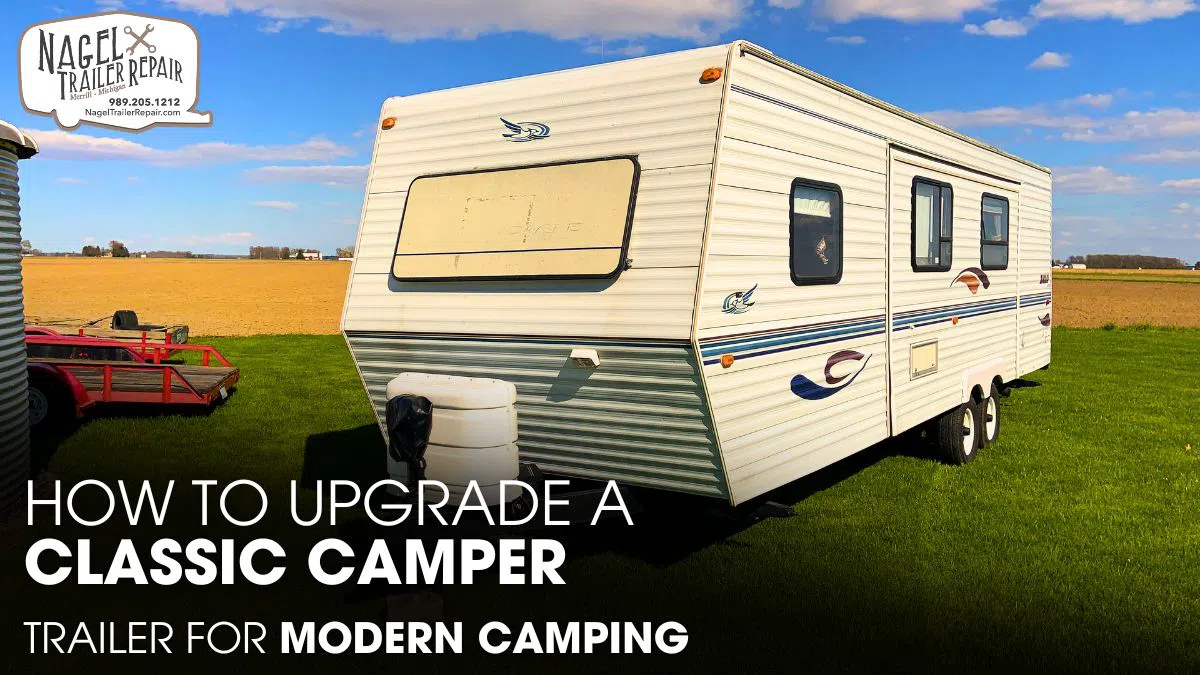
A classic camper trailer has a charm that modern RVs simply can’t replicate. With its timeless design and nostalgic character, it can become the perfect home on wheels—without losing what makes it special.
However, older trailers often lack the comforts today’s campers expect. Outdated wiring, limited storage, poor insulation, aging plumbing, and inefficient appliances can quickly turn a relaxing trip into a frustrating experience.
The good news? You don’t need to replace your classic trailer to enjoy modern camping. With the right upgrades—guided by a classic camper expert in Michigan—you can preserve its character while adding comfort, safety, convenience, and off-grid capability. In this guide, you’ll discover practical, period-sensitive ways to transform your vintage camper into a reliable, modern retreat.
Assess Your Classic Camper:
Before you start replacing cabinets or choosing fancy gadgets, find out exactly what you have. A classic trailer may look solid on the outside while hiding corrosion, water damage, tired wiring, or worn suspension underneath. A thorough inspection can save you from spending money twice.
Begin with the frame and chassis. Look closely at the frame rails, crossmembers, spring hangers, axle mounts, and welds. Surface rust usually needs cleaning and protection, but deep corrosion, cracks, holes, or distorted metal can compromise structural strength. Fix those problems before adding equipment.
Water damage deserves equal attention. Check the roof, window frames, roof vents, doors, floor edges, and plumbing penetrations. Press suspicious areas of the floor and walls for soft spots. If you find rotten plywood, remove and replace it instead of covering it with new flooring. Also inspect the trailer's electrical, plumbing, and propane systems. Older wiring often uses outdated insulation, undersized conductors, or poorly protected connections.
Record the trailer's unloaded and loaded weights.
Inspect the axle, springs, wheels, tires, and coupler.
Check every roof and exterior seal for water entry.
Map existing electrical circuits before rewiring.
Pressure-test the water system for leaks.
If the trailer uses propane, have a qualified technician inspect the regulator, hoses, valves, appliances, and exhaust system. Never assume an old gas system remains safe simply because it still works—especially for classic camper restorations in Michigan, where humidity, road salt, and seasonal temperature swings accelerate corrosion.
A thorough pressure test and leak check are essential before any trip. Many vintage owners overlook hidden cracks in aged fittings. Pair this inspection with a review of floor supports and axle bearings, common failure points in revived units. Proper gas safety ensures your restored classic delivers reliable comfort, not unnecessary risk, on every Great Lakes adventure.
Upgrade the Interior Comfort:
Once the trailer has a healthy structure, improve the space people actually use. Classic trailers often have thin walls and minimal insulation, so they can become extremely hot during the day and lose heat quickly at night.
Start with the thermal envelope. If you expose the walls or ceiling during renovation, add suitable insulation while maintaining any required ventilation and drainage paths. Closed-cell foam can provide good thermal performance in tight spaces, while rigid insulation works well where you have enough cavity depth.
Do not ignore air leaks. Gaps around doors, windows, roof vents, and utility penetrations can undermine otherwise good insulation. Seal them with materials compatible with the trailer's construction. The floor also deserves attention. Repair damaged subfloor sections before installing vinyl, laminate, or other finished flooring. Choose lightweight materials where practical because every added kilogram reduces your available payload.
Insulate the roof, walls, floor, and wheel wells.
Replace rotten structural flooring before refinishing.
Seal drafts around doors and windows.
Install a powered roof ventilation fan.
Choose lightweight, moisture-resistant finishes.
Ventilation makes a surprisingly large difference. Cooking, showering, and even sleeping introduce moisture into the cabin. A powered roof fan helps remove humid air and reduces condensation on cold surfaces. For sleeping comfort, consider a high-density foam mattress cut specifically for the available space.
You can also replace bulky furniture with lightweight modular storage while keeping frequently used items within easy reach. Many upgrades start with a visit to a classic camper shop in Michigan, where local experts offer retrofit kits and space-saving solutions tailored to vintage trailers and modern vans alike.
Modernize Power and Lighting:
The electrical system usually needs the most careful planning because modern camping equipment can place much higher demands on an old trailer than its original designers anticipated. Start by creating a load list. Write down every DC and AC appliance, its wattage, and its expected daily operating time. Then calculate energy consumption:
Energy (Wh) = Power (W) × Operating time (h)
For example, a 40 W appliance running for five hours consumes approximately 200 Wh. Repeat the calculation for refrigeration, lighting, fans, pumps, electronics, and inverter-powered equipment. This gives you a realistic daily energy requirement.
For off-grid camping, a common architecture combines solar panels, an MPPT charge controller, a LiFePO4 battery bank, a DC distribution panel, and an inverter when AC power is necessary. Size each component as part of one system rather than purchasing them independently.
Install a main fuse close to the battery.
Protect every branch circuit individually.
Size cables according to current and voltage drop.
Replace incandescent lamps with LED fixtures.
Use a shunt-based monitor for accurate battery data.
Cable sizing matters because long DC runs can create significant voltage loss. High-current equipment such as an inverter requires appropriately sized conductors and short cable runs. Protect cables from abrasion and secure them so vibration cannot damage the insulation.
Solar panels should connect to a correctly sized MPPT controller, while the battery requires suitable overcurrent protection. If you install an inverter, account for both continuous consumption and startup surges from motors and compressors.
For shore-power AC circuits, use appropriate RCD/GFCI protection and follow the electrical requirements that apply in your region. Keep AC and DC wiring clearly separated and label every circuit.
Improve the Kitchen and Bathroom:
Modern kitchen and bathroom equipment can dramatically improve a camper, but these systems also introduce additional electrical, water, and ventilation demands.
Consider a compressor refrigerator if you plan to camp without hookups. It generally works well with a properly sized 12V battery and solar system. Before installing one, calculate its actual energy requirement under expected ambient temperatures rather than relying only on the manufacturer's maximum rating.
For the water system, use potable-water-rated tanks and tubing. A demand pump should match the system's pressure requirements, and an accumulator can smooth pressure pulses and reduce pump cycling. Give yourself service access. A beautiful installation becomes frustrating when you need to dismantle a cabinet just to replace a pump or tighten a fitting.
Install shutoff valves near major fixtures.
Use potable-water-rated plumbing components.
Add filtration where appropriate.
Protect pipes from vibration and freezing.
Provide ventilation around cooking equipment.
Water heating requires particularly careful planning. Electric heaters can consume substantial power, which may overwhelm a small battery bank. Gas-fired water heaters require correct combustion air, exhaust routing, regulator pressure, and carbon-monoxide protection.
For the bathroom, choose compact fixtures and low-flow fittings. Keep drains properly supported and sloped, and provide access to pumps, traps, valves, and connections. Install leak detection near tanks and pumps where possible.
Enhance Safety and Towing:
A beautifully renovated camper still needs to tow safely. In fact, modernization makes this area even more important because new batteries, water tanks, appliances, and storage can substantially change the trailer's weight and balance.
Inspect the axle, leaf springs or torsion suspension, wheel bearings, brake assemblies, coupler, safety chains, breakaway system, wheels, and tires. Replace components that show excessive wear rather than trying to extend their service life indefinitely.
Pay particular attention to tire age. Tread depth alone does not tell you whether an RV trailer tire remains safe. Check its age, load rating, inflation specification, sidewalls, and overall condition.
Verify the axle's maximum load rating.
Check tire capacity against actual trailer weight.
Service and adjust wheel bearings correctly.
Test electric brakes and the breakaway system.
Inspect safety chains and hitch components.
After completing major upgrades, weigh the trailer again. Check total trailer weight and axle loading, then measure tongue weight. Store heavy components such as batteries, water, and tools as low and close to the trailer's center as practical. Avoid loading heavy equipment at the extreme rear. Excess rear weight can reduce tongue stability and encourage trailer sway. At the same time, excessive tongue weight can overload the hitch and tow vehicle.
Finally, install functioning smoke and carbon-monoxide alarms and keep a suitable fire extinguisher accessible. These simple systems can make a major difference when you're traveling far from assistance. Beyond onboard safety, pair your preparation with classic trailer service in Michigan to ensure your hitch, brakes, and bearings are highway-ready before any long trip.
Regular professional checks catch hidden wear, while your own alarm tests and extinguisher inspections complete a smart, layered approach. Together, they guard against fire risks and mechanical failures, giving you peace of mind on every mile. Stay proactive, test monthly, and replace batteries yearly for reliable protection.
Add Modern Camping Features:
With the fundamentals working correctly, you can finally add the features that make modern camping more convenient. The goal should not be to fill the trailer with electronics. Instead, choose upgrades that solve real problems.
USB-C Power Delivery outlets make an excellent addition because they can charge phones, tablets, cameras, and laptops without running a large inverter. Exterior LED lighting can also make nighttime setup and campsite maintenance much easier.
If you regularly travel through areas with weak cellular coverage, a cellular router with an external antenna can provide a more dependable connection. Keep networking equipment on a dedicated, low-power circuit so it does not unnecessarily drain the battery. A battery monitor with a shunt provides far better information than battery voltage alone. It can track current flowing into and out of the battery and estimate remaining capacity when correctly configured.
Add USB-C charging outlets.
Install efficient interior and exterior lighting.
Use modular storage to manage weight.
Add remote battery monitoring where useful.
Label every wire, fuse, valve, and service point.
Documentation may sound boring, but it becomes invaluable when something fails on the road. Create a simple wiring diagram and record cable gauges, fuse sizes, battery specifications, appliance models, and plumbing shutoff locations.
Think of the finished trailer as a small engineered system rather than a collection of upgrades. Structure supports the equipment, electrical and plumbing systems supply it, and safety systems protect everything. Once those fundamentals work together, modern features become much easier to integrate.
Still, even the best design benefits from routine upkeep—searching "classic camper repair near me" often connects you with specialists who understand vintage layouts and can preserve that system balance. With their guidance, you can address wear without disrupting the overall harmony, ensuring your camper remains roadworthy, efficient, and ready for thoughtful enhancements season after season.
The Role of Professional Maintenance:
Professional maintenance gives an older camper a safer and more reliable foundation for modern travel. Skilled technicians can identify hidden corrosion, worn suspension components, faulty wiring, plumbing leaks, and aging seals before they become expensive roadside problems.
They can also inspect batteries, charging systems, brakes, tires, wheel bearings, propane appliances, and towing connections using the correct tools and procedures. Regular servicing keeps upgraded systems working efficiently and helps prevent small defects from developing into major failures.
Long road trips place continuous stress on every part of a camper, so preventive maintenance becomes even more important. Before a long journey, have a professional inspect the trailer, verify tire and brake condition, test electrical and safety systems, and check for water or gas leaks.
Carrying essential spares and keeping maintenance records also helps you respond quickly when something goes wrong. A properly maintained camper delivers greater confidence, better performance, and fewer interruptions on the road.
Conclusion:
A classic camper trailer can deliver modern comfort without losing its original character. The key lies in upgrading its critical systems methodically rather than simply adding new gadgets.
Prioritize structural integrity, electrical safety, reliable plumbing, efficient power, and proper towing performance. These upgrades create a dependable foundation for comfortable camping.
With careful engineering and sensible weight management, an old trailer can become a capable modern camping platform. Trust Nagel Trailer Repair for chassis upgrades and axle work. As a classic camper expert in Michigan, we preserve its personality, rebuild weak systems, and deliver reliability. Ready to revive your vintage rig? Contact us today!