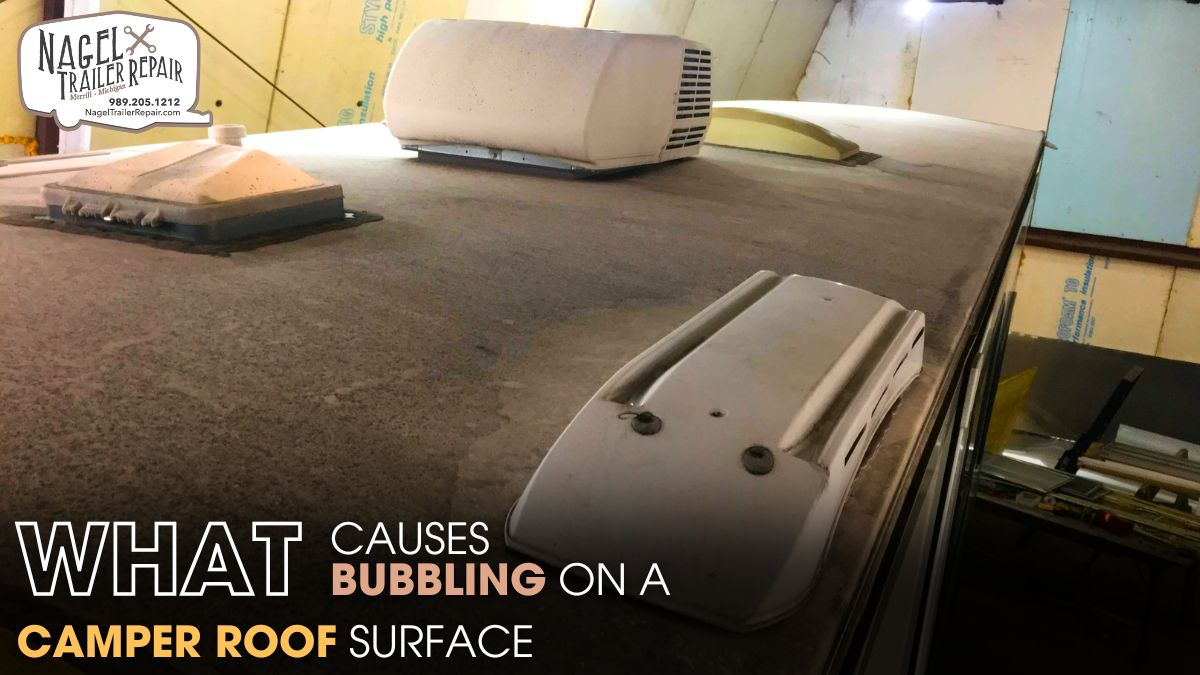
Bubbling on a camper roof surface isn’t just a cosmetic issue—it’s a sign that something deeper might be wrong with your roofing system. Whether you’re a full-time RVer or a weekend explorer, a bubbled roof could compromise the integrity of your camper if left unchecked. Many Michigan camper owners notice roof bubbling due to the state’s fluctuating weather conditions, from freezing winters to humid summers. Understanding why this problem occurs and how to address it early can save you from costly repairs down the road.
Understanding the Structure of a Camper Roof:
To pinpoint the cause of bubbling, it’s helpful to first understand the layers that make up a typical camper roof. Most modern campers use either rubber (EPDM or TPO), fiberglass, or aluminum roofing materials. Beneath this outer layer is a wood substrate—usually plywood or luan—adhered using a bonding agent or industrial glue. When installed correctly, this roof system should form a uniform seal across the entire surface, providing a watertight barrier that can last for years.
However, when bonding fails or moisture infiltrates the layers, the roof membrane may separate from the substrate. This separation allows air or moisture to get trapped beneath the roofing material, forming bubbles. These blisters may appear small at first but often grow with heat exposure or ongoing water intrusion.
Common Causes of Roof Bubbling:
One of the leading causes of bubbling is improper installation. If the adhesive wasn’t applied evenly or the membrane wasn’t pressed firmly during installation, air pockets can form. Over time, these pockets expand, especially when the camper sits under the sun. In Michigan’s climate, where temperatures swing dramatically between day and night, trapped air and moisture can expand and contract, putting additional stress on the roofing material.
Another culprit is water intrusion. When even a minor crack or pinhole allows water to seep in, it can weaken the adhesive layer and delaminate the membrane from the wood deck. Once water infiltrates, it rarely dries out on its own. The trapped moisture breaks down the glue and eventually lifts the roofing surface, creating visible bubbles and soft spots. This is where Camper Roof Sealing Michigan becomes critically important. Applying a quality sealant at the first sign of leaks helps to prevent these issues before they spiral into major damage.
Chemical degradation also plays a role. Over time, UV radiation from the sun breaks down the rubber or vinyl components of a camper roof. When the roofing material loses its elasticity, it becomes more vulnerable to tearing and bubbling. This effect is especially pronounced on older campers or those stored outdoors without adequate UV protection. In such cases, routine inspections and reapplication of protective coatings go a long way in extending the roof’s life.
The Role of Poor Ventilation and Internal Humidity:
Most camper owners think of roof problems as external issues, but internal conditions can have just as much impact. Poor ventilation inside the camper creates humidity, especially from cooking, showering, or simply breathing in a closed environment. If that moisture has no way to escape, it may rise and get absorbed by the ceiling panels or the roof substrate.
Over time, this constant exposure causes the adhesive to deteriorate, especially in colder climates like Michigan, where condensation cycles occur frequently. As the bond between the membrane and wood weakens, bubbles can begin to form. Regular use of roof vents, dehumidifiers, and insulated roofing layers can help combat this issue, especially in four-season campers.
It’s also worth noting that some bubbling may result from incompatible repair materials. If a previous owner or technician used the wrong sealant or patching compound, it may chemically react with the roofing membrane. This chemical reaction can soften the surrounding area, creating blister-like bubbles that resemble those caused by moisture, even when water isn't the direct cause.
Repair and Prevention Strategies:
Addressing roof bubbling requires more than just smoothing out the affected areas. If you don’t eliminate the root cause, the problem will resurface quickly. For minor, dry bubbles that don’t show signs of active leakage, heat and pressure can sometimes flatten the membrane back into place. However, for bubbles caused by water infiltration or adhesive failure, more invasive measures may be needed.
In most cases, you’ll need to cut out the affected area, dry the substrate, reapply adhesive, and re-seal the roofing membrane. It’s crucial to inspect the surrounding areas for soft spots, mold, or rot, which often accompany long-term water damage. If the damage is extensive, partial or full roof replacement may be more cost-effective in the long run.
This is why preventative maintenance and professional inspection are essential. Many Michigan RV service providers specialize in Camper Roof Sealing Michigan to help prevent these issues before they start. These services typically involve deep cleaning, resealing joints and vents, and applying a UV-resistant protective layer. When done annually, this maintenance routine can dramatically reduce the likelihood of bubbling and other roof failures.
Staying proactive also means being selective about storage. Always store your camper under a roof or cover when not in use, especially during Michigan’s heavy snow season. Ice dams and snow accumulation can lead to roof stress, increasing the risk of separation between the membrane and its base.
The Role of Professional Maintenance:
Bubbling on a camper roof often starts small—just a soft bump or raised patch—but it signals much deeper trouble. Whether from poor installation, moisture seeping into the membrane, or aging adhesive that’s lost its bond, those bubbles only get worse over time. They can grow under the summer sun or after a heavy rain, eventually leading to full membrane failure if left untreated. Once moisture gets in, it doesn't dry on its own. That’s when mold, rot, and hidden damage set in.
At the same time, many camper owners overlook what’s needed to prepare for harsh weather. Snow and rain can do real damage to a camper roof, especially if it isn’t reinforced. Heavy snow adds weight that presses down on unsupported areas, risking sagging or cracking. Persistent rain finds its way into seams or tiny punctures, especially around vents and skylights. Reinforcing the Camper roof means more than just sealing cracks—it involves inspecting the roof structure, shoring up weak points, and ensuring the sealant is fresh and intact before the bad weather hits. Whether you’re dealing with bubbling or trying to prep for winter storms, catching issues early and making solid repairs can save your camper from serious damage down the road.
Conclusion:
Bubbling on a camper roof surface is more than an aesthetic concern; it's a sign of underlying issues that could eventually compromise the entire roofing system. Improper installation, moisture intrusion, chemical breakdown, and poor ventilation all contribute to this problem, especially in regions like Michigan, where weather patterns can accelerate wear and tear. Addressing the root cause early and using the right repair methods will help you avoid costly replacements down the road. Whether you’re dealing with minor bubbling or widespread membrane failure, taking action now can save your investment.
Professional services focused on Camper Roof Sealing Michigan play a crucial role in preventative care. These specialized inspections and treatments not only extend the lifespan of your roof but also ensure your camper remains weatherproof and road-ready year-round. With proper maintenance, regular sealing, and climate-appropriate storage, you can travel confidently, knowing your roof is secure, sealed, and protected against the elements.