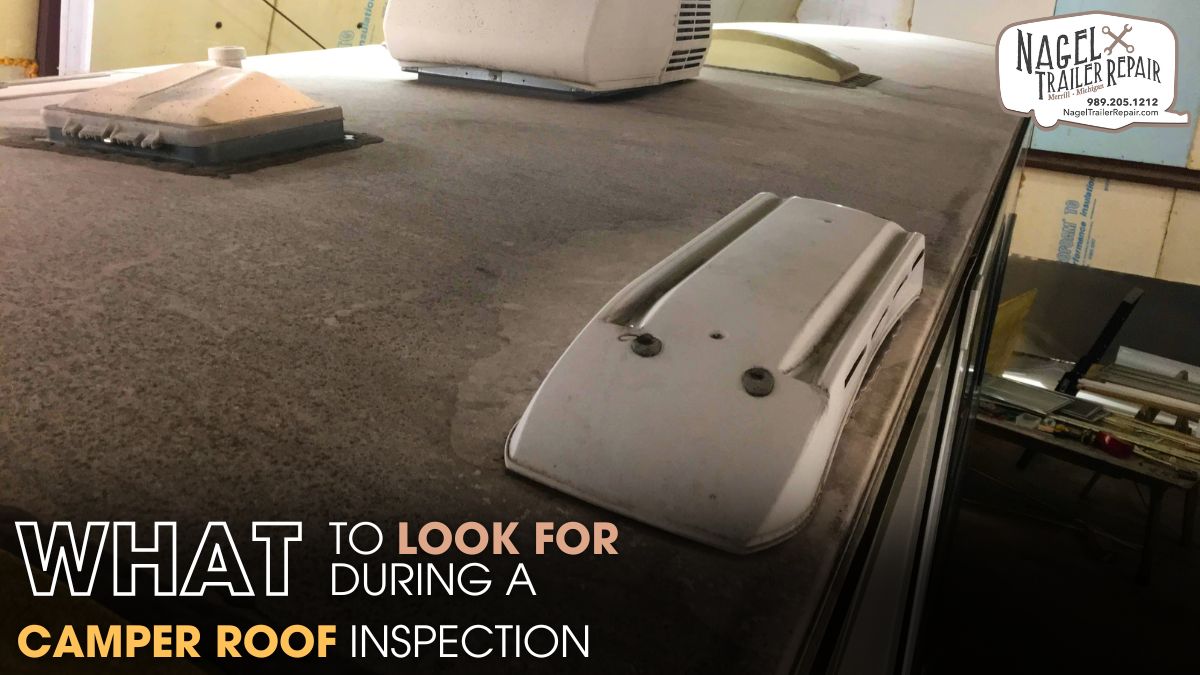
A camper roof inspection is not something to put off or rush through. Your camper roof takes a beating from sun, rain, snow, tree sap, and road debris. If you fail to inspect and maintain it properly, water can find its way inside, leading to costly structural and interior damage. Knowing what to look for during an inspection is essential for protecting your investment and keeping your travels worry-free.
Surface Condition and Membrane Integrity:
The first step in any camper roof inspection is assessing the surface condition of the roof membrane. Whether your camper roof is made of EPDM rubber, TPO, fiberglass, or metal, the top layer must be free from tears, cracks, blisters, and discoloration. Walk the roof carefully, checking for soft spots that might indicate underlying water damage. Discoloration could signal UV degradation or mold. Any bubbles in the membrane may be a sign of separation or trapped moisture, especially near seams and vents. In Michigan’s fluctuating weather, regular inspections become even more critical.
That’s why many RV owners turn to Camper Roof Sealing Michigan professionals for early detection and preventive care before those minor issues grow into expensive problems.
Seams, Seals, and Caulking Stability:
Camper roof seams are often the first areas to fail. Over time, the adhesive materials used to hold seams together degrade due to UV exposure and shifting temperatures. Check the seams closely, especially around transitions like skylights, antennas, A/C units, and vents. Gaps, separation, or dried-out caulking could allow water to seep in unnoticed. Run your finger gently along the seams to feel for looseness or cracking in the sealant. Reapply RV-grade self-leveling sealant when you spot early signs of wear.
If your camper hasn’t had routine sealant maintenance in a while, it's a smart move to consult a Camper Roof Sealing Michigan expert for a full reseal and inspection, especially before the camping season begins.
Drainage Paths and Water Flow Behavior:
A commonly overlooked part of camper roof inspections is drainage. Blocked or inefficient water pathways can lead to standing water that eats away at your roof’s surface. Look around the edge of the roof to ensure no debris or sealant buildup is preventing runoff. Water should never pool near vents, fans, or air conditioning units. Inspect gutters or drip rails for blockages caused by leaves or dirt. After a rainstorm or washing your camper, walk the roof to observe how water flows. Even slight inclines or warps in the structure could lead to unwanted water retention.
In Michigan’s humid climate, trapped moisture can quickly lead to mold, mildew, and roof rot if not addressed with Camper Roof Sealing Michigan services that specialize in full waterproofing solutions.
Interior Signs of External Roof Problems:
Not all roof issues reveal themselves on the surface. Sometimes, the first signs of trouble show up inside your camper. During every inspection, take a close look at the ceiling and upper cabinetry. Look for bubbling wallpaper, staining, peeling paint, or warped paneling. These are signs that water has entered through the roof and is affecting your interior walls and insulation. Press gently on ceiling panels—any softness or sagging means trouble. Musty smells or condensation in the attic space may also point to poor roof ventilation or hidden leaks.
Many Michigan camper owners rely on Camper Roof Sealing Michigan specialists to pair interior inspection with thermal imaging or moisture detection tools that catch hidden leaks before they create irreversible damage.
Scheduling and Frequency of Roof Inspections:
Camper roof inspections should be done at least twice a year—once before the camping season and once at the end of it. However, if your camper is stored outdoors or used frequently, consider inspecting it quarterly. After any storm, heavy snowfall, or long road trip, take the time to do a visual check, even if it's just a walk-around. It only takes a few minutes to spot early signs of cracking sealant or water damage. Keeping a seasonal inspection log helps you track changes over time.
If you're unsure about the condition of your roof or have limited access to a safe climbing setup, professional services like Camper Roof Sealing Michigan provide mobile inspections and preventative resealing packages that take the guesswork out of roof care.
The Role of Professional Maintenance:
Regular camper roof inspections are one of the most important responsibilities for any RV owner. When done thoroughly, these inspections can uncover early signs of wear like cracked sealant, soft spots in the roof membrane, or loose vents—problems that may not be obvious but could lead to major damage if ignored. Often, minor issues like seam gaps or surface bubbles are the beginning stages of roof failure, and if left untreated, water intrusion can occur. Moisture is not only destructive to a camper’s structure but can also quietly impact something even more critical: your electrical systems.
Once water finds its way through the roof, it often travels downward into the walls where wiring is hidden. Wet insulation, saturated paneling, and even light fixtures can become conductive hazards. Electrical shorts, corrosion at wire connections, and damaged power inverters are just a few of the risks water leaks introduce. Even a slow, unnoticed leak near a roof-mounted A/C unit can result in unseen moisture buildup that eventually compromises safety. In extreme cases, fire hazards and system failures become real concerns. That’s why roof inspections are more than just routine maintenance—they are a first line of defense in protecting not only your camper’s comfort but also your safety on the road.
Conclusion:
The camper roof plays a vital role in shielding your vehicle from the elements, making routine inspection one of the most valuable habits you can develop as an RV owner. Every crack, tear, or loose seal presents an opportunity for water to intrude, which can lead to rot, rust, mildew, and interior destruction. Don’t assume that because you don’t see water dripping inside that your roof is leak-free. Problems often begin subtly, beneath the surface or around vent and seam points. Conducting thorough roof inspections at scheduled intervals and after major weather events will significantly reduce the risk of major damage and repair bills. By keeping a close eye on your roof's condition and acting early, you’re not just protecting your vehicle—you’re safeguarding your adventures.
When in doubt, trust the professionals who understand regional weather challenges and have the tools to maintain your camper in peak condition. That’s where a team like Camper Roof Sealing Michigan makes a difference. With proper inspections and expert sealing, your camper roof can last for many reliable and dry travel seasons to come.