ציורי בית המקדש, or paintings of the Beit Hamikdash, offer a visual journey into one of the most revered sites in Jewish history. The First and Second Temples stood in Jerusalem as the centre of spiritual life, and their destruction has been mourned for millennia. Artists who take on the challenge of depicting the Beis hamikdash draw on biblical descriptions, rabbinic commentary and archaeological research to imagine the architecture, furnishings and ceremonies of the Holy Temple. Their works provide glimpses into a sacred space that remains central to Jewish prayer and longing.
In these paintings, the Temple’s grand courtyards and imposing walls are often rendered with golden hues and meticulous detail. The menorah, altar, Ark of the Covenant and other ritual objects appear in their prescribed positions, surrounded by priests in priestly garments and Levites singing psalms. Some artists choose a panoramic perspective, showing the Temple in its Jerusalem setting, with the Mount of Olives and surrounding cityscape beyond. Others focus on interior scenes, highlighting the craftsmanship of the sacred vessels or the solemnity of the Yom Kippur service. The use of light and colour conveys the sense of divine presence that permeates the Temple narrative.
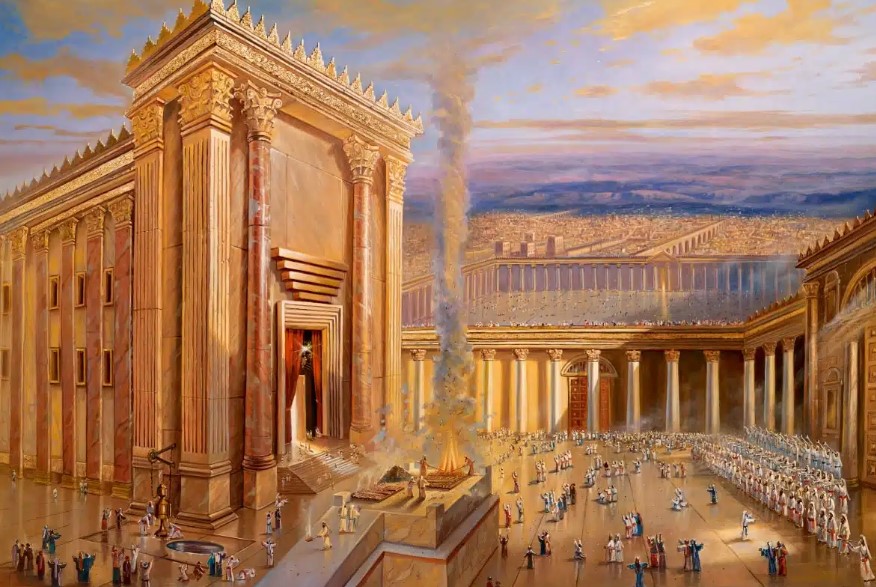
Paintings labeled Beis hamikdash may also incorporate Hebrew inscriptions and mystical symbols. Artists inscribe verses from the book of Kings or Chronicles, descriptions from Maimonides, or passages from the siddur that reference the Temple. The inclusion of these texts emphasises the connection between the visual image and the liturgical memory. In some works, calligraphic letters merge with architectural forms, suggesting that the Temple is built not only of stone but also of words and prayer. This interplay reflects a deep reverence for the power of language within Jewish tradition.
Modern artists bring their own interpretations to ציורי בית המקדש. Some employ abstract techniques, using blocks of colour and dynamic brushstrokes to evoke the Temple’s spiritual energy rather than its physical structure. Others take a historical approach, basing their compositions on archaeological reconstructions and scholarly diagrams. Contemporary works might juxtapose the ancient Temple with the present‑day Western Wall, underscoring continuity and loss. The Western Wall, or Kotel, is the last visible remnant of the Second Temple and a site of pilgrimage and prayer. Depicting it alongside imagined scenes of the Temple invites viewers to consider both what has been lost and what endures.
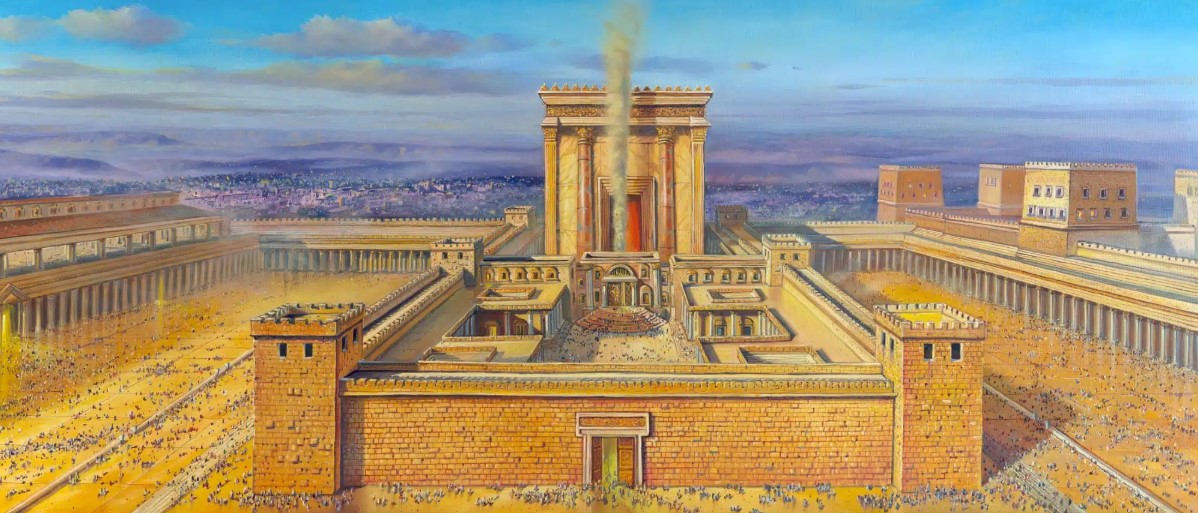
For viewers and collectors, ציורי בית המקדש and Beis hamikdash paintings offer more than mere historical illustration. They serve as meditations on hope, memory and the yearning for redemption. Displayed in homes, schools and synagogues, these works inspire discussion about Jewish history and the messianic vision of rebuilding. People who seek ציורי בית המקדש or Beis hamikdash art often feel a personal connection to the subject, whether through religious observance, cultural heritage or scholarly interest. By engaging with these paintings, they participate in an ongoing conversation about the meaning of sacred space and the resilience of faith across time and place. Such art keeps the vision alive for generations.