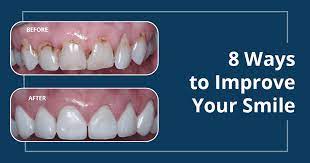
Maintaining good oral health is essential not only for a confident smile but also for overall well-being. Various dental issues, ranging from cavities to misalignments, can affect the function and aesthetics of your teeth. Fortunately, modern dentistry offers a plethora of teeth fixing procedures to address these problems. This article will explore the most common teeth fixing procedures, explaining how they work and what you can expect.
1. Dental Fillings
What They Are: Dental fillings are used to repair teeth damaged by decay. The dentist removes the decayed portion of the tooth and fills the cavity with a material such as amalgam, composite resin, gold, or porcelain.
Procedure: After numbing the area, the dentist drills out the decayed part of the tooth, cleans the cavity, and fills it with the chosen material. Composite fillings are popular due to their natural appearance.
Best For: Small to moderate cavities and minor tooth fractures.
2. Dental Crowns
What They Are: Crowns, also known as caps, cover the entire tooth to restore its shape, size, strength, and appearance.
Procedure: The dentist reshapes the tooth and takes an impression to create a custom crown. A temporary crown is placed until the permanent one is ready. The permanent crown is then cemented in place.
Best For: Severely decayed, damaged, or weakened teeth.
3. Dental Bridges
What They Are: Bridges are used to replace one or more missing teeth by anchoring artificial teeth to the adjacent natural teeth or implants.
Procedure: The teeth on either side of the gap are prepared, and an impression is taken. A custom bridge is made and then cemented into place, restoring function and appearance.
Best For: Replacing missing teeth when implants are not an option.
4. Root Canal Treatment
What It Is: A root canal is performed to save a tooth that is severely infected or decayed, removing the damaged pulp and sealing the tooth.
Procedure: The dentist drills into the tooth to remove the infected pulp, cleans and shapes the root canals, and fills them with a biocompatible material. A crown is often placed afterward for protection.
Best For: Infected or severely decayed teeth that are at risk of extraction.
5. Dental Implants
What They Are: Implants are artificial tooth roots made of titanium that are surgically inserted into the jawbone to support replacement teeth.
Procedure: The implant is placed in the jawbone and allowed to integrate with the bone over several months. Once integrated, an abutment and crown are attached to complete the restoration.
Best For: Replacing one or more missing teeth with a permanent solution.
6. Orthodontic Treatments
What They Are: Orthodontic treatments, including braces and clear aligners like Invisalign, are used to straighten misaligned teeth and correct bite issues.
Procedure: Braces use metal brackets and wires, while clear aligners use a series of custom-made plastic trays to gradually move teeth into the desired position.
Best For: Correcting misaligned teeth, overcrowding, and bite issues.
7. Dental Veneers
What They Are: Veneers are thin shells made of porcelain or composite resin that cover the front surface of teeth to improve their appearance.
Procedure: The dentist removes a small amount of enamel from the tooth surface, takes an impression, and then bonds the custom veneer to the tooth.
Best For: Discolored, chipped, or slightly misaligned teeth.
8. Tooth Bonding
What It Is: Bonding involves applying a tooth-colored resin to repair decayed, chipped, or discolored teeth.
Procedure: The dentist roughens the tooth surface, applies a conditioning liquid, and then molds the resin onto the tooth. A special light hardens the material, which is then shaped and polished.
Best For: Minor repairs and cosmetic improvements.
9. Inlays and Onlays
What They Are: Inlays and onlays are custom-made restorations that fit into or onto a damaged tooth, often made from porcelain, gold, or composite resin.
Procedure: The dentist removes the decayed area of the tooth and takes an impression. A lab creates the inlay or onlay, which is then bonded to the tooth.
Best For: Teeth with moderate decay or damage that are too extensive for fillings but not severe enough for crowns.
10. Dentures
What They Are: Dentures are removable replacements for missing teeth, available as full or partial sets.
Procedure: Impressions of the mouth are taken, and custom dentures are created. Adjustments are made to ensure a proper fit and function.
Best For: Individuals who have lost several or all of their teeth.
Conclusion
Modern dentistry offers a wide range of procedures to fix dental issues, restore function, and enhance the appearance of your teeth. From simple fillings to complex implants, there is a solution for nearly every dental problem. By understanding these common procedures, you can make informed decisions about your oral health and work with your dentist to choose the best treatment for your needs. Whether it's a minor repair or a complete smile makeover, these dental procedures can help you achieve a healthy, beautiful smile. Read more