By AirZone HVAC Services
A bedroom above the garage, a rear addition or an upstairs office can stay chilly while the rest of the house reaches the thermostat setting. Turning up the heat may make the living room too warm without making that room comfortable.
The right fix depends on why heat is falling short. Sometimes the furnace needs a repair. Sometimes the room loses too much heat or the ducts cannot deliver enough of it. A properly designed cold-climate heat pump can also give a hard-to-reach space its own heating and cooling. At AirZone, we look at those options together before recommending equipment.
Start with the furnace's condition and the room's history
A room that suddenly becomes cold deserves a different investigation from one that has struggled every winter. If heating throughout the house has weakened, the furnace repeatedly shuts down or the thermostat shows a fault, arrange a furnace repair diagnostic. An operating furnace can still have an airflow or control problem.
For a system that is working and due for routine care, furnace service can review filters, blower operation, controls and operating condition. That is useful preventative work. A persistent room-temperature difference also needs an assessment of the room and its air distribution.
Tell the technician which room is affected, whether it improves with the door open and when the problem began. Those details help us decide what to check first.
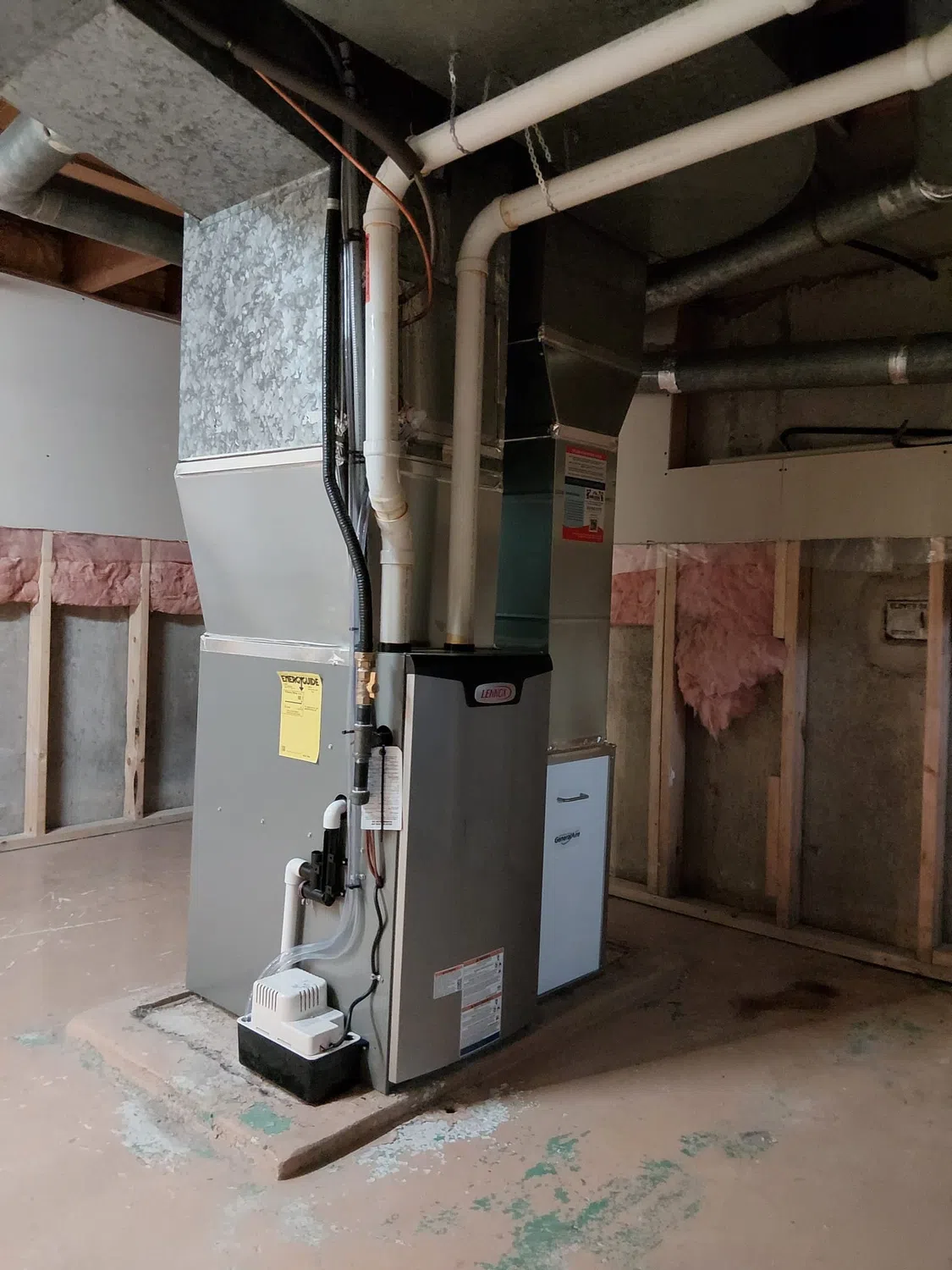
A Lennox SLP99V installation from AirZone's project photos. A room assessment considers the heating equipment and the air-distribution system. Photo: AirZone HVAC Services.
Check the heat escaping from the room
A room with several exposed walls, a ceiling below an attic or a floor above an unheated garage can have a higher heating demand than neighbouring spaces. Air leakage around windows and other openings adds to that demand.
Insulation and air-sealing improvements can reduce the heat the room needs. Above-garage construction deserves particular attention at the separating floor and walls. The work should preserve the required separation between the garage and living space, with a qualified building professional involved where needed.
These improvements matter when sizing new heating too. Equipment selected before planned insulation work may be larger than the finished room needs. A heat pump can supply additional comfort, but it does not repair a draughty wall or an uninsulated floor.
Find out whether enough warm air can reach the room
A forced-air system needs an adequate supply of conditioned air and a return path. A long or restricted duct branch, leakage, a closed damper or an obstructed grille can affect the amount reaching a room. Closing the bedroom door can expose a weak return-air arrangement.
A technician can assess airflow and identify whether balancing, duct repairs or a designed return path would help. NRCan's home-operation guidance explains that inadequate ducts can limit what balancing achieves. Duct cleaning alone does not correct that design problem.
A larger furnace still relies on those same ducts. If the existing equipment is suitable and the limitation is confined to one part of the house, a targeted solution may make more sense than replacing the whole heating system.
A ductless heat pump can serve the room directly
A single-zone ductless mini split connects one indoor unit to an outdoor heat pump. It can provide heating and cooling to an addition, office, bedroom or connected open area without extending the central ducts. NRCan specifically identifies additions and rooms above garages as useful applications where ductwork is difficult to provide.
For several separate spaces, a compatible multi-zone system can connect multiple indoor units to one outdoor unit. Separate single-zone systems are another option to compare. The choice depends on each room's demand, outdoor space, piping routes, installation cost and how the equipment performs when only one small zone needs heat.
Indoor-unit placement matters. A hallway head does not reliably deliver conditioned air into every bedroom with its door closed. Each occupied room needs a realistic delivery plan.
Wall-mounted heads are only one indoor option
Depending on the selected system, floor-mounted units, ceiling cassettes or concealed indoor units may suit the layout. A compact ducted unit can serve a small group of rooms through short ducts where there is suitable space for the equipment, supply and return paths.
NRCan's heat-pump sizing guide notes that concealed ducted units can distribute air more reliably to separate rooms and can suit several small, isolated bedrooms. They need a proper duct design, drainage and service access. Rooms served by one indoor unit do not automatically have independent temperature control.
Where the main house has usable ducts and selected rooms need direct comfort, AirZone ComfortSpan is another arrangement to assess. It combines a compatible central connection with up to four additional ductless zones, with capacity assigned to the home's actual heating and cooling needs.
Choose for Ottawa winter conditions as well as summer cooling
A cold-climate label is the beginning of selection. The designer must compare the room's heat loss with the exact indoor-and-outdoor combination's available heating output as temperatures fall. A brochure's lowest operating temperature tells you where the system can run; it does not establish how much heat it will deliver there.
The design also needs to account for mild-weather operation, simultaneous demand on a multi-zone system and any heating that must remain as backup. Outdoors, the installation needs clear airflow, appropriate snow clearance and a route for defrost water that will not create an icing problem. Indoor condensate from summer cooling needs its own drainage plan.
If a room is cold in winter and hot in summer, the same heat pump may address both seasons. Our Ottawa heat-pump installation team can compare room-targeted equipment with furnace, duct and building improvements. Tell us which space you want to use comfortably, and we can work through the options that fit it.