Introduction
As energy efficiency and sustainable living become increasingly important, homeowners are searching for reliable, cost-effective heating solutions. Among the various options available, air source heat pump cylinders have emerged as a leading technology, providing both heating and hot water while reducing carbon footprints and energy bills. In this guide, we explore everything you need to know about air source heat pump cylinders, their benefits, installation process, and why they are a superior choice for modern homes.
What is an Air Source Heat Pump Cylinder?
An air source heat pump cylinder is a device that extracts heat from the outdoor air and transfers it to a hot water cylinder to provide heating and domestic hot water. This system is highly efficient, as it utilizes ambient air rather than fossil fuels, reducing energy consumption significantly.
Unlike traditional gas or electric water heaters, air source heat pumps work efficiently even in colder climates. They function by compressing and circulating refrigerant to extract heat from the air, which is then transferred to a storage cylinder, ensuring a steady supply of hot water.
Benefits of Air Source Heat Pump Cylinders
1. Energy Efficiency and Cost Savings
One of the biggest advantages of air source heat pumps is their ability to deliver more heat energy than the electrical energy they consume. With a coefficient of performance (COP) of up to 4, these systems can generate four times more heat energy than the electricity required to power them. This leads to substantial reductions in energy bills.
2. Environmentally Friendly
By relying on renewable energy from the air, these systems significantly lower carbon emissions, making them a greener alternative to gas or oil-fired boilers. When combined with solar panels, they can operate on 100% renewable energy, further reducing the environmental impact.
3. Low Maintenance and Longevity
Air source heat pump cylinders require minimal maintenance compared to traditional heating systems. They have fewer moving parts, reducing wear and tear. With proper care, these systems can last over 20 years, providing long-term savings.
4. Versatile and Adaptable
These heat pumps can be integrated into existing heating systems, including underfloor heating and radiators, making them an excellent choice for both new builds and retrofits.
5. Government Incentives and Grants
Many governments provide financial incentives, such as the Renewable Heat Incentive (RHI) in the UK or tax credits in the US, to encourage homeowners to switch to heat pump technology. These incentives can significantly offset the initial installation costs.
How Does an Air Source Heat Pump Cylinder Work?
- Heat Absorption – The system extracts heat from the outside air using a refrigerant fluid.
- Compression – The refrigerant is compressed, increasing its temperature.
- Heat Transfer – The heat is transferred to a storage cylinder, which then supplies hot water to the home.
- Recycling Process – The refrigerant cools down and returns to the outdoor unit to start the process again.
Choosing the Right Air Source Heat Pump Cylinder
1. Consider the Size of Your Home
Selecting the correct capacity is essential to meet your home’s heating demands. Larger homes require higher-capacity cylinders to ensure adequate hot water supply.
2. Insulation Quality
Homes with better insulation require less energy to maintain heat, maximizing the efficiency of the heat pump system.
3. Climate Considerations
While air source heat pumps work in cold climates, those in extremely cold regions may require a hybrid system that combines a heat pump with a backup heating source.
4. Compatibility with Existing Systems
Check whether your existing radiators and heating infrastructure are compatible with a low-temperature heat pump system.
Installation Process
- Site Assessment – A professional installer evaluates your home’s heating needs and determines the best location for the unit.
- Outdoor Unit Installation – The heat pump is placed outside, usually against an exterior wall with sufficient airflow.
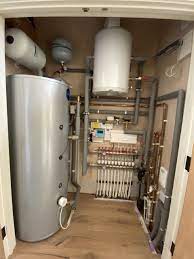
- Indoor Cylinder Setup – The hot water cylinder is installed in a designated space, such as a utility room or airing cupboard.
- Connecting Pipework and Controls – The necessary plumbing and electrical connections are completed.
- System Testing and Commissioning – The installer runs performance checks to ensure everything functions optimally.
Maintenance and Troubleshooting
Routine Maintenance Tips
- Clean Filters Regularly – Dust accumulation can reduce efficiency.
- Check for Airflow Blockages – Ensure the outdoor unit is free from debris.
- Monitor System Performance – Any unusual noises or drops in efficiency should be investigated by a professional.
- Annual Servicing – A certified technician should inspect the system annually to maintain peak performance.
Common Issues and Solutions
- Reduced Efficiency in Cold Weather – If performance drops significantly, consider adding insulation to your home or installing a hybrid system.
- Unusual Noises – This may indicate a refrigerant leak or mechanical issue that requires professional attention.
- Water Temperature Fluctuations – This could be due to incorrect thermostat settings or sediment buildup in the cylinder.
Conclusion
Air source heat pump cylinders are an excellent choice for homeowners seeking energy-efficient, environmentally friendly, and cost-effective heating solutions. With their ability to lower energy bills, reduce carbon footprints, and integrate seamlessly with modern home heating systems, they are a future-proof investment.
If you are considering an upgrade to your home heating system, now is the perfect time to explore air source heat pump technology and take advantage of available government incentives.