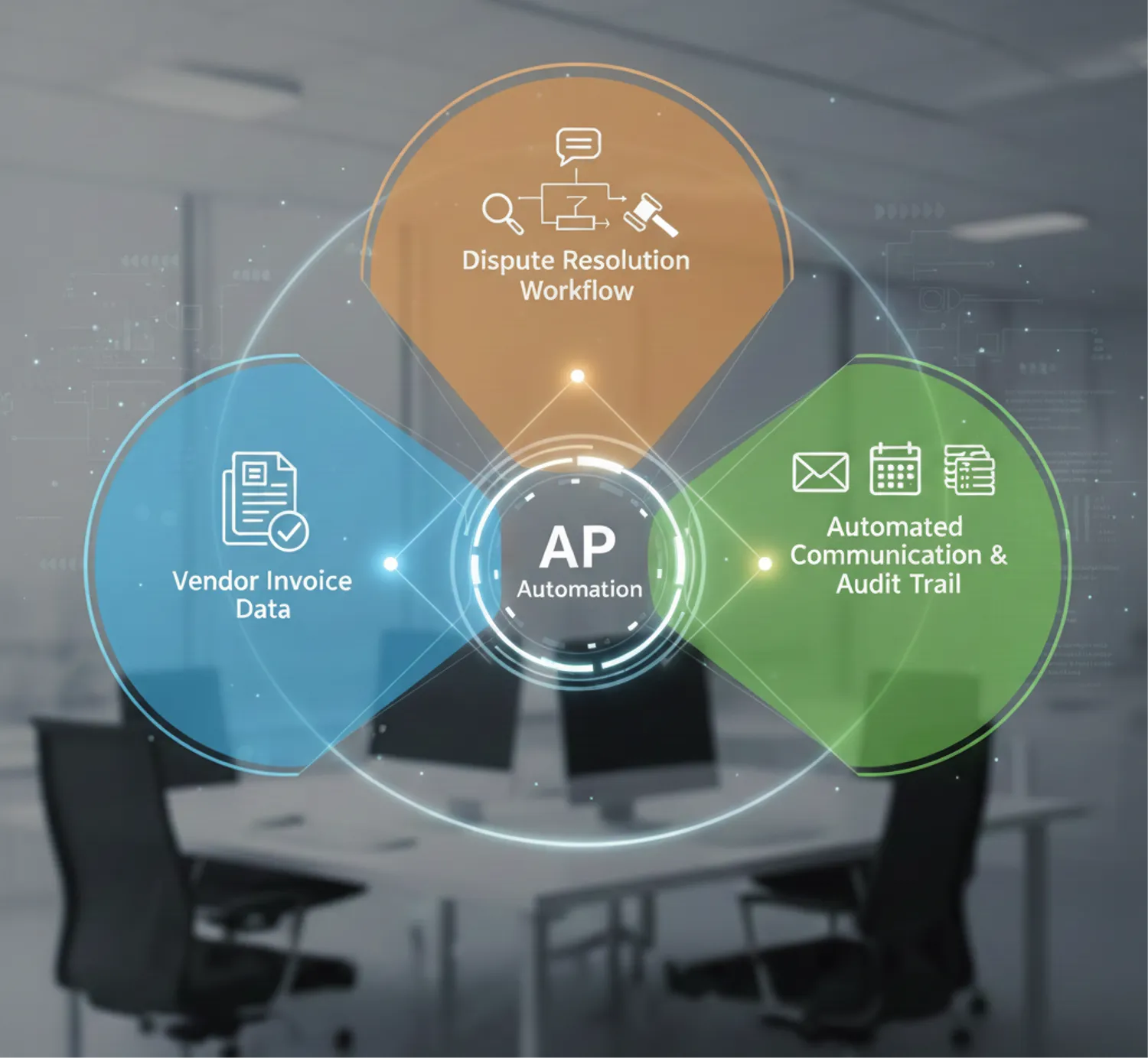
Late payments. Missing documentation. Mismatched invoices. These aren't just operational hiccups, they’re often the spark behind vendor disputes that cost time, trust, and long-term relationships. Manual accounts payable (AP) workflows make it difficult to maintain consistency, accuracy, or real-time visibility, leaving both AP teams and vendors stuck in a cycle of confusion and back-and-forth.
That’s where AP automation changes the pace. It offers a structured, transparent, and data-backed approach to managing vendor payments, ensuring that disputes are reduced or resolved faster when they do occur. In this blog, we’ll unpack why vendor conflicts happen, how automation solves them across multiple workflows, and what success looks like with an automation-first AP setup.
Why vendor disputes emerge in traditional AP processes
Understanding the causes of vendor disputes is the first step toward solving them. Manual AP processes often create the perfect conditions for conflict to arise.
Common invoice mismatches and data entry errors
Disputes frequently begin with preventable issues like incorrect invoice amounts, wrong purchase order (PO) references, duplicate entries, or mismatched line items. Manual entry or fragmented systems increase the risk of these mistakes, which often go unnoticed until vendors raise concerns.
Delays in approvals, payments and communication breakdowns
Beyond data errors, slow internal processes create bottlenecks. When invoices linger for approval or payments are delayed, vendors are left without clear answers. Escalations grow when there’s no visibility into the approval status or expected timeline.
Lack of audit trails and inconsistent documentation
Without proper recordkeeping, even the most basic dispute can spiral. In manual AP setups, invoice history often lives in scattered spreadsheets, inbox threads, or handwritten notes. This makes it nearly impossible to track what went wrong.
What AP Automation does differently to prevent disputes
Now that we’ve identified the main friction points, let’s examine how automation changes the structure and flow of AP processes to stop disputes from arising in the first place.
Accurate invoice capture and PO/GRN matching
Automated AP systems rely on invoice data extraction and real-time purchase order matching to catch discrepancies early. Solutions with built-in 3-way matching logic, as explained in this guide to 3-way matching in AP, can verify invoice data against both the PO and the goods receipt to avoid overpayments or duplication.
Digital audit trail for every invoice and payment
One of the key strengths of AP automation is complete traceability. Every action from invoice submission to final payment is recorded digitally, offering a clear, time-stamped audit trail.
Real-time status tracking for vendors and AP teams
Instead of relying on inboxes or spreadsheets, AP automation platforms provide live updates to both vendors and internal teams. This shared visibility drastically reduces miscommunication and repetitive follow-ups.
Key AP workflows where automation reduces vendor friction
The benefits of automation are best understood when viewed within specific workflows. Here’s how AP automation directly impacts the most sensitive areas of vendor interaction.
Invoice receipt, validation and exception detection
Automation begins at the point of entry. Invoices submitted via email or vendor portals are immediately processed, validated, and flagged for any anomalies. This reduces the risk of manual oversight.
Approval routing and timely payments
Once validated, invoices are routed to the correct approvers using pre-defined business rules. This reduces approval delays and accelerates the payment cycle.
Vendor portal for transparent communication and queries
Rather than sending follow-up emails, vendors can log in to a secure portal, check invoice statuses, submit queries, or upload supporting documents. This makes dispute handling much faster and far more transparent.
Automated reconciliation and payment confirmation
Once payments are released, automation ensures that confirmations are sent and records are reconciled in the system. Vendors receive instant payment status updates without needing to call or email.
How dispute resolution becomes simpler with automation
Disputes aren’t always avoidable, but automation makes resolving them significantly more manageable. Here’s how it improves the resolution process.
Clear records for invoice history and communications
Every step including submissions, modifications, approvals, and comments is stored and accessible. This simplifies investigations and ensures all parties have access to the same information.
Faster detection and flagging of anomalies or unmatched items
Automated systems catch mismatches or irregularities instantly. Rather than waiting for vendors to report issues, AP teams are alerted early and can act proactively.
Efficient vendor responses through shared dashboards or portals
With a centralized space for communication, vendors can quickly respond to queries or disputes using real-time data. This shortens turnaround times significantly.
Reduced follow-ups and fewer manual interventions
Since most processes are automated and documented, there’s little need for back-and-forth over email. This reduces both the volume of touchpoints and the likelihood of miscommunication.
Additional benefits that support vendor trust and relationships
Beyond operational accuracy, automation plays a significant role in strengthening vendor relationships. Consistency and visibility build long-term trust.
On-time payments and fewer late-fee or penalty disputes
When payments are processed automatically based on schedule, vendors are paid more reliably. This helps prevent disputes tied to interest charges or penalties.
Consistent compliance and audit readiness across jurisdictions
Automation enforces business rules and tax validations by default. Whether it's regulatory forms or local tax structures, documents are always audit-ready and compliant.
Enhanced transparency on vendor performance and payment cycles
Many automation platforms offer reporting tools that track average invoice processing time, payment delays, and issue frequency. This allows finance teams to monitor performance and improve collaboration.
Implementation approach for effective dispute-resilient AP automation
To experience these benefits, implementation must be intentional. A strategic approach ensures you identify the right workflows and apply automation where it matters most.
Assessing current AP pain points and dispute patterns
Start by analyzing where disputes are currently happening. Look at volume, types of issues raised, and the time it takes to resolve them.
Setting up invoice data capture, matching and exception rules
With insights in hand, configure rules for invoice validation, PO matching, duplicate detection, and tax compliance. This is the backbone of automated control.
Enabling vendor-facing portals and transparent dashboards
Ensure that vendors have access to their data. Portals that show real-time status, raise tickets, and upload invoices can drastically reduce conflict frequency.
Monitoring KPIs: dispute frequency, resolution time, payment accuracy
Track metrics that show whether automation is working. Focus on the number of flagged invoices, resolution speed, and straight-through processing rate.
Overlooked angles that improve vendor dispute handling beyond basic AP automation
Some AP processes benefit from automation, but others require deeper integration across business functions. These angles often go unnoticed but yield high impact.
Automating regulatory, tax or compliance-related validations before payment
Catch errors before approval. Automating tax calculations, currency conversions, and compliance checks eliminates many downstream disputes.
Integrating procurement, goods receipt and AP systems to avoid mismatches upstream
Disputes often begin before the invoice is even received. By linking procurement and receiving systems with AP, you create a closed-loop process with fewer errors.
Using historical invoice/dispute data to inform vendor scorecards and improve vendor selection
Track long-term performance, recurring errors, and support responsiveness. Use this data to inform supplier choices and contractual negotiations.
What success looks like: metrics and signals of smooth vendor relations
Once automation is live, how do you know it’s working? These are the clearest signals of dispute-free vendor engagement.
Reduction in number of vendor queries and dispute tickets
A decreasing number of vendor calls or complaint tickets is a clear sign that processes are running smoothly.
Faster resolution times for flagged invoices or payments
Even if issues occur, they’re resolved in less time. With full traceability and structured workflows, corrections happen quickly.
Percentage of invoices auto-matched and auto-approved without manual corrections
A high straight-through processing rate signals accurate data capture and efficient rule application.
Consistent on-time payment rate and improved vendor satisfaction
Vendors value reliability. If your on-time payment rate improves, so does your vendor retention and priority access.
Conclusion: AP automation as a strategy for dispute-free vendor relationships
Vendor disputes aren’t just administrative hiccups. They represent a breakdown in trust. By investing in automation, companies create consistent, reliable, and auditable workflows that reduce friction and build stronger partnerships. From PO matching to final reconciliation, each step becomes clearer and faster. Businesses looking for structured dispute prevention, audit transparency, and long-term vendor confidence should consider adopting an AI-powered accounts payable automation platform built with these outcomes in mind.