Servomotors are such an essential tool in modern machines and tools. They introduce accuracy, speed, and reliability to conduct tasks. From robotics in manufacturing to healthcare, they are crucial for optimal performance. They are easy to regulate and yield consistent performance, so they hold the top position in most industries. To meet the challenges of control and understand the What Is DC Servomotor it will be a great option.
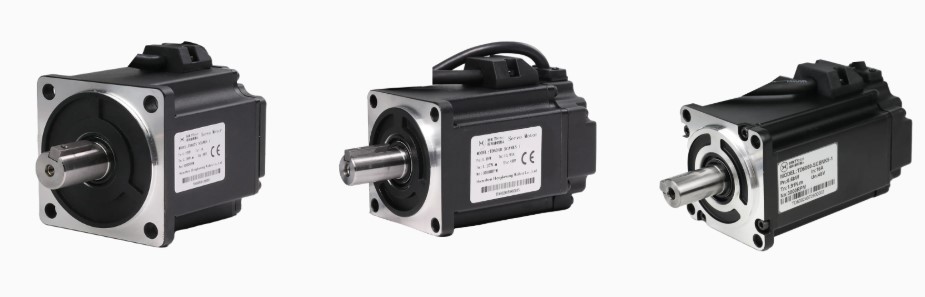
DC Servomotor are utilized in machines and tools to supervise movement. They are special motors designed to give precise control over speed, position, and direction. Unlike regular motors, a servomotor is built to follow commands from a controller. This makes them useful for applications demanding great precision and flexibility.
How Does a DC Servomotor Work?
A servomotor functions through direct current electricity. There are a few parts which it contains to make it function. The main ones are the motor, feedback such as an encoder, and a controller. The data related to the position or speed of the motor is transferred from the feedback device to the controller. The controller checks if the movement of the motor matches with the set-up.
In a robotic arm, the servomotor ensures that the arm pushes to the precise position required. This is why high control is associated with servomotors, which are used in tasks requiring great precision and reliability.
Key Parts of a DC Servomotor
• Motor
The motor converts electrical energy into mechanical movement. This part does the actual work of rotating or moving.
• Feedback Device
The feedback device measures the motor’s current position or speed. The encoders or potentiometers are the most commonly used.
• Controller
The controller processes the feedback data. It compares the current state of the motor with the desired state. If there is a difference, it sends a signal to correct the motor’s motion.
Types of DC Servomotors
• Brushed DC Servomotor
This type employs brushes and a commutator to transfer current to the motor. It is less complex and cheaper. But it needs regular maintenance to clean or replace the brushes.
• Brushless DC Servomotor
Brushless motors use electronic circuits instead of brushes. This makes them more reliable and longer-lasting. They are widely used in sophisticated machines as they require less maintenance.
Where Are DC Servomotors Used?
Servomotors are adopted in many industries where precise control is required. Industrial Machines, direct cutting tools or moving parts to exact locations. In robotics, they have actuators that control the joints and allow robots to perform detailed tasks. They find applications in cameras and medical devices, including drones.
For instance, in medical equipment such as an MRI scanner, servomotors ensure that the movement is smooth and precise. This gives better images to diagnose. Likewise, in a drone, the servomotor adjusts the rotor blades to achieve balance and motion.
Benefits of DC Servomotors
• Precise Positioning: The servomotors offer accurate positioning and speed control.
• Fast Response Time: They have a fast response to changes in commands, which is useful in applications requiring a quick change of direction.
• Compact Size: They are small but powerful. Hence easy to fit into machines with limited space.