The right AGV drive system will require an understanding and thorough analysis of operational requirements, such as distance, load capacity, power requirements, and level of automation. There are reliable and optimal AGV drive systems that can help improve operational efficiency while enhancing safety and reducing costs in due course. Within such an AGV environment, the future of automated logistics can always be embraced. Explore the possibilities of enhancing your operations with the right AGV drive system today.
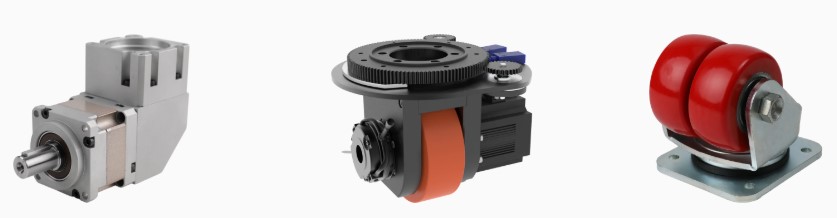
Automated guided vehicles are an indispensable part of modern industry and continue to improve efficiency, safety, and productivity. At the heart of an AGV system is an AGV drive system that promotes the movement of a vehicle while maintaining accuracy and reliability. For any company planning to adapt AGVs into its operations, understanding the AGV drive is part and parcel of it. Thus, here's a guide to help buyers through informed decision-making when selecting an AGV Drive Motor.
Understanding AGV Drive Systems
At the very basics, the AGV drive system consists of a motor, gearbox, controller, and sensors that will use all of these for movement, speed, and direction control of the AGV. Whether you'sve got plans for automating a warehouse, a manufacturing floor, or a distribution center for operation, choosing the right AGV drive will be critical for smooth, reliable operations.
Key Components of AGV Drive Systems
1. Motor Selection: The AGV Motor has an engine as its heart. The type of motor will directly impact the efficiency, power, and reliability of the whole AGV. Usual types of motors include DC motors, stepper motors, and different types of permanent magnet synchronous motors (PMSM). PMSM motors would be best for high-efficiency operations that require exact torque control; on the other hand, for jobs that do not exert much demand on the system, DC motors have great simplicity and cost efficiency. So, when it comes to selecting the motor, bear in mind your load cycles and the travel distance.
2. Gearbox: The gearbox alters the speed and torque supplied by the electric motor. The gearbox should be very specific about what operational needs your AGV will have. This is the right gearbox that will allow your vehicle to run without any loss of power on flat ground or some slope ramps, which is extremely critical to your operations' continuity.
3. Controller and Sensors: When coupled with encoders, proximity sensors, and LIDAR, the controller is the 'brain' of the AGV, interpreting commands and managing the very behavior of the vehicle itself, enabling it to navigate the environment with precision and safety. For buyers, an AGV system must support advanced sensors and controllers with real-time monitoring and precise navigation, along with the detection of possible obstructions.
4. Communication System: AGVs depend on communications systems for transmitting information between the individual AGVs in the fleet when connected to a central control unit. Such synchronization allows route optimization as well as fleet management. Many AGVs will require coordinating operations to remain efficient within a communication system.