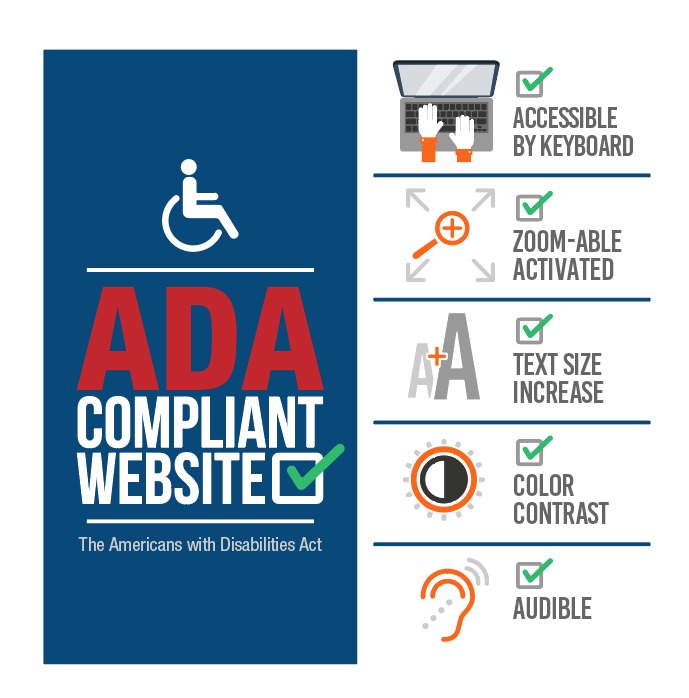
In an era where digital interactions dominate our daily lives, ensuring accessibility for all users is paramount. For businesses and organizations, compliance with accessibility standards, such as those outlined in the Americans with Disabilities Act (ADA), is not just a legal requirement—it's a moral imperative. To navigate the complexities of ADA compliance effectively, businesses are turning to ADA compliance solutions. These specialized tools offer a range of features and functionalities designed to identify, address, and maintain compliance with accessibility standards across digital platforms.
ADA compliance solutions encompass a variety of software tools and services aimed at helping organizations ensure that their digital assets, including websites, applications, and documents, meet the accessibility requirements outlined in the ADA and related regulations, such as the Web Content Accessibility Guidelines (WCAG).
One of the primary features of ADA compliance solutions is automated scanning. These tools utilize algorithms to analyze the code and content of digital assets, identifying potential accessibility barriers such as missing alt text on images, improper heading structures, or inaccessible forms. Automated scans provide organizations with a comprehensive overview of accessibility issues, allowing them to prioritize remediation efforts efficiently.
However, automated scans alone are not sufficient to achieve full ADA compliance. Manual testing by accessibility experts is also essential to ensure that digital assets are truly accessible to individuals with disabilities. ADA compliance solutions often include tools that facilitate manual testing, such as keyboard navigation simulations and screen reader compatibility checks. These tools enable testers to experience digital content from the perspective of users with disabilities, identifying issues that may not be detected by automated scans alone.
In addition to identifying accessibility issues, ADA compliance solutions offer robust reporting functionalities. These reports provide organizations with detailed insights into their compliance status, outlining specific accessibility issues detected and offering recommendations for remediation. These reports serve as a roadmap for addressing accessibility concerns and provide documentation that can be invaluable in the event of a legal dispute related to ADA compliance.
Furthermore, ADA compliance solutions often include features that support ongoing compliance efforts. Continuous monitoring capabilities allow organizations to regularly assess their digital assets for accessibility issues, ensuring that any new content or updates remain compliant over time. Additionally, built-in training resources and educational materials empower stakeholders to develop a deeper understanding of accessibility best practices, fostering a culture of inclusion within the organization.
The benefits of ADA compliance solutions extend beyond regulatory compliance. By ensuring that digital assets are accessible to individuals with disabilities, organizations can enhance the user experience for all users, regardless of their abilities. Accessible websites and applications are easier to navigate, faster to load, and more user-friendly overall, leading to increased engagement and customer satisfaction.
In conclusion, ADA compliance solutions are essential tools for businesses and organizations seeking to ensure accessibility across their digital platforms. By leveraging automated scanning, manual testing, reporting functionalities, and ongoing monitoring capabilities, organizations can achieve and maintain compliance with ADA standards. Moreover, by prioritizing accessibility, businesses can create more inclusive and user-friendly digital experiences, benefiting both the organization and society as a whole.