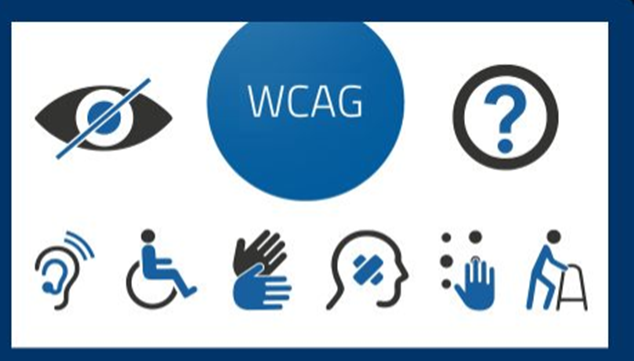
In today's digital age, the internet serves as a vital platform for communication, commerce, and information dissemination. However, for individuals with disabilities, accessing online content can present significant challenges. Web Content Accessibility Guidelines (WCAG) provide a framework to address these issues, ensuring that websites are accessible to all users, regardless of their abilities. Let's explore the importance of web content accessibility guidelines and how they contribute to a more inclusive online environment.
Understanding Web Content Accessibility Guidelines:
Web Content Accessibility Guidelines (WCAG) are a set of internationally recognized standards developed by the World Wide Web Consortium (W3C). These guidelines offer a comprehensive approach to making web content more accessible to people with disabilities. WCAG outlines principles, guidelines, and success criteria organized around four main principles: Perceivable, Operable, Understandable, and Robust (POUR).
The Significance of Web Content Accessibility:
Web content accessibility is essential for ensuring equal access to information and services for all individuals, regardless of their abilities. Consider someone with a visual impairment who relies on screen readers to navigate the web, or a motor-impaired individual who may need to navigate using keyboard inputs. By adhering to web content accessibility guidelines, websites can accommodate these users and provide a seamless browsing experience for everyone.
Key Principles of Web Content Accessibility:
- Perceivable: Information and user interface components must be presented in ways that users can perceive. This includes providing text alternatives for non-text content such as images, videos, and audio.
- Operable: Users should be able to navigate and interact with the website interface using various input methods, including keyboard-only navigation. Interfaces should also provide users enough time to read and use content.
- Understandable: Content should be clear and easy to understand, with predictable website behavior and input assistance for users. Avoiding jargon, providing clear instructions, and maintaining consistent navigation aids comprehension.
- Robust: Websites should be compatible with current and future user agents, including assistive technologies. This ensures that users can access content across different devices and platforms.
Implementing Web Content Accessibility Guidelines:
- Text Alternatives: Provide descriptive text alternatives for non-text content such as images, videos, and audio. This allows users who cannot see or hear the content to understand its meaning.
- Keyboard Accessibility: Ensure all website functions and navigation can be operated using a keyboard alone, facilitating access for users who cannot use a mouse.
- Color and Contrast: Maintain sufficient color contrast between text and background elements to aid readability for users with visual impairments. Avoid relying solely on color to convey information.
- Descriptive Headings and Labels: Use descriptive headings and labels to structure content logically and facilitate navigation for screen reader users.
- Testing and Feedback: Regularly test the website's accessibility using automated tools and manual testing methods. Additionally, gather feedback from users with disabilities to identify areas for improvement.
Conclusion:
Web content accessibility guidelines play a crucial role in ensuring that the internet remains an inclusive space where everyone can access and interact with digital content. By embracing these guidelines, website owners and developers can create online experiences that are accessible to all users, regardless of their abilities. As the digital landscape continues to evolve, prioritizing web content accessibility is essential for fostering diversity, equity, and inclusion online. By implementing WCAG principles, we can build a more accessible and inclusive web for everyone.