Introduction
Digital marketing channels rarely operate independently. A blog discovered through search may introduce someone to a brand, a social post may bring that person back, a paid ad may promote a specific offer, and an email may continue the conversation. Understanding how these channels connect is more useful than treating them as unrelated activities.
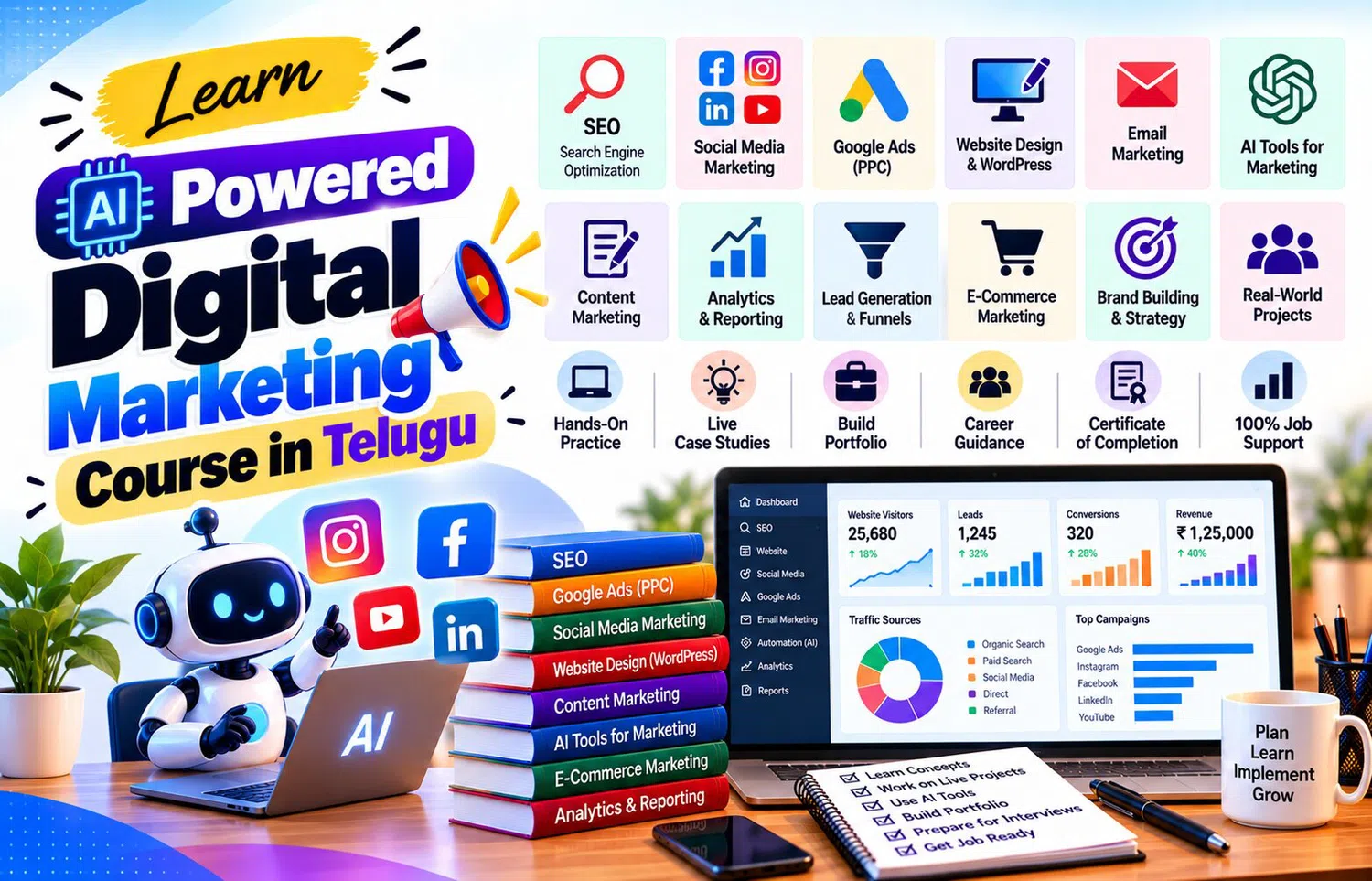
An Ai Powered Digital Marketing Course in Telugu can help learners understand how content marketing, SEO, social media, and paid advertising can support one another inside a coordinated strategy.
AI tools can assist with ideation, research, copy variations, repurposing, and reporting, but the marketing objective should guide how each channel is used.
Begin with One Audience
A coordinated marketing strategy needs a clearly defined audience.
Suppose a company offers beginner-friendly cloud training.
The audience may include:
Final-year students.
Recent graduates.
Early-career professionals.
Career switchers.
These groups may have different questions.
The campaign should identify which segment is the priority before creating content.
Start with a Core Topic
Choose one meaningful topic related to the audience.
Example:
“How to Start Learning Cloud Computing.”
This can become the foundation for multiple channels.
Long-form blog:
Complete roadmap.
SEO:
Target relevant informational searches.
Social:
Share smaller tips and visual explanations.
Paid ads:
Promote the course or guide to selected audiences.
One strong topic can support a coordinated campaign.
Content Marketing Creates Depth
Long-form content gives brands space to answer detailed questions.
A cloud-learning article might cover:
Basic concepts.
Prerequisites.
Learning sequence.
Project ideas.
Common mistakes.
The article can provide real value before presenting a relevant next step.
AI can help organize the outline, but the content should include accurate and original explanations.
SEO Supports Discovery
SEO helps users discover content through search.
Important areas include:
Search intent.
Keyword themes.
On-page structure.
Internal links.
Useful answers.
Metadata.
Technical accessibility.
The content should be written naturally for people.
Search optimization should support clarity rather than encourage repetitive keyword usage.
Social Media Extends the Topic
A single article can produce several social pieces.
For example:
Carousel:
Five Cloud Concepts Beginners Should Know.
Short video:
Difference Between Storage and Compute.
Poll:
Which cloud topic is most confusing?
LinkedIn post:
Beginner Cloud Learning Roadmap.
This repurposing helps the brand communicate the same broader theme in formats suited to different platforms.
Paid Ads Accelerate Reach
Organic content takes time to build visibility.
Paid advertising can place a relevant offer in front of selected audiences faster.
Possible ads include:
Search ads targeting course-related terms.
Social ads promoting a webinar.
Remarketing to eligible website visitors where appropriate.
The landing page should match the message used in the advertisement.
Connect Paid Ads with Content
Paid advertising does not need to send every user directly to a sales page.
Depending on the campaign stage, an ad may promote:
A guide.
Webinar.
Checklist.
Case study.
Free session.
This can be useful when the audience needs more information before making a larger decision.
The offer should match their stage in the journey.
Use Internal Linking
SEO content should connect related pages.
For example:
Cloud Roadmap article.
AWS Beginner Guide.
Azure Beginner Guide.
Cloud Project Ideas.
Course Landing Page.
Internal links help readers explore related information.
They also create a clearer website structure.
AI can help identify possible linking opportunities, but relevance should be checked manually.
Retarget Content Visitors Carefully
Some advertising platforms allow marketers to reach previous website visitors when applicable permissions and platform rules are satisfied.
For example, someone who read a cloud article may later see an ad for a cloud webinar.
The message can reflect the user’s previous stage rather than treating them like a completely new visitor.
Privacy and consent requirements should always be considered.
AI for Cross-Channel Planning
AI can help map one topic into several formats.
Provide:
Audience.
Core topic.
Campaign objective.
Channels.
Brand tone.
Then request:
Blog idea.
Social concepts.
Ad variations.
Email angle.
Landing-page headline.
The marketer should select the options that fit the campaign rather than publishing everything generated.
Keep the Message Consistent
Consistency does not mean using identical wording everywhere.
It means the core promise remains aligned.
Suppose the campaign focuses on:
“Learn cloud fundamentals through practical projects.”
The blog, social posts, advertisements, and landing page should not suddenly make unrelated promises.
A consistent message reduces confusion.
Adapt Content to Each Channel
A 1,500-word article should not be copied directly into Instagram or LinkedIn.
Instead:
Blog:
Detailed explanation.
LinkedIn:
Professional insight.
Instagram:
Visual summary.
Short video:
One clear idea.
Ad:
Focused value proposition.
Every platform has different consumption behavior.
Repurposing should preserve the idea while changing the presentation.
Measure Channels Differently
Different channels serve different roles.
SEO may be measured through:
Search visibility.
Organic visits.
Conversions.
Social may use:
Reach.
Engagement.
Clicks.
Paid ads may use:
Cost.
Conversions.
Cost per lead.
Do not expect every channel to produce the same metric.
Evaluate it according to its purpose in the customer journey.
Measure the Combined Journey
A customer may interact with several channels before converting.
Example:
Finds blog through search.
Follows brand on social media.
Clicks webinar advertisement.
Registers.
Receives email reminder.
This journey shows why marketing performance should not always be interpreted using only the last interaction.
Use available analytics and attribution information carefully.
Practical Integrated Campaign
Choose a fictional Cyber Security webinar.
Create:
One SEO blog topic.
One landing page.
Three social posts.
One short-video script.
Two paid-ad concepts.
One email reminder.
One UTM structure.
Define the purpose of each channel.
Then explain how a user might move from the first touchpoint to registration.
Use AI to create alternatives, but keep one consistent campaign message.
Frequently Asked Questions
Should content, SEO, social media, and paid ads use the same strategy?
They should support the same broader business objective, but each channel needs its own format and role.
Can one blog be repurposed for social media?
Yes. The main ideas can be adapted into posts, videos, carousels, emails, or other formats.
Why combine organic and paid marketing?
Organic channels can build long-term discovery and trust, while paid campaigns can provide faster targeted reach.
How can AI support integrated marketing?
It can help create cross-channel ideas, copy variations, repurposed formats, and reporting summaries.
Conclusion
An Ai Powered Digital Marketing Course in Telugu can help learners understand modern marketing as a connected system rather than a collection of isolated channels.
Content provides depth. SEO supports discovery. Social media keeps the conversation active. Paid advertising extends reach and promotes selected offers.
AI can make cross-channel planning and content production faster, but marketers still need to understand each platform, maintain consistent messaging, track performance, and adapt based on evidence.
When these channels work together around one audience and objective, digital marketing becomes more coordinated and easier to measure.