The Victoria Nile flows through contrasting freshwater environments, from the river channels near Jinja to the powerful currents surrounding Murchison Falls. These changing conditions create different opportunities for recreational anglers interested in Nile perch and other freshwater species.
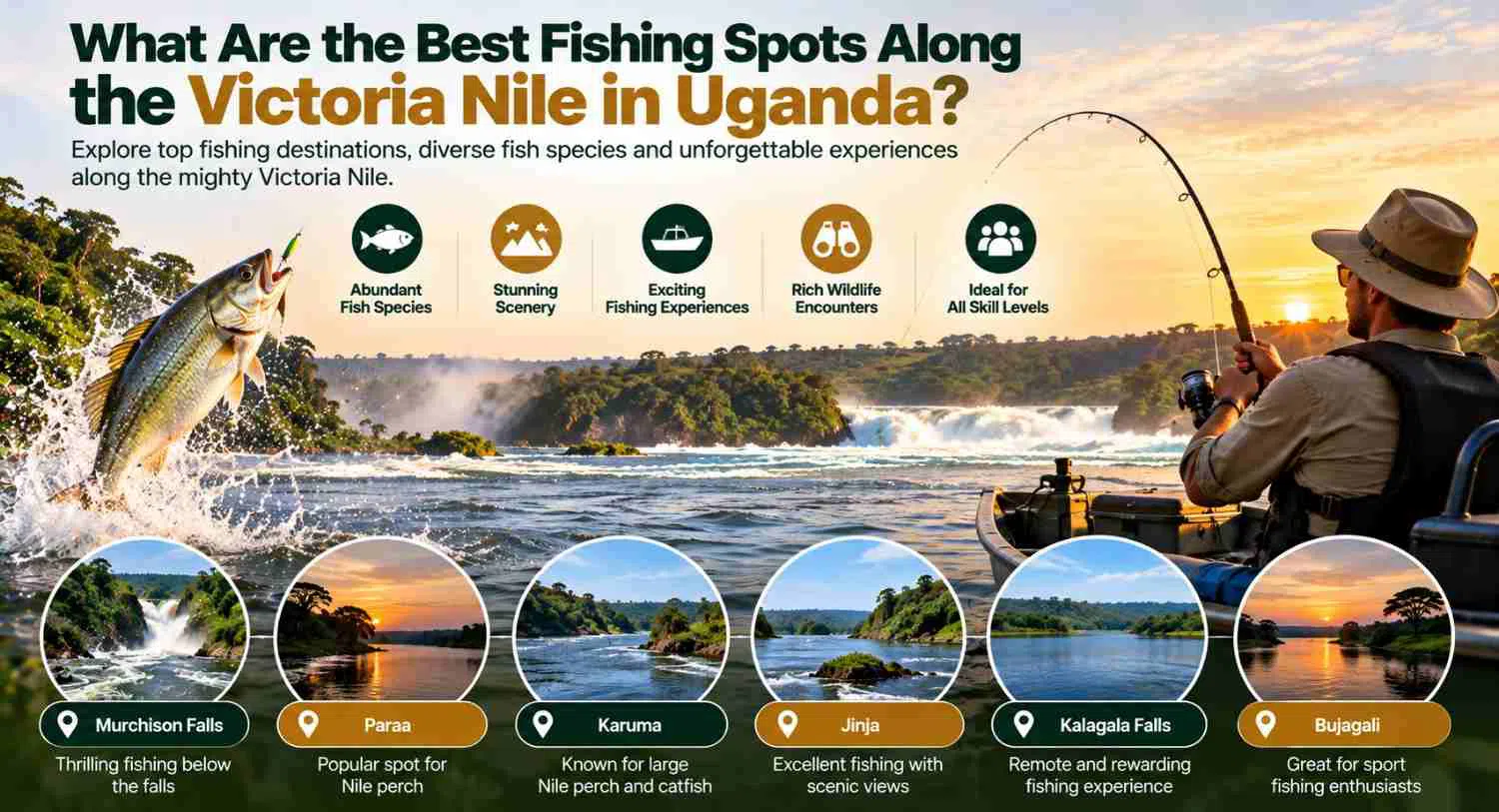
However, successful fishing requires more than selecting an attractive riverbank. Water depth, current strength, protected-area regulations, and seasonal conditions influence where anglers can safely and legally fish. The most established sport fishing opportunities occur around authorised sections near Murchison Falls, while other river locations require careful investigation before planning an excursion.
Understanding the Victoria Nile's Fishing Environment
The Victoria Nile begins where water leaves Lake Victoria near Jinja. It flows northwards through the Lake Kyoga system before continuing towards Lake Albert.
Along this route, the river passes through rocky channels, deeper pools, slower waterways, and areas with powerful currents.
These environments influence fish distribution and recreational fishing opportunities.
Important geographical distinctions include:
Upper Victoria Nile: Features flowing channels, changing currents, and infrastructure near Jinja.
Lake Kyoga system: Connects river environments with extensive lake habitats.
Murchison Falls: Contains powerful currents, rocky formations, and deeper downstream waters.
Lower river sections: Include channels approaching Lake Albert.
Although these waterways connect geographically, they do not share identical fishing conditions or access regulations.
Sport Fishing Opportunities Near Murchison Falls
Murchison Falls represents one of Uganda's most established destinations for recreational Nile fishing.
Here, the Victoria Nile passes through a narrow rocky gorge before plunging into turbulent downstream waters.
The resulting currents, deeper channels, and rocky structures create habitats that attract predatory freshwater fish.
Fishing Below Murchison Falls
Authorised fishing sections below the waterfall attract anglers interested in targeting Nile perch.
Strong currents and changing depths create demanding fishing conditions. Consequently, anglers require suitable equipment, careful boat positioning, and appropriate safety arrangements.
However, the presence of suitable fish habitat does not mean every location permits recreational fishing.
Protected sections, dangerous rapids, and restricted access areas require strict compliance with park regulations.
Fishing Around Authorised Park River Sections
Murchison Falls National Park permits sport fishing in designated areas under applicable wildlife authority arrangements.
Fishing activities may involve authorised riverbank locations or suitable fishing boats.
Nevertheless, ordinary sightseeing boat excursions do not automatically provide permission for recreational angling.
Visitors must confirm current fishing permissions, park access requirements, and permitted activities before entering designated fishing environments.
Fishing Opportunities Along the Upper Victoria Nile Near Jinja
Jinja occupies an important position near the source of the Victoria Nile.
The surrounding river environment attracts outdoor enthusiasts because its channels and currents support various water-based activities.
Recreational anglers may investigate authorised fishing opportunities within suitable upper river sections.
However, several factors require attention:
River currents: Strong water movement can make certain locations unsuitable.
Hydropower infrastructure: Dams and associated facilities may restrict access.
River depth: Different channels require suitable fishing equipment.
Local permissions: Recreational fishing arrangements depend on applicable regulations.
Importantly, rafting locations, bridges, and dam surroundings should never automatically count as authorised fishing areas.
Anglers must verify access before arranging activities.
The Relationship Between Lake Kyoga and River Fishing
The Victoria Nile connects with Lake Kyoga before continuing towards Murchison Falls.
Lake Kyoga contains extensive freshwater habitats that support fishing activities. However, fishing within the lake differs geographically from fishing directly along the Victoria Nile.
Water movement, aquatic vegetation, shoreline characteristics, and fish distribution may vary between these connected environments.
Consequently, travellers should confirm whether an advertised fishing activity takes place within the river channel or on the lake.
This distinction helps prevent confusion when comparing freshwater fishing destinations.
Nile Perch and Other Freshwater Fish Species
Nile perch attracts considerable attention among anglers planning fishing safaris in Uganda.
This predatory freshwater fish can reach substantial sizes and provides demanding sport fishing opportunities.
Its feeding behaviour and preference for suitable aquatic habitats make river depth, current patterns, and underwater structures relevant considerations.
Nevertheless, Nile perch distribution varies between environments.
Other freshwater fish associated with the wider Victoria Nile system include:
Tilapia: Occupy suitable freshwater habitats and attract anglers using appropriate lighter tackle.
Catfish: Inhabit various river environments and may require different fishing methods.
Tigerfish: Occur within relevant Nile habitats and attract interest because of their predatory behaviour.
Actual species availability depends on local ecological conditions and fishing regulations.
Choosing Suitable Fishing Methods Along the Victoria Nile
Fishing techniques should match water conditions, target species, and authorised access arrangements.
Boat-Based Sport Fishing
Boat fishing can provide access to suitable deeper channels and locations away from accessible riverbanks.
Anglers may use appropriate lures or other permitted methods depending on their target fish.
However, strong currents demand experienced boat handling and reliable safety equipment.
Riverbank Fishing
Authorised riverbank fishing allows anglers to cast towards suitable aquatic habitats without entering the water.
Nevertheless, slippery rocks, steep banks, and nearby wildlife can create significant hazards.
Therefore, location selection should prioritise safety and legal access.
Seasonal Conditions and River Fishing Safety
Rainfall, catchment conditions, and regulated water flows influence the Victoria Nile's fishing environment.
Changing water levels may affect accessibility, visibility, and current strength.
Additionally, anglers should monitor weather conditions before travelling.
Essential precautions include:
Wear suitable footwear: Reduce slipping on wet rocks.
Use appropriate safety equipment: Follow authorised boating procedures.
Respect wildlife: Maintain distance from crocodiles and hippopotamuses.
Check river conditions: Avoid dangerous currents and restricted infrastructure.
Carry suitable supplies: Prepare for changing weather and remote surroundings.
No season guarantees successful catches or consistently favourable conditions.
Fishing Regulations and Responsible Angling
Uganda's fishing regulations differ according to location, protected-area status, and permitted activities.
Anglers should confirm current requirements with the Uganda Wildlife Authority and relevant fisheries authorities.
Responsible fishing also requires careful fish handling, appropriate equipment, and respect for aquatic habitats.
Visitors should remove discarded fishing lines, avoid disturbing wildlife, and follow applicable catch restrictions.
Catch-and-release practices can support responsible recreational fishing when anglers handle fish appropriately, although specific requirements depend on local rules.
Conclusion
The Victoria Nile offers contrasting recreational fishing environments, particularly around authorised sections near Murchison Falls and potentially suitable locations near Jinja.
However, productive fish habitats do not automatically provide unrestricted fishing access.
Anglers should select destinations according to target species, river conditions, approved fishing methods, and personal safety requirements.
Confirming current permissions and respecting freshwater conservation rules remain essential steps towards planning a responsible fishing experience.