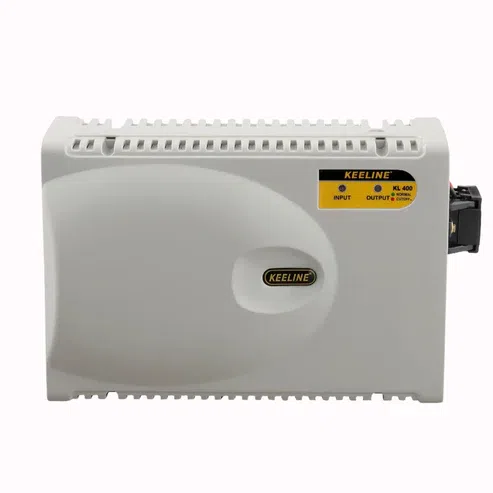
Air conditioners require a stable power supply to operate efficiently and safely. However, voltage fluctuations are common in many homes, particularly during peak summer months when electricity demand increases. Sudden voltage drops, voltage surges, and repeated fluctuations can affect an AC's electrical components and may interfere with normal cooling performance. A suitable stabilizer can help regulate the incoming voltage and provide protection against these electrical variations.
For homeowners using a 1.5 ton air conditioner, choosing the right stabilizer for 1.5 ton ac can be an important part of protecting the appliance from unstable power conditions. Understanding common voltage problems can also help you determine when additional voltage protection may be useful.
What Is a Voltage Fluctuation?
A voltage fluctuation occurs when the electrical supply entering an appliance moves above or below its normal operating range. These changes may happen because of an overloaded electrical grid, switching of high-power appliances, local distribution issues, or variations in electricity demand.
An AC contains several electrical and electronic components that require an appropriate voltage range. Frequent fluctuations may place additional stress on these components, particularly the compressor and control circuitry.
Low Voltage During AC Operation
Low voltage is one of the most common electrical problems experienced by households. During periods of high electricity demand, the voltage supplied to a home may fall below the level required for optimal appliance operation.
When an AC receives insufficient voltage, the compressor may struggle to operate properly. In some situations, the appliance may draw more current to compensate for the reduced voltage, potentially increasing stress on electrical components.
A suitable stabilizer can boost low incoming voltage to a more appropriate output level, depending on its operating range and design.
Sudden High Voltage
Voltage can also rise above the normal level. A sudden increase may occur due to electrical disturbances or changes in the local power supply.
High voltage can place stress on sensitive electronic components inside modern air conditioners. Repeated exposure to excessive voltage may contribute to component damage over time.
Many AC stabilizers include high-voltage cut-off protection. If the incoming voltage moves beyond the stabilizer's specified safe range, the device can disconnect the appliance from the supply until the voltage returns to an acceptable level.
Frequent Voltage Fluctuations
Some areas experience repeated voltage changes rather than a single major surge or drop. The voltage may move up and down several times throughout the day.
Frequent fluctuations can be particularly inconvenient because the AC may repeatedly start, stop, or adjust its operation. A stabilizer continuously monitors the input voltage and regulates it within its specified output range.
This makes a stabilizer useful in locations where voltage instability is a recurring household concern.
Power Surges
A power surge is a sudden increase in voltage that occurs over a short period. While not every electrical surge will damage an appliance, stronger or repeated surges can create additional stress on electronic components.
A stabilizer with appropriate surge protection and voltage cut-off features can provide an additional layer of protection. However, consumers should check the exact protection features offered by the specific model rather than assuming that every stabilizer provides the same level of surge protection.
Compressor Protection Concerns
The compressor is one of the most important components of an air conditioner. It requires suitable electrical conditions to operate correctly.
Unstable voltage can affect compressor operation and may contribute to electrical stress. A properly selected stabilizer helps maintain an appropriate voltage supply within its rated operating range.
This is especially relevant when an AC is installed in an area where voltage regularly falls below or rises above the normal range.
How a Stabilizer Helps
A voltage stabilizer is designed to monitor incoming voltage and adjust its output according to the device's operating specifications. Depending on the model, it may boost low voltage, reduce high voltage, and disconnect the connected appliance during extreme conditions.
When selecting a stabilizer for 1.5 ton ac, homeowners should consider the AC's voltage requirements, whether it is an inverter or non-inverter model, the normal voltage conditions in their area, and the stabilizer's input and output range.
Choosing a model based only on the AC's tonnage may not be sufficient. The stabilizer should also be compatible with the electrical characteristics and requirements of the specific air conditioner.
Why Low-Voltage Areas May Need a Booster Stabilizer
Homes located in areas with consistently low voltage may require a stabilizer with a suitable boosting capability. A standard stabilizer may not provide the required correction range if the incoming voltage regularly drops significantly.
A booster stabilizer is designed to increase low input voltage within its specified operating range. Some models also use multiple boosting stages to handle wider voltage fluctuations.
Before choosing one, measure or understand the typical voltage range in your home and compare it with the stabilizer's specified input range.
Features to Check Before Buying
When purchasing a stabilizer for an AC, look beyond the product's basic capacity. Important specifications may include input voltage range, output voltage regulation, overload protection, high- and low-voltage cut-off, surge protection, time delay, and compatibility with inverter ACs.
A time-delay feature can be useful for protecting an AC from immediate restart after a power interruption. The exact requirements can vary between AC models, so checking the air conditioner's manufacturer's recommendations is advisable.
Maintain Your AC's Electrical Protection
Voltage problems can affect the reliable operation of an air conditioner, especially when fluctuations are frequent or severe. Low voltage, high voltage, repeated fluctuations, and power surges are among the common electrical conditions that can create challenges for AC systems.
A properly matched stabilizer for 1.5 ton ac can help regulate voltage and provide additional protection within its rated operating range. Before purchasing, check your AC's specifications, measure the voltage conditions in your area when possible, and select a stabilizer with suitable protection features.
A stabilizer should complement, not replace, proper electrical installation, grounding, circuit protection, and regular AC maintenance.
FAQs
1. Is a stabilizer necessary for a 1.5 ton AC?
It depends on the voltage conditions in your area and the AC manufacturer's requirements. If your home experiences frequent or significant voltage fluctuations, a suitable stabilizer may provide additional protection.
2. Can a stabilizer protect a 1.5 ton AC from low voltage?
Yes, a suitable stabilizer can boost low incoming voltage within its specified operating range. Check the stabilizer's input range before purchasing, especially if your area experiences substantial voltage drops.
3. What features should I check in a stabilizer for a 1.5 ton AC?
Check the input voltage range, output regulation, overload protection, high- and low-voltage cut-off, surge protection, time delay, and compatibility with your AC type.
4. Is a booster stabilizer useful for low-voltage areas?
A booster stabilizer can be useful where the incoming voltage frequently falls below the normal operating range. Its suitability depends on how low the voltage gets and the stabilizer's specified input range.
5. Can voltage fluctuations damage an AC compressor?
Frequent or significant voltage fluctuations can place electrical stress on AC components, including the compressor. Appropriate voltage protection can help reduce risks associated with unstable power, although it cannot prevent every type of electrical or mechanical failure.