Choosing the right probiotic formulation is an important decision for agricultural businesses, distributors, and product developers. Agriculture Probiotic Manufacturers in India increasingly offer both liquid and powder formulations because different crops, application methods, storage conditions, and business requirements can call for different formats. While both formulations are designed to deliver beneficial microorganisms, their handling, storage, application, and formulation requirements can differ significantly.
What Are Agriculture Probiotics?
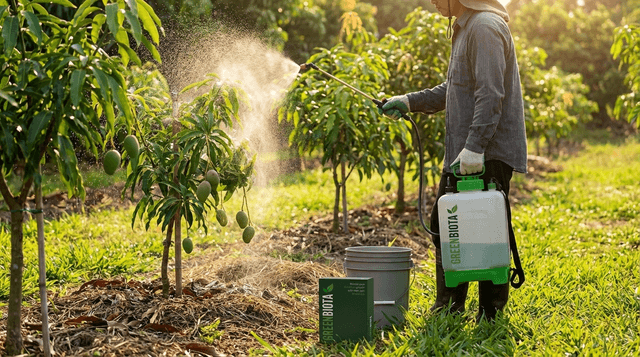
Agriculture probiotics are microbial formulations containing selected beneficial microorganisms intended for use in agricultural applications such as soil management, root-zone applications, seed treatment, irrigation, horticulture, and crop cultivation. Depending on the product design, these formulations may contain beneficial bacteria, fungi, or microbial blends.
The objective is not simply to select a product with a high microbial count. Factors such as strain selection, viability, purity, stability, carrier system, application method, and storage conditions should also be considered.
For businesses developing agricultural microbial products, choosing between a liquid and powder format should therefore be based on the intended use rather than appearance or convenience alone.
Liquid Agriculture Probiotics: What Are the Advantages?
Liquid probiotics contain microorganisms in a liquid formulation or carrier system. They can be convenient for applications where mixing with water or incorporation into irrigation systems is part of the recommended application process.
One of the main advantages of liquid formulations is ease of dispersion. When properly formulated, a liquid product can be mixed and applied across an agricultural area using suitable equipment. This can make liquid formulations attractive for certain soil, root-zone, irrigation, and crop-management applications.
Liquid products can also be useful when a manufacturer wants to develop a ready-to-use or easily diluted formulation. However, microbial stability must be carefully considered because environmental conditions, packaging, temperature, and storage duration can influence product quality.
For this reason, businesses should ask manufacturers about recommended storage conditions, shelf life, microbial viability, packaging requirements, and batch specifications before selecting a liquid formulation.
Powder Agriculture Probiotics: Why Are They Popular?
Powder probiotics are formulated in a dry format, often using a suitable carrier or stabilizing system. Their lower moisture content can make them convenient for transportation, storage, and certain types of bulk handling.
For distributors and agricultural businesses purchasing products in larger quantities, powder formulations can offer practical advantages in logistics. Moisture protection and appropriate packaging remain important, however, because exposure to unsuitable environmental conditions can affect product stability.
Powder products may also provide flexibility for businesses developing premixes, customized agricultural microbial products, or formulations intended for specific application systems.
The suitability of a powder formulation ultimately depends on the microorganisms involved, formulation technology, carrier materials, target application, and required product specifications.
Liquid vs Powder Agriculture Probiotics: Key Differences
Liquid and powder agriculture probiotics can both be effective formulation options, but their practical characteristics are different. Liquid formulations are generally convenient for products designed to be diluted with water or applied through suitable irrigation and spraying systems. They can offer straightforward dispersion when the formulation has been developed for that application.
Powder formulations, on the other hand, can be convenient for dry handling, transportation, storage, and certain agricultural application methods. They generally require appropriate moisture-resistant packaging to help protect the formulation during storage and distribution.
Storage requirements can also differ. Liquid products may require careful control of temperature and other environmental conditions, depending on the microorganisms and formulation system. Powder products typically require protection from moisture and unsuitable storage conditions. In both cases, the manufacturer's recommended storage conditions should be followed to help maintain product quality.
Transportation is another consideration. Liquid products can involve greater weight and volume because of their water or carrier content, while powder products can be practical for bulk logistics. However, the final choice should always consider product stability, application requirements, packaging, and microbial specifications rather than transportation cost alone.
Which Formulation Is Better for Soil Applications?
There is no single answer. Both liquid and powder formulations can be designed for agricultural soil applications.
A liquid formulation may be convenient where the application involves dilution with water, irrigation, or root-zone delivery. A powder formulation may be attractive where dry handling, transportation, or incorporation into another compatible agricultural input is preferred.
Instead of choosing based solely on formulation type, agricultural businesses should evaluate the complete product specification. This includes microbial identity, concentration, viability, purity, stability, carrier materials, application rate, packaging, and storage conditions.
Which Is Better for Large-Scale Agricultural Businesses?
For large agricultural companies, distributors, and private-label brands, the decision often involves more than application convenience. Manufacturing scalability, transportation, shelf life, packaging, cost structure, quality documentation, and consistency between batches can all influence the choice.
Businesses working with Agriculture Probiotic Manufacturers in India should communicate their intended application and commercial requirements before finalizing a formulation. A manufacturer with custom formulation capabilities may be able to recommend a suitable liquid, powder, granule, or other format according to the product concept.
This is particularly important for private-label and contract manufacturing projects, where the final product may need to meet defined specifications for microbial concentration, packaging, stability, and target application.
What Should You Check Before Selecting a Formulation?
Before choosing liquid or powder agriculture probiotics, consider the target application first. Determine whether the product is intended for soil application, root-zone treatment, seed treatment, irrigation, horticulture, plantations, or another agricultural use. The formulation should be compatible with the intended application method.
The microbial strain is another important consideration. Different microorganisms can have different formulation and stability requirements. The strain should be selected according to the intended application and product specifications rather than simply choosing a microorganism based on popularity.
Microbial viability should also be evaluated. For microbial products, maintaining viable microorganisms throughout the stated shelf life is an important quality consideration. Appropriate batch testing, formulation development, packaging, and storage conditions can therefore play an important role in product quality.
Storage conditions should be reviewed before selecting a formulation. Temperature, moisture, packaging, transportation, and expected storage duration can all influence formulation stability. Liquid products require packaging designed to maintain product integrity and prevent leakage, while powder products generally require suitable protection against moisture and environmental exposure.
Manufacturing capabilities are equally important for businesses developing a commercial agricultural probiotic product. A suitable manufacturing partner should be able to support formulation development, quality control, manufacturing, testing, packaging, and documentation according to agreed product specifications.
Why Custom Formulation Matters
There is no universal agricultural probiotic formulation that works for every application. Crop type, application method, microbial strain, concentration, climate, storage conditions, and distribution model can all influence the ideal product format.
ELMED Life Sciences supports custom formulations and different agricultural probiotic formats, including liquid, powder, granule, and other customized formulations. Its contract manufacturing services also focus on agricultural applications and emphasize formulation consistency, microbial viability, stability, and quality considerations.
For businesses seeking Agriculture Probiotic Manufacturers in India, this type of formulation flexibility can be valuable when developing products for different agricultural markets.
Choosing the Right Agriculture Probiotic Manufacturer
The right manufacturing partner should be evaluated on more than price. Look at microbial selection, formulation expertise, quality systems, batch consistency, testing capabilities, packaging options, scalability, and technical support.
ELMED Life Sciences operates from Hyderabad and provides probiotic contract manufacturing services for agriculture and other applications. Its published capabilities include custom formulations, bulk manufacturing, quality testing, packaging, and microbial stability-focused product development.
For companies exploring contract manufacturing, the target product requirements should be discussed with the technical team before selecting the final formulation. This can help ensure that the selected format is aligned with the intended application, storage requirements, target market, and business model.
Liquid or Powder: Which One Should You Choose?
The answer depends on your application and commercial objectives.
A liquid formulation may be appropriate when convenient dilution, irrigation compatibility, or liquid application is central to the product concept. A powder formulation may be preferable when dry handling, transportation, moisture-controlled packaging, or a dry agricultural product format is more appropriate.
For businesses unsure which format is suitable, working with experienced Agriculture Probiotic Manufacturers in India can help connect the microbial strain, formulation technology, application method, packaging, and quality requirements into one product-development strategy.
Ultimately, the best formulation is not simply the one that is liquid or powder. It is the one that maintains the required microbial quality and stability while fitting the intended agricultural application, storage conditions, distribution model, and customer requirements.
Other Recommendations: Probiotic Contract Manufacturers In Hyderabad