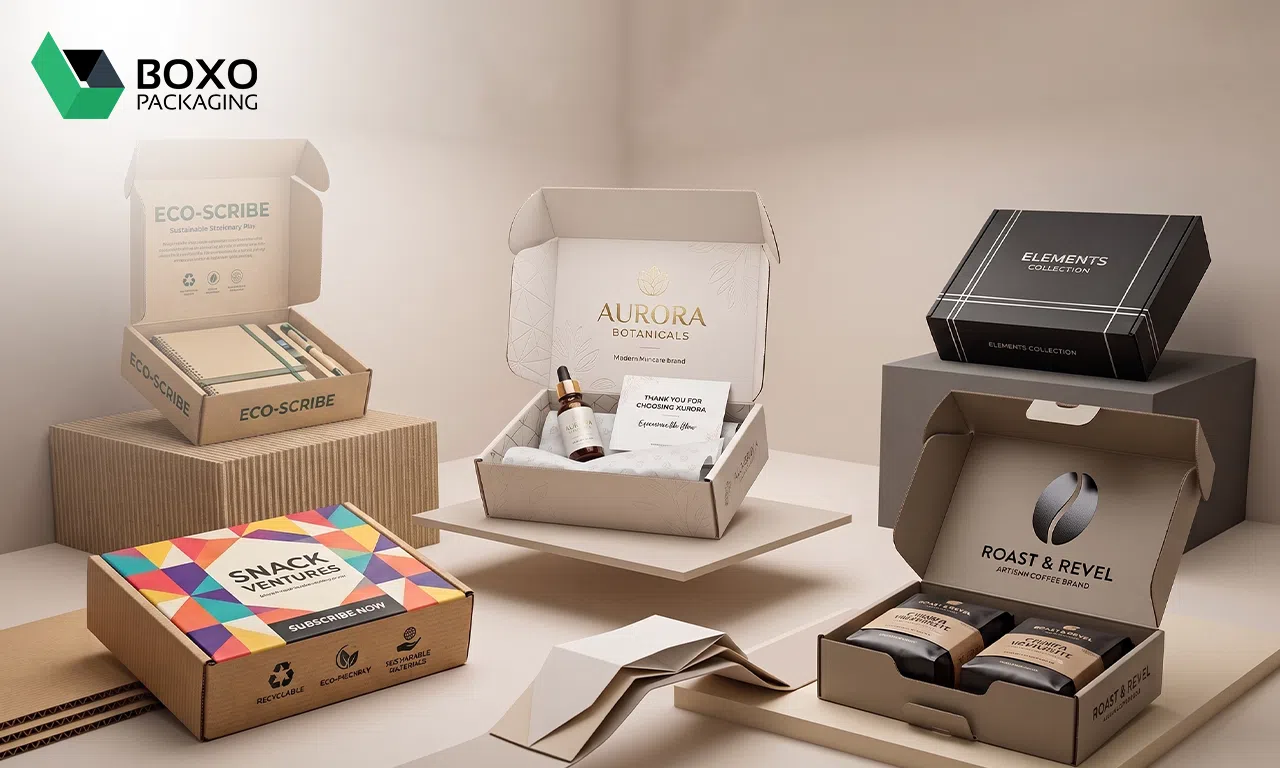
Packaging does more than protect a product during handling. It also introduces your brand before customers interact with the product itself. Custom tuck boxes give businesses a practical way to combine protection, presentation, portability, and branding. These folding cartons use tuck-in flaps that close the package without requiring a separate lid. They arrive flat, occupy relatively little storage space, and can be produced around specific product dimensions. Current packaging guides describe tuck boxes as lightweight folding cartons widely used across retail, cosmetics, supplements, food, and consumer products.
That combination explains their popularity. A business does not always need a heavy rigid package to create a professional presentation. Sometimes, a carefully designed paperboard carton does the job better. Think of the box as a compact salesperson sitting directly on a shelf. Its colors attract attention, its structure protects the product, and its printed panels communicate useful information. With the right material and construction, custom tuck boxes can support both everyday packaging requirements and premium product presentation. They can also accommodate different printing methods, finishes, dimensions, and closure styles. That flexibility makes them suitable for businesses ranging from emerging brands to established retail companies.
What Are Custom Tuck Boxes?
A tuck box is a folding carton made from a flat sheet of paperboard. Manufacturers cut and score the sheet before folding it into its final three-dimensional form. Tuck flaps then fold inward and secure the package through the box structure. Depending on the design, the top and bottom closures can fold in the same direction or opposite directions. Some structures also use locking bottoms when products require additional support.
The word “custom” describes the level of personalization available. Instead of choosing a generic carton from a standard catalog, a brand can specify dimensions, board type, artwork, printing, coatings, and structural details. The result can fit the product more closely while providing dedicated surfaces for branding. This approach also helps businesses avoid unnecessary empty space inside the package. A properly sized carton can create a cleaner presentation and reduce the amount of packaging material surrounding a small product. Therefore, the structure becomes part of the overall product experience rather than simply serving as an outer container.
How the Tuck Closure Works
The closure mechanism gives tuck boxes their recognizable appearance. Flaps extend from the carton panels and fold inward along scored lines. The final flap then slides into the appropriate position, helping keep the box closed during normal handling. This structure eliminates the need for customers to manage a separate lid in many applications. It also allows the package to open and close relatively easily when the product needs repeated access.
Different products require different closure arrangements. A lightweight cosmetic product may work well with a straightforward tuck-end structure. A heavier item may benefit from an auto-lock or reinforced bottom. Likewise, a product designed for fast filling may require a structure that suits manual or automated packing operations. The key is to choose the closure based on the product, rather than selecting a box style simply because it looks attractive. A beautiful package becomes a poor investment if its closure does not perform properly.
Why Brands Choose Tuck Box Packaging
Businesses often choose folding cartons because they balance appearance and practicality. Tuck boxes can provide large printable surfaces without the bulk associated with many rigid packages. Their paperboard construction also allows manufacturers to create detailed folds and precise structural features. Because the cartons can ship flat, businesses can store unused packaging without filling the same amount of warehouse space as fully assembled boxes.
Branding adds another important advantage. The front panel can carry the primary visual message, while side and rear panels can provide product details. Companies can print logos, colors, instructions, ingredients, barcodes, contact information, and promotional messages across different surfaces. This gives the package multiple communication opportunities. A customer may first notice the front design, then turn the box around to discover additional information. In that sense, the carton works like a small billboard that travels with the product.
Efficient Storage and Shipping
Flat shipping is one of the most practical features of folding cartons. Manufacturers can supply the boxes in a collapsed form before final assembly. This arrangement can reduce the volume required for transportation and storage compared with many pre-assembled packages. Current packaging sources specifically highlight flat delivery as an important advantage for tuck-end cartons.
For growing brands, storage efficiency can become increasingly important. Imagine a company carrying ten different products, each requiring its own package size. Pre-assembled cartons could quickly consume valuable warehouse space. Flat-packed cartons allow more units to remain organized before filling. They can also make fulfillment areas easier to manage because staff can assemble boxes as needed. Consequently, the packaging format can influence not only product presentation but also operational efficiency.
Strong Branding Opportunities
A plain package can protect a product, but branded packaging can communicate far more. Custom printing gives businesses control over the visual language surrounding their products. A luxury brand might select restrained typography and subtle finishes. A children's product might use energetic illustrations and bright colors. Meanwhile, an organic brand could choose kraft paperboard and natural visual elements.
The flexibility also extends beyond the front panel. Side panels can explain features, while the back can provide instructions or required product information. Interior printing can add an unexpected message when customers open the package. Even small details can make the unboxing experience feel intentional. Therefore, businesses should treat every printable panel as part of a larger communication strategy rather than decorating the front alone.
Popular Types of Tuck Boxes
Tuck boxes come in several structural variations. The most appropriate option depends on product weight, filling method, desired presentation, and closure requirements. Straight tuck end and reverse tuck end designs remain common choices, while auto-bottom structures provide additional support for certain products.
Understanding these differences before production can prevent expensive mistakes. The closure direction changes the appearance of the carton and can also affect how the package opens. Likewise, the bottom structure influences how quickly workers can assemble the package. A packaging supplier should therefore evaluate the complete application before recommending a structure. Choosing the right style at the beginning can make production smoother later.
Straight Tuck End Boxes
Straight tuck end boxes use top and bottom flaps that tuck in the same general direction. This creates a clean presentation across the main display panel. Packaging references commonly recommend this structure for products such as cosmetics, supplements, and standard retail items.
The clean front can become particularly useful when visual branding drives purchasing decisions. A logo, product name, image, and key benefit can occupy the primary panel without competing with an awkward closure seam. Straight tuck designs also provide a familiar opening experience for consumers. However, businesses should still evaluate product weight and closure requirements before selecting the structure. A visually appealing design must remain functional throughout transportation, storage, and retail handling.
Reverse Tuck End Boxes
Reverse tuck end boxes use flaps that close in opposite directions. This configuration can provide efficient material use and suits many lightweight retail products. Current packaging resources identify reverse tuck structures for applications including cosmetics, food, pharmaceuticals, and other consumer goods.
The opposite flap direction can also influence how the package opens and closes. For businesses running larger production volumes, those small structural details can matter. Faster filling and easier handling can improve workflow over thousands of units. Nevertheless, the best choice depends on the complete packaging specification. Product dimensions, board thickness, closure strength, and packing process should all receive attention before finalizing the dieline.
Auto-Bottom Tuck Boxes
Auto-bottom tuck boxes combine a tuck-style upper closure with a locking bottom structure. This configuration can provide additional support when a simple folded bottom is not enough. Packaging manufacturers commonly recommend auto-bottom designs for products that need stronger bases or faster assembly.
The structure can be especially useful when employees need to pack products quickly. Instead of manually constructing every part of the bottom, the locking mechanism helps form the base during setup. This can save handling time in suitable production environments. However, the additional structure can also affect material requirements and production costs. Therefore, businesses should compare the benefits against their actual packing process rather than automatically choosing the strongest available design.
Choosing the Right Box Material
Material selection affects appearance, durability, print quality, and overall packaging performance. Common choices include SBS paperboard, kraft board, recycled paperboard, and other folding-carton stocks. Current supplier specifications commonly place tuck cartons within lightweight to moderate paperboard applications, although exact thickness should depend on the product and structural design.
A good material should provide enough rigidity without adding unnecessary weight. It should also fold cleanly along the scored lines without cracking or losing visual quality. The outside surface matters as well because printing performance can change between coated and uncoated boards. Brands should therefore select stock based on more than appearance. Product weight, dimensions, handling conditions, print requirements, and sustainability goals all deserve consideration before production.
SBS Paperboard
Solid bleached sulfate, commonly called SBS, provides a smooth and bright surface for printed packaging. Its appearance makes it popular for products where crisp graphics and clean colors matter. Packaging sources commonly list SBS among materials used for tuck-end cartons.
This material can suit cosmetics, retail products, supplements, and other consumer packaging where presentation matters. A bright surface can help printed colors appear more consistent and detailed. However, material selection should always follow the product's structural requirements. A premium-looking board cannot compensate for an unsuitable thickness or poorly engineered box structure. The ideal specification balances appearance with performance.
Kraft and Recycled Options
Kraft paperboard offers a natural appearance that can support earthy or minimalist branding. Its recognizable brown tone can communicate a handmade or environmentally conscious aesthetic when used appropriately. Recycled paperboard provides another route for businesses seeking packaging with recycled material content.
Sustainability claims require careful wording, however. A package should not automatically be described as environmentally friendly simply because it uses paper. Recycling availability depends on local collection systems, material combinations, coatings, inks, and contamination. The U.S. Environmental Protection Agency reports that paper and paperboard recycling reached 68.2% in 2018, while overall paper and paperboard packaging recycling reached 80.9% that year. These figures show the importance of paper packaging recovery, but they do not guarantee that every individual carton will be recycled.
Custom Tuck Box Printing Options
Printing transforms a functional carton into branded packaging. Digital printing can work well for shorter runs and designs requiring flexibility. Offset printing can become attractive for larger production quantities where consistent high-quality output matters. CMYK printing supports full-color graphics, while spot colors can provide more controlled brand color reproduction.
The best printing process depends on quantity, artwork, color requirements, and budget. A small business testing a new product may prioritize flexibility and low setup complexity. An established brand producing large quantities may prioritize consistent color and unit economics. Before approving production, businesses should request a proof or sample whenever possible. That step allows them to review text, colors, dimensions, and artwork placement before committing to a larger run.
Finishes That Improve Box Appearance
Finishing options can change the way a carton looks and feels. Matte coatings create a subdued appearance, while gloss coatings can produce a brighter visual effect. Soft-touch finishes add a smooth tactile quality that can support premium positioning. Foil stamping and spot UV can highlight selected elements such as logos or product names.
However, more finishing does not automatically mean better packaging. Excessive effects can make a design feel crowded or distract from the product message. A restrained approach often creates a stronger result. For example, a simple matte surface with a carefully placed foil logo can communicate quality without overwhelming the package. The finish should support the brand story instead of becoming the story itself.
Product Applications for Tuck Boxes
Tuck cartons work across many industries because their structure adapts to different dimensions and printing requirements. Packaging sources list cosmetics, supplements, food, pharmaceuticals, soap, small electronics, and other consumer products among common applications.
The format works particularly well when a product needs a branded outer carton without the weight of a rigid package. Cosmetics can use the front panel to communicate product names and visual identity. Food brands can provide product information across side and rear panels. Small electronics can use custom dimensions to keep accessories organized. Retail businesses can also use the carton to create consistent packaging across multiple product variations. The key is selecting the appropriate structure and board specification for each application.
Retail, Cosmetics, and Food
Retail shelves place strong demands on packaging. Products must compete visually while also providing enough information for customers to make decisions. A well-designed carton can use hierarchy to guide the eye from brand name to product type and key benefits.
Cosmetic packaging often benefits from clean typography and premium finishing. Food packaging may require clearer information and practical structural considerations. Meanwhile, retail accessories can prioritize compact sizing and strong shelf presentation. Each category requires a different design approach. The same carton structure can therefore produce completely different results depending on its artwork, material, and intended audience.
How to Design Effective Tuck Packaging
Start with the product rather than the artwork. Measure its length, width, and height carefully, then determine how much clearance the package needs. Packaging guides recommend creating the dieline around the product dimensions and considering closure and flap requirements during structural development.
After establishing the structure, build the visual design around the available panels. Keep important text away from fold lines and closure areas. Place the logo where customers can see it quickly. Then organize supporting information according to importance. A strong package does not force customers to search for the basics. Instead, it creates a visual path that feels natural. Finally, produce a physical sample and test the actual product inside it. Digital artwork can look perfect while revealing unexpected problems during real assembly.
Custom Sizing and Structural Considerations
One major advantage of custom packaging involves fitting the carton to the product. Standard boxes may leave excessive empty space or fail to accommodate unusual shapes. Custom dimensions can create a more controlled fit and help businesses present products more professionally.
Size also influences material consumption and shipping efficiency. A larger carton requires more board and may occupy more storage space. An overly tight carton can create problems during packing or damage the product. The goal is not simply to create the smallest possible package. Instead, the goal is to achieve a practical balance between protection, presentation, material use, and assembly. Structural testing becomes especially important when the product has unusual weight or shape.
Sustainable Tuck Box Packaging
Paperboard packaging can support recycling-focused packaging strategies, but sustainability depends on the complete material specification. The EPA's packaging data show that paper and paperboard remain major components of the recycling stream. However, businesses should avoid broad environmental claims without checking the actual board, coatings, inks, adhesives, and local recycling rules.
Brands can take several practical steps toward more responsible packaging. They can select appropriately sized cartons, reduce unnecessary material, investigate recycled-content boards, and avoid unnecessary mixed-material components. They can also communicate disposal instructions clearly when appropriate. The strongest sustainability strategy usually begins with avoiding excess rather than adding decorative claims. A compact package that uses suitable material can provide a more credible approach than an oversized box with a green-colored design.
Comparing Tuck Boxes With Rigid Boxes
Tuck boxes and rigid boxes serve different packaging objectives. Folding cartons generally prioritize efficient material use, flat shipping, customization, and scalable production. Rigid boxes typically emphasize substantial structure and a more substantial unboxing experience.
Neither format wins in every situation. A luxury gift may benefit from the substantial feel of a rigid package. A retail cosmetic may benefit from the efficiency of a folding carton. The right decision depends on customer expectations, product requirements, production volume, storage, and budget.
How Much Do Custom Tuck Boxes Cost?
There is no single price for a custom carton because multiple variables affect production. Box dimensions, board material, printing method, order quantity, finishing, structural complexity, and shipping requirements can all change the final cost. Larger production runs often produce different unit economics than small batches, while specialized finishes can add additional expenses.
Businesses should avoid comparing quotations using unit price alone. A cheaper box may require more assembly time or provide less structural support. A slightly more expensive package could reduce storage requirements or improve packing efficiency. Therefore, the better question is whether the complete packaging system delivers acceptable value. Ask suppliers about material specifications, sample costs, production timelines, printing methods, finishing, shipping, and minimum order quantities before making the final decision.
How to Order Custom Tuck Boxes
The ordering process becomes easier when the packaging specification is prepared in advance. Start by documenting the product dimensions and approximate weight. Then decide whether you need a straight tuck, reverse tuck, or auto-bottom structure. After that, select the paperboard type, thickness, printing requirements, and preferred finish.
Next, request a dieline or structural drawing from the packaging supplier. Place the artwork correctly according to that template and keep critical elements away from folds and glue areas. Request a physical sample when the product or design requires precise fitting. Finally, review the assembled box before approving the full production quantity. This process reduces the chance of discovering structural or artwork problems after manufacturing has started.
Common Design Mistakes to Avoid
Many packaging problems begin before the first box reaches production. One common mistake involves designing artwork without considering the dieline. Important logos or text can become distorted when placed too close to folds. Another mistake involves choosing a board that looks attractive but lacks sufficient rigidity for the product.
Poor information hierarchy can also weaken an otherwise attractive package. Customers should quickly understand what the product is and which brand made it. Excessive decoration can create another problem by making the package visually confusing. Businesses should also avoid treating sustainability as a marketing shortcut. Claims should reflect the actual material and disposal conditions. A disciplined design process prevents these problems and creates packaging that looks intentional from every angle.
The strongest results come from treating packaging as both a structural and branding project. Start with the product dimensions, choose the appropriate closure, select a suitable board, and then develop the artwork around the finished structure. Test samples before large production runs, and evaluate sustainability claims based on actual materials. When these decisions work together, a simple folding carton can become a valuable part of the customer experience.
Frequently Asked Questions
1. What are custom tuck boxes used for?
Custom tuck boxes are used for many lightweight and moderate-weight products. Common applications include cosmetics, supplements, food, soap, pharma packaging, electronics accessories, and retail merchandise. Their printable surfaces make them useful when brands need both product protection and visible branding.
2. Can tuck boxes be made in custom sizes?
Yes. Tuck cartons can be engineered around specific product dimensions. Businesses can adjust length, width, height, flap dimensions, and structural details according to their requirements. Accurate measurements help create a better product fit and reduce unnecessary internal space.
3. Are tuck boxes recyclable?
Many paperboard cartons can enter paper recycling streams, but recyclability depends on the specific material combination and local recycling rules. Coatings, laminations, adhesives, and other components can affect disposal options. Businesses should verify the finished package against local recycling guidance rather than making universal claims.
4. Which tuck box style should I choose?
Straight tuck designs work well when a clean presentation matters. Reverse tuck structures can suit many lightweight retail applications. Auto-bottom versions can provide additional support for products that need a stronger base. The correct choice depends on product weight, packing method, dimensions, and desired customer experience.
5. Can custom tuck boxes include premium finishes?
Yes. Depending on the supplier and material, businesses can use matte, gloss, soft-touch, foil stamping, spot UV, and other finishing techniques. These effects can emphasize logos, product names, or selected design elements. A restrained combination often creates a more polished result than using every available effect.