Why Is It So Important?
Effective management enables companies to make the most of their office space by identifying underutilized areas. Maximizing the usage can reduce the need for additional office space or even cut down on the current site, resulting in significant cost savings. For example, if you are a hybrid or remote-first company, you can reduce office expenses by lowering the number of workspaces and implementing a shared-desk policy.
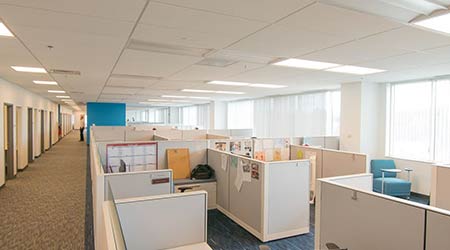
A well-managed office space can have a positive impact on employee productivity. Employees are more likely to feel motivated, engaged, and productive if you create a comfortable and functional workplace. And a clean, organized, and efficient office space can help to build trust and credibility and improve brand image because the office is often the first point of contact for customers and visitors.
7 Tips to Ease Office Space Management
1| Evaluate your current office space
Evaluate the current space to identify areas for improvement. You should analyze the existing layout of your office and assess how well it supports your business operations and employees’ needs. Look for underutilized spaces, such as usually empty meeting rooms or unused storage areas, and consider how these spaces can be repurposed to meet your organization’s needs better. Suppose you use a space reservation system or have data about space occupancy. In that case, you can analyze when and how often the space was occupied and use those insights for better space utilization or even office layout changes.
2| Use space planning tools
Space planning tools can help you visualize the layout of your office space and identify areas for improvement. Floor plans, seating charts, and 3D models can be used to create a more efficient workspace. By experimenting with different layouts and configurations, you can identify the optimal arrangement of your office space that maximizes productivity and collaboration.
3| Optimize desk layout
The desk layout is an essential component of an efficient workspace. Ensure that employees have the office space required per person to work and move around and that desks are arranged to promote collaboration and productivity. Consider using open office layouts or desk clusters to encourage employee communication and interaction. Additionally, provide ergonomic seating and workstations to ensure employee comfort and reduce the risk of injury.
4| Implement flexible workspaces
Flexible workspaces, such as hot-desking, shared desks, and coworking spaces, can maximize office space utilization and provide employees with more options for where and how they work. This can include creating shared spaces for casual collaboration or setting up areas for mobile workers who may not need a permanent desk. This allows for more efficient use of space while providing employees the flexibility to work productively.
5| Use technology to track space utilization
Technology can play a significant role in optimizing office space utilization. Desk booking systems and occupancy sensors can track space utilization and provide valuable insights into how employees use their workspace. This information can be used to optimize desk allocation, schedule cleaning, and maintenance, and identify areas for improvement.
6| Promote a clean and clutter-free environment
A clean and organized workspace is essential for productivity and efficiency. Encourage employees to keep their workspaces tidy, provide adequate storage solutions, and implement regular cleaning schedules. This not only improves the physical appearance of the office but can also help reduce distractions and promote focus.
7| Encourage collaboration
Collaboration is a critical component of many modern workplaces, and creating designated spaces for group work can promote teamwork and productivity. Consider setting up meeting rooms, collaboration zones, or communal areas where employees can interact and collaborate on projects. Encouraging collaboration not only fosters a positive office culture but can also help maximize the use of office space optimisation in Malta.
By considering employee needs and implementing the right tools and processes, you can maximize the use of your space, increase collaboration and communication, and enhance overall job satisfaction. Remember, well-managed office space is not only good for your employees but also for your business’s bottom line. So, take the time to assess your current space management practices and make changes as necessary to create a better work environment for everyone.