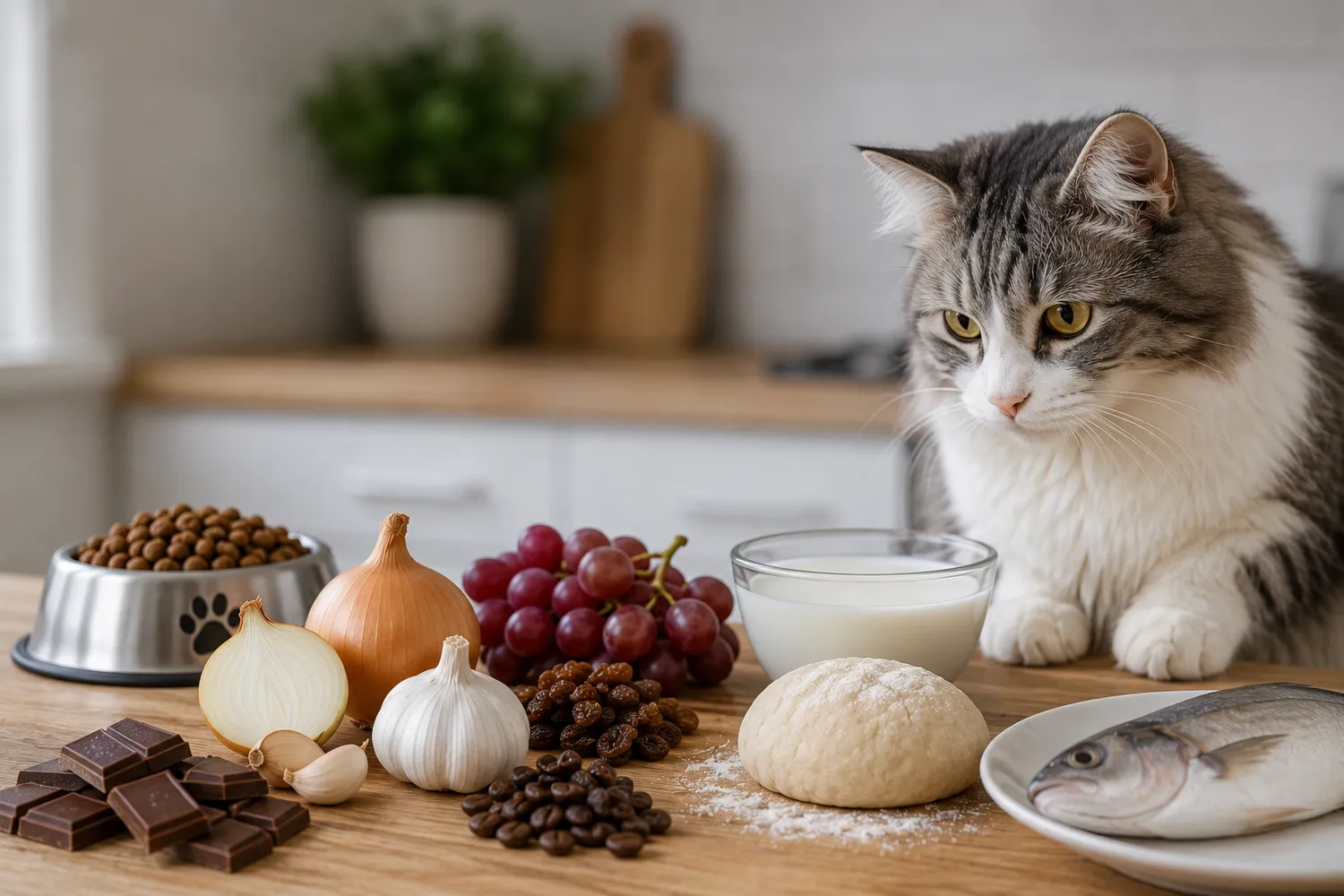
Cats are obligate carnivores with a digestive system built around animal protein. Their cat food requirements differ significantly from those of other animals, including dogs. What appears harmless from a human perspective can cause serious harm to a cat. Some of these foods are found in everyday kitchens, which is why knowing what to keep out of your cat's reach matters.
Here are seven foods that should never be given to a cat.
Foods That Are Never Safe for Cats
1. Onions and Garlic
Onions and garlic, both members of the allium family, are toxic to cats in all forms. Raw, cooked, dried, and powdered versions all carry the same risk.
The compounds in allium vegetables damage red blood cells in cats, reducing their ability to carry oxygen effectively. This leads to a condition called haemolytic anaemia.
What to watch for after exposure:
- Lethargy and weakness
- Pale or yellowish gums
- Reduced appetite
- Rapid breathing or elevated heart rate
The symptoms may not appear immediately. They can develop over several days, making it more difficult to identify the cause. Any product containing onion or garlic powder, including many processed human foods and stocks, should be kept out of reach of cats.
Choosing pet-safe treats made with safe ingredients is the most reliable way to ensure allium derivatives are not present in anything your cat consumes.
2. Chocolate and Caffeine
Both chocolate and caffeine contain compounds that cats cannot metabolise safely. Chocolate contains theobromine. Coffee, tea, energy drinks, and certain medications contain caffeine. Both affect the nervous system and cardiovascular function in cats.
Symptoms of chocolate or caffeine toxicity in cats:
- Restlessness and hyperactivity
- Rapid heart rate
- Tremors or seizures
- Vomiting and diarrhoea
Dark chocolate contains the highest concentration of theobromine, but milk chocolate and white chocolate are not safe either. Even a small amount warrants veterinary attention. If your cat has consumed anything containing chocolate or caffeine, contact a veterinarian immediately rather than waiting for symptoms to develop.
3. Grapes and Raisins
Grapes and raisins are toxic to cats and can cause acute kidney failure. The exact compound responsible has not been fully identified, which means there is no established safe quantity for either.
Both fresh grapes and dried raisins carry the same risk. They appear in many human foods, including fruit cakes, trail mix, and certain breads. Any accidental ingestion should be treated as a veterinary emergency regardless of the amount consumed.
Understanding cat food safety includes knowing which everyday foods pose a risk, even in trace amounts. Grapes and raisins fall firmly into that category.
4. Raw Dough and Alcohol
These two sit in the same category because the mechanism of harm is related.
Raw dough containing yeast continues to ferment inside a cat's stomach after ingestion. This produces carbon dioxide, causing painful bloating, and also produces ethanol as a byproduct. Ethanol, the same compound found in alcohol, is toxic to cats even in small quantities.
Alcohol itself, regardless of source, causes rapid intoxication in cats due to their small body weight and limited ability to process ethanol. Symptoms include disorientation, vomiting, breathing difficulties, and in serious cases, coma.
Neither raw dough nor any form of alcohol should ever be accessible to a cat.
5. Raw Fish in Large Quantities
Fish is a natural part of many cats' diets and is used as a protein source in cat-safe foods formulated specifically for feline nutrition. The concern is not the fish itself but raw fish consumed regularly in large quantities.
Raw fish contains an enzyme called thiaminase, which breaks down thiamine, also known as vitamin B1. Thiamine is essential for neurological function in cats. A deficiency caused by regular raw fish consumption leads to serious neurological symptoms, including loss of coordination, seizures, and in severe cases, death.
Cooked fish does not carry the same risk because heat deactivates the thiaminase enzyme. Occasional raw fish in small amounts is generally not a concern. Regular large quantities are.
6. Dog Food as a Regular Diet
Occasional exposure to dog food is unlikely to cause immediate harm. Feeding dog food as a regular diet is a different matter.
Cats have specific nutritional requirements that dog food is not formulated to meet. Taurine is an amino acid that cats cannot synthesise themselves and must obtain through diet. Dog food contains insufficient taurine for a cat's needs. Long-term taurine deficiency in cats leads to serious cardiovascular and vision problems.
Cats also require higher levels of protein and specific fatty acids not present in adequate amounts in dog food. Dog food fed regularly to a cat is not a neutral choice. It is a diet that progressively fails to meet the cat's core nutritional needs.
7. Dairy Products
Most adult cats are lactose intolerant. Like dogs, cats produce the lactase enzyme as kittens to digest their mother's milk. As they mature, lactase production reduces significantly.
When adult cats consume dairy products, including milk, cream, or cheese, the undigested lactose ferments in the digestive system and causes discomfort.
Common symptoms of dairy consumption in lactose-intolerant cats:
- Loose stools or diarrhoea
- Bloating and gas
- Vomiting shortly after consumption
The image of a cat drinking a bowl of milk is a persistent cultural reference. For most adult cats, it is not a practice that supports healthy pet nutrition.