Symmetry is not decorative. It governs how light organizes itself inside a diamond. When facets align precisely, the pattern of brightness and contrast appears deliberate and balanced. When alignment drifts, sparkle becomes uneven.
Symmetry supports optical precision.
Facet Alignment and Light Return
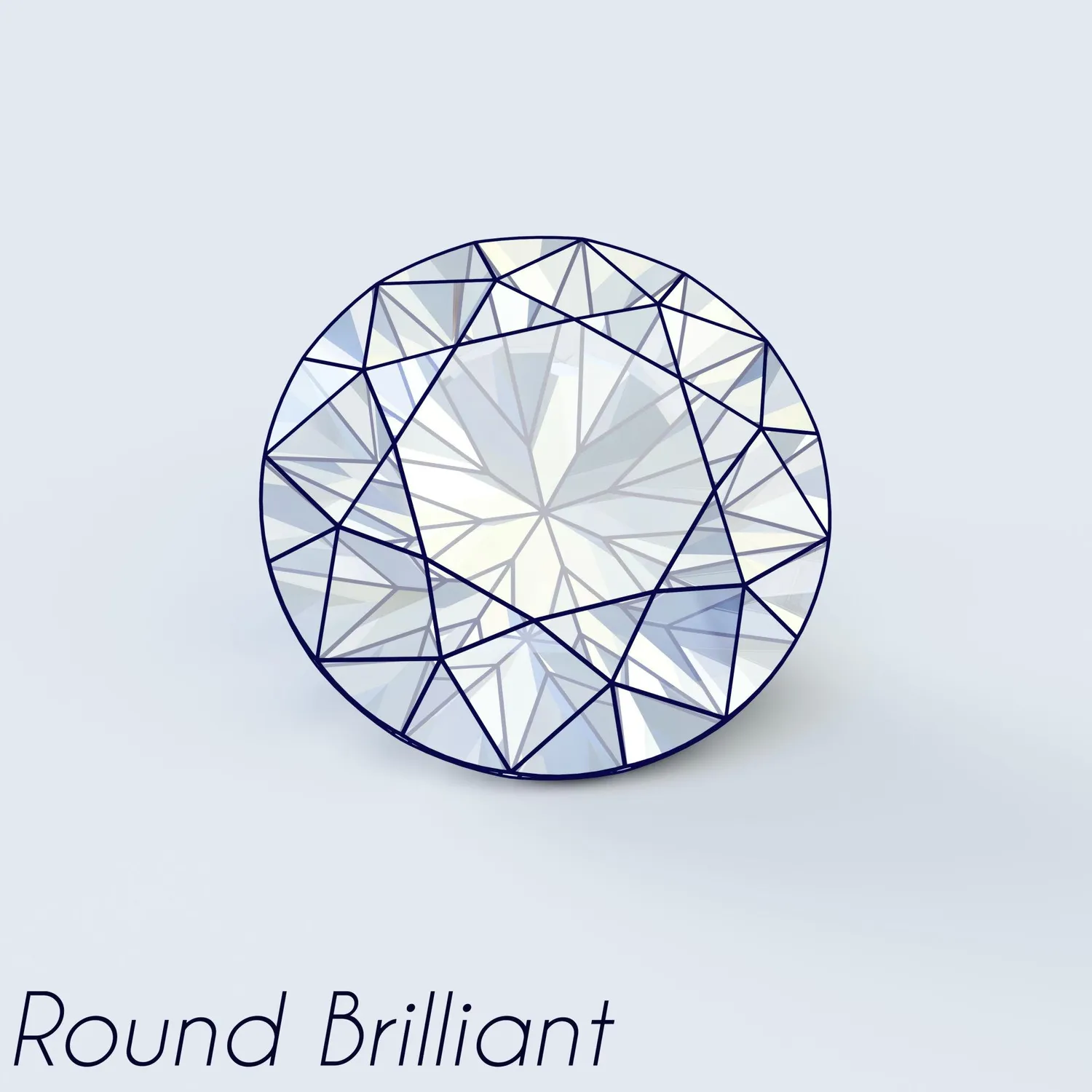
A round brilliant diamond contains multiple facets arranged in calculated positions. Each facet functions as a mirror.
If facets are aligned consistently:
- Light reflects evenly across the crown.
- Contrast zones appear balanced.
- Brightness distributes uniformly.
If alignment is inconsistent:
- Certain areas appear darker.
- Scintillation becomes irregular.
- The visual pattern lacks cohesion.
Even small deviations can alter how light exits the stone.
Pattern Consistency and Visual Precision
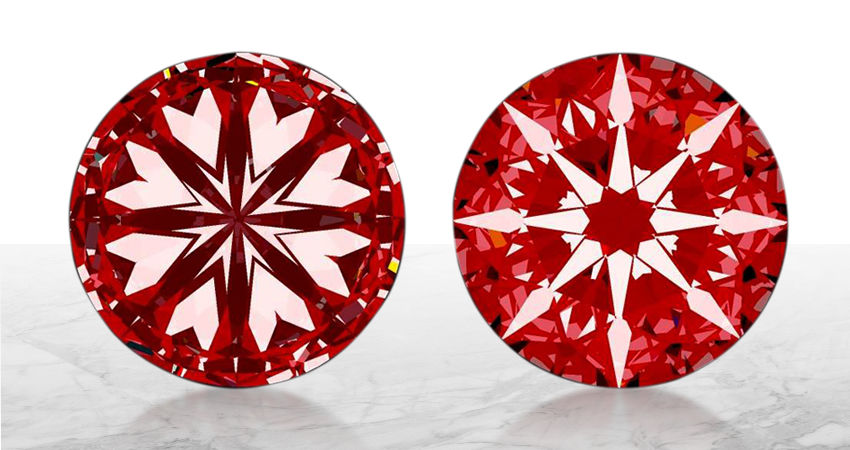
When viewing a well-symmetrical diamond face-up, the contrast pattern appears organized. In some cases, distinct “arrows” are visible in round brilliants under proper lighting.
This optical symmetry:
- Enhances perceived precision
- Strengthens scintillation
- Contributes to refined appearance
In poorly symmetrical stones, pattern irregularities interrupt the flow of light. While casual observers may not identify the issue directly, the stone can appear less crisp.
Precision reads as quality.
Scintillation and Movement
Scintillation refers to flashes of light and dark as the diamond moves.
Strong symmetry produces:
- Even flashes across the surface
- Predictable light-dark transitions
- Balanced visual rhythm
Weak symmetry produces:
- Random bright spots
- Uneven flashing
- Areas that remain persistently dark
Movement reveals structural accuracy.
Symmetry vs Proportion
Proportion and symmetry are related but distinct.
- Proportion governs angles and percentages.
- Symmetry governs alignment and shape precision.
A diamond may have acceptable proportions but mediocre symmetry, resulting in slightly disrupted light distribution.
Both must work together for optimal performance.
Laboratory Symmetry Grades
Grading reports typically include a symmetry grade such as Excellent, Very Good, Good, and below.
Higher symmetry grades indicate:
- Proper facet alignment
- Centered table
- Even outline shape
While minor symmetry variations may not dramatically reduce sparkle, higher grades support consistent performance.
For everyday wear, Excellent or Very Good symmetry generally maintains refined appearance.
Visible Clues in Real Lighting
In diffused daylight:
- Check for even brightness across the table.
- Observe whether dark zones appear lopsided.
In spotlight lighting:
- Watch how flashes distribute during rotation.
If certain sections repeatedly lack brightness, symmetry may be compromised.
Durability Implications
Symmetry does not directly affect structural strength, but misaligned facets may indicate inconsistent cutting precision overall.
Precision cutting often correlates with careful finishing, which benefits long-term performance.
Long-Term Satisfaction
Over time, consistent light pattern becomes more noticeable than momentary brilliance.
A symmetrical diamond:
- Appears refined
- Maintains visual balance
- Performs predictably across lighting conditions
Irregular light patterns can subtly diminish perceived quality.
Frequently Asked Questions
Is symmetry more important than cut grade?
Symmetry is part of cut quality but does not replace balanced proportions.
Can I see symmetry without magnification?
Yes, through consistent contrast patterns and even brightness.
What is the hearts and arrows pattern?
A visual indicator of precise optical symmetry in certain round brilliants.
Does symmetry affect sparkle?
Yes, it influences how evenly light flashes across the surface.
Are minor symmetry flaws noticeable?
Often only subtly, but precision enhances refinement.
Should I prioritize Excellent symmetry?
For round brilliants, higher symmetry grades generally support better light pattern consistency.
Does symmetry influence price significantly?
It can, particularly at higher quality tiers.
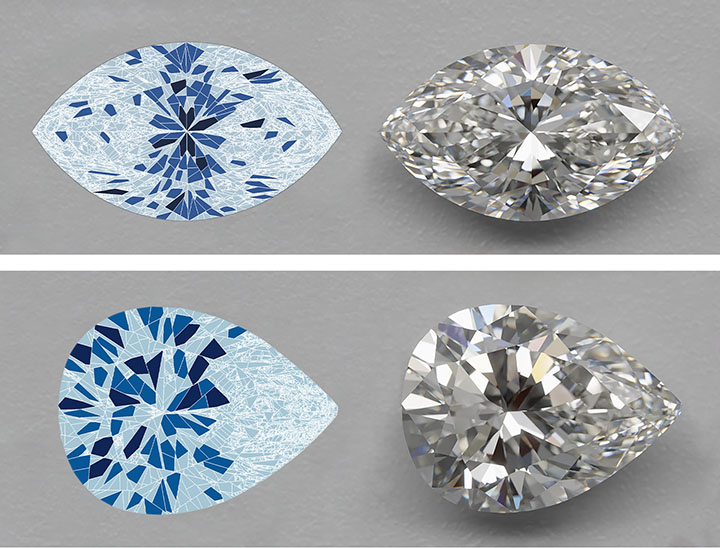
Is symmetry relevant for all shapes?
Yes, though visual impact may vary by cut style.