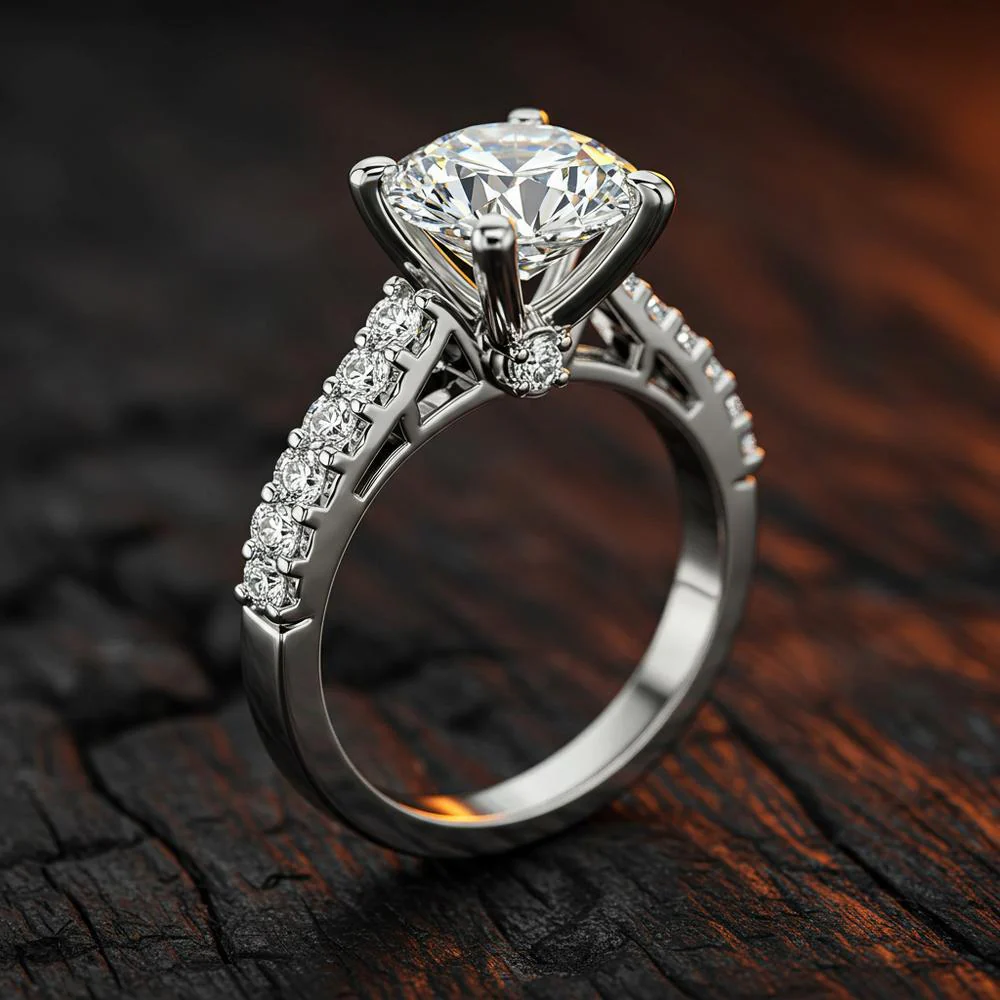
Prongs are structural anchors. They secure center stones and absorb daily impact. Over time, they thin, wear down, and lose metal through friction and polishing.
Re-tipping is not cosmetic. It is preventive structural maintenance.
When It’s Needed
Prongs require attention when you notice:
- Flattened or sharp edges
- Visible thinning at the tip
- Stone movement under light pressure
- Uneven height among prongs
Routine inspections often reveal wear before it becomes visible to the wearer. High-contact areas — especially rings worn daily — are most vulnerable.
Delaying repair increases the risk of stone loss.
Process Overview
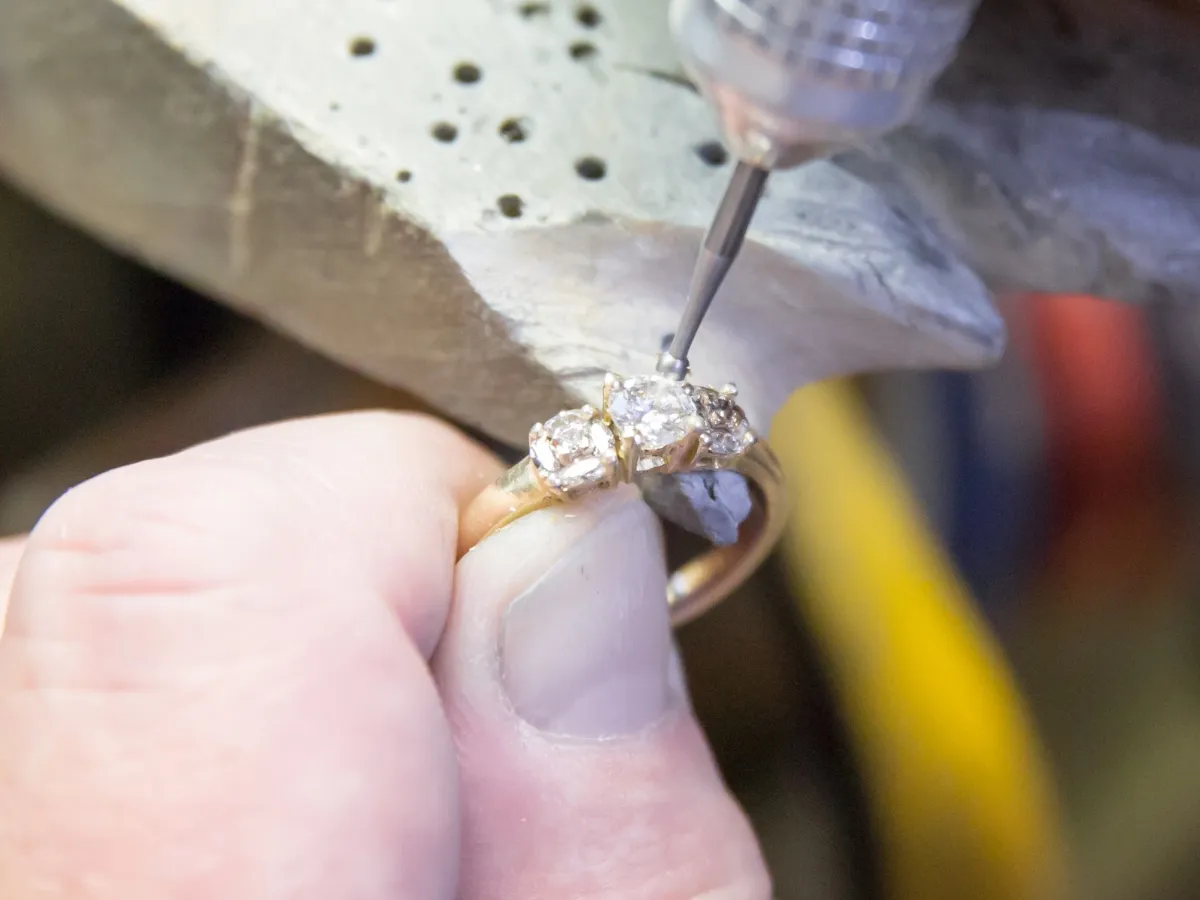
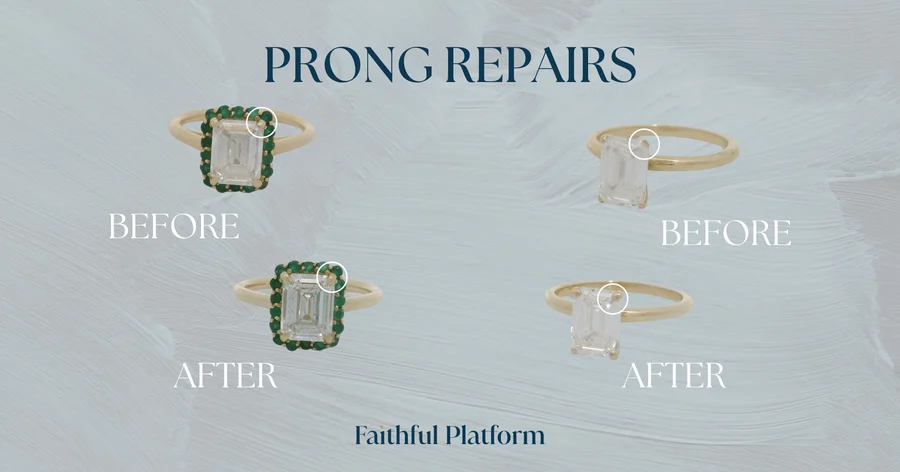
Re-tipping involves rebuilding worn prong tips with new metal.
The jeweler typically:
- Inspects prong stability and stone seating
- Applies compatible metal to rebuild the tip
- Reshapes and secures the prong
- Checks stone alignment and tightness
In some cases, full prong replacement may be necessary if wear extends below the tip.
Frequency
There is no fixed timeline.
Re-tipping frequency depends on:
- Wear habits
- Metal type (gold vs platinum behavior)
- Ring profile height
- Number of prior polishings
Daily-wear rings often require prong evaluation every 12–18 months. Maintenance intervals shorten if the ring is worn during high-impact activities.
Over-polishing accelerates metal loss.
Prevention Habits
To extend prong lifespan:
- Remove rings during workouts or manual tasks
- Avoid knocking settings against hard surfaces
- Schedule professional inspections
- Limit unnecessary polishing
Lower-profile settings reduce prong exposure and impact risk.
Preventive care is less costly than stone replacement.
Cost Considerations
Re-tipping costs vary based on:
- Number of prongs
- Metal type
- Severity of wear
- Stone complexity
While relatively minor compared to full reconstruction, neglecting prong wear can lead to significantly higher replacement expenses.
Structural maintenance protects long-term value.
FAQ
Is re-tipping visible after repair?
When done well, the repair blends seamlessly with the existing prong.
Can all prongs be re-tipped?
Most can, unless structural damage extends into the setting base.
Does platinum behave differently than gold?
Yes. Platinum displaces metal rather than wearing away as quickly, but it still requires maintenance.
Should I wait until a prong breaks?
No. Preventive repair reduces stone loss risk.