A ring’s beauty is visible from the top. Its strength is revealed from the side and underneath. Strong construction determines whether a ring withstands decades of daily wear or requires repeated repair.
Engineering must support aesthetics.
Band Thickness and Structural Integrity
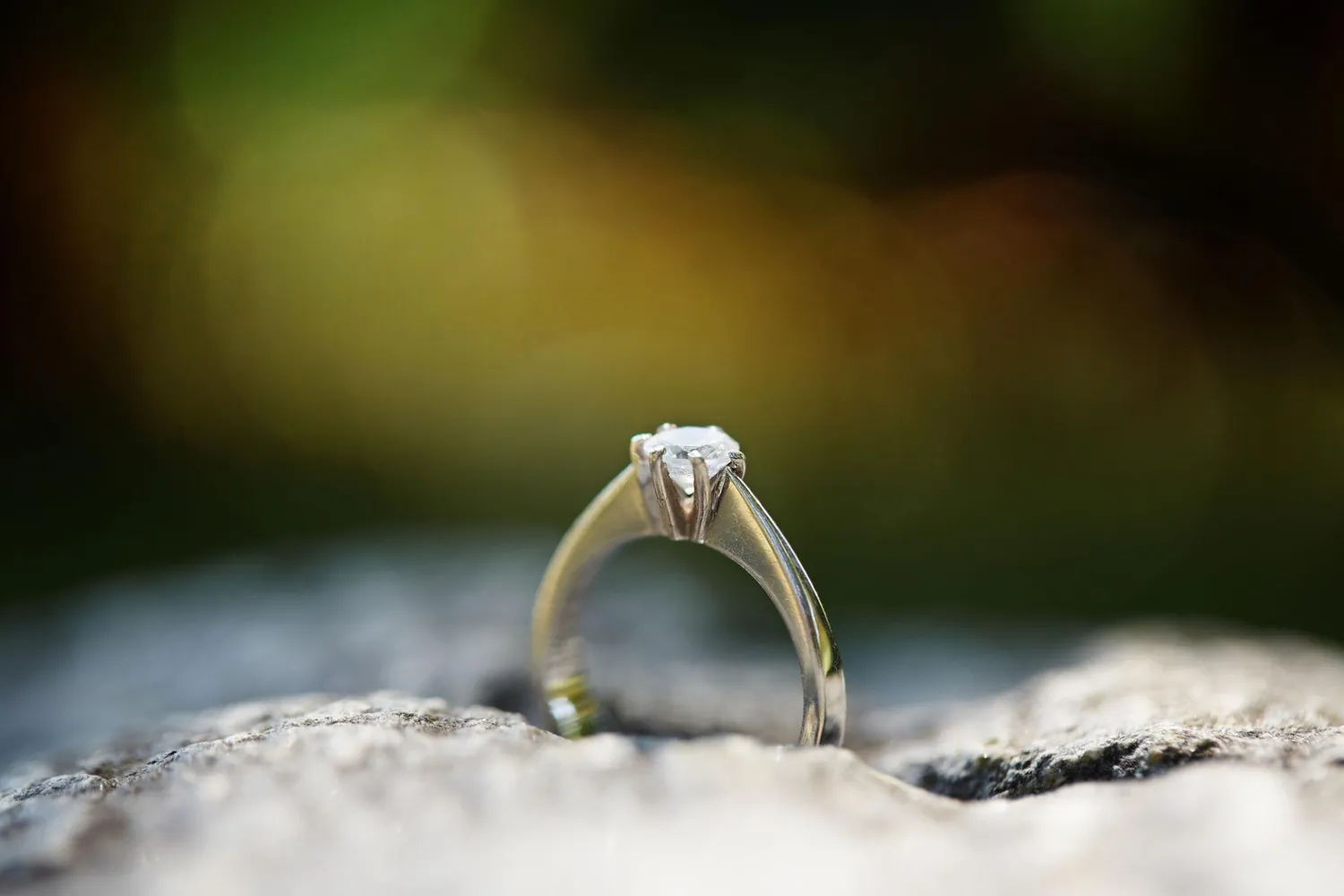
The shank carries the ring’s weight and absorbs daily impact.
For long-term durability:
- Minimum thickness should generally remain around 1.8 to 2.0 mm for daily wear rings.
- Extremely thin bands under 1.5 mm wear down faster through friction.
- Tapering should be gradual, not abrupt.
Thin bands paired with large center stones create imbalance. The ring may bend, distort, or loosen prongs over time.
Substance supports stability.
Setting Integrity
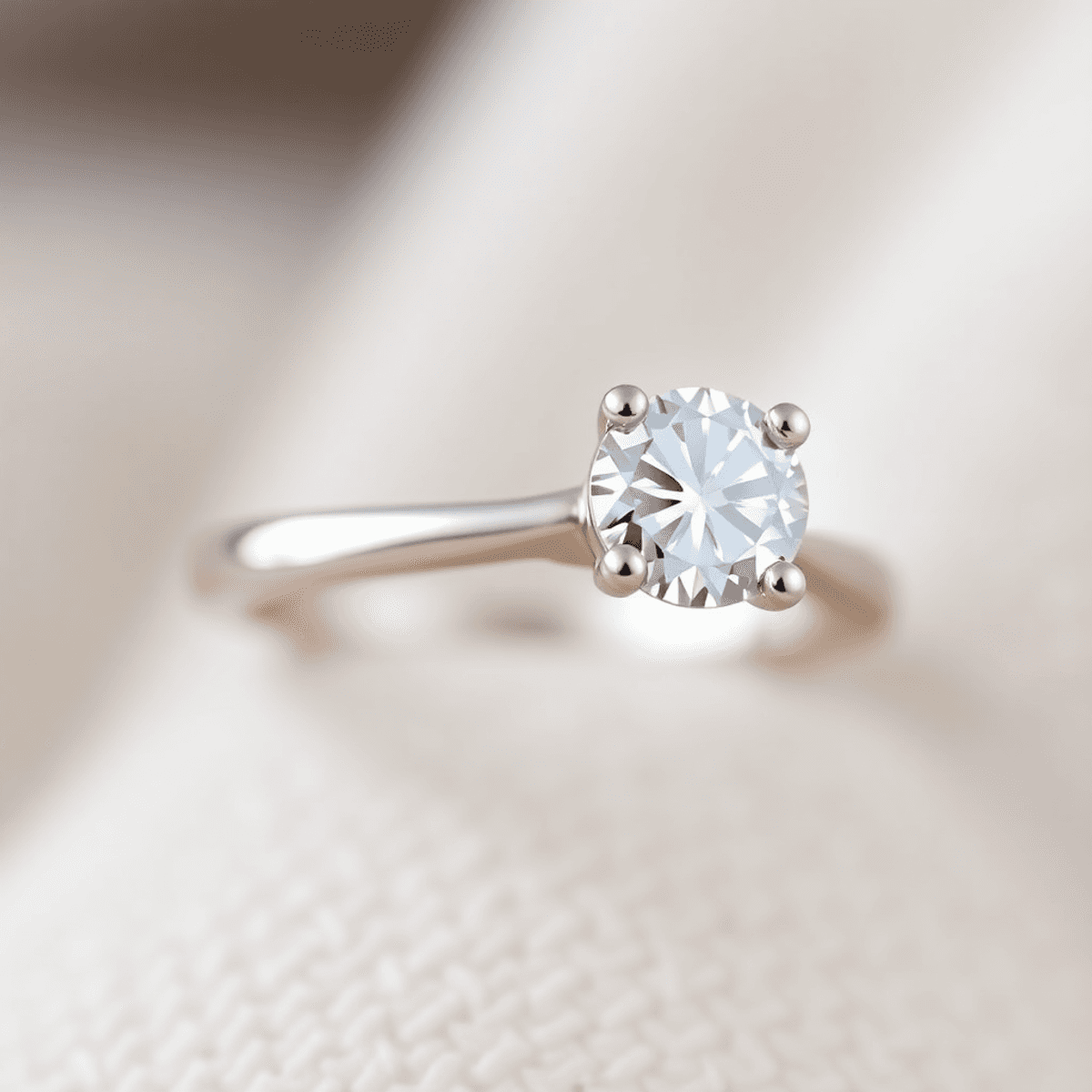
Examine how the center stone is secured.
Strong settings show:
- Even prong spacing
- Adequate prong thickness
- Proper metal coverage at contact points
- Symmetrical alignment from all angles
Prongs that appear overly thin or uneven may compromise long-term security.
Low to moderate setting height reduces leverage stress and snagging risk.
Gallery and Understructure
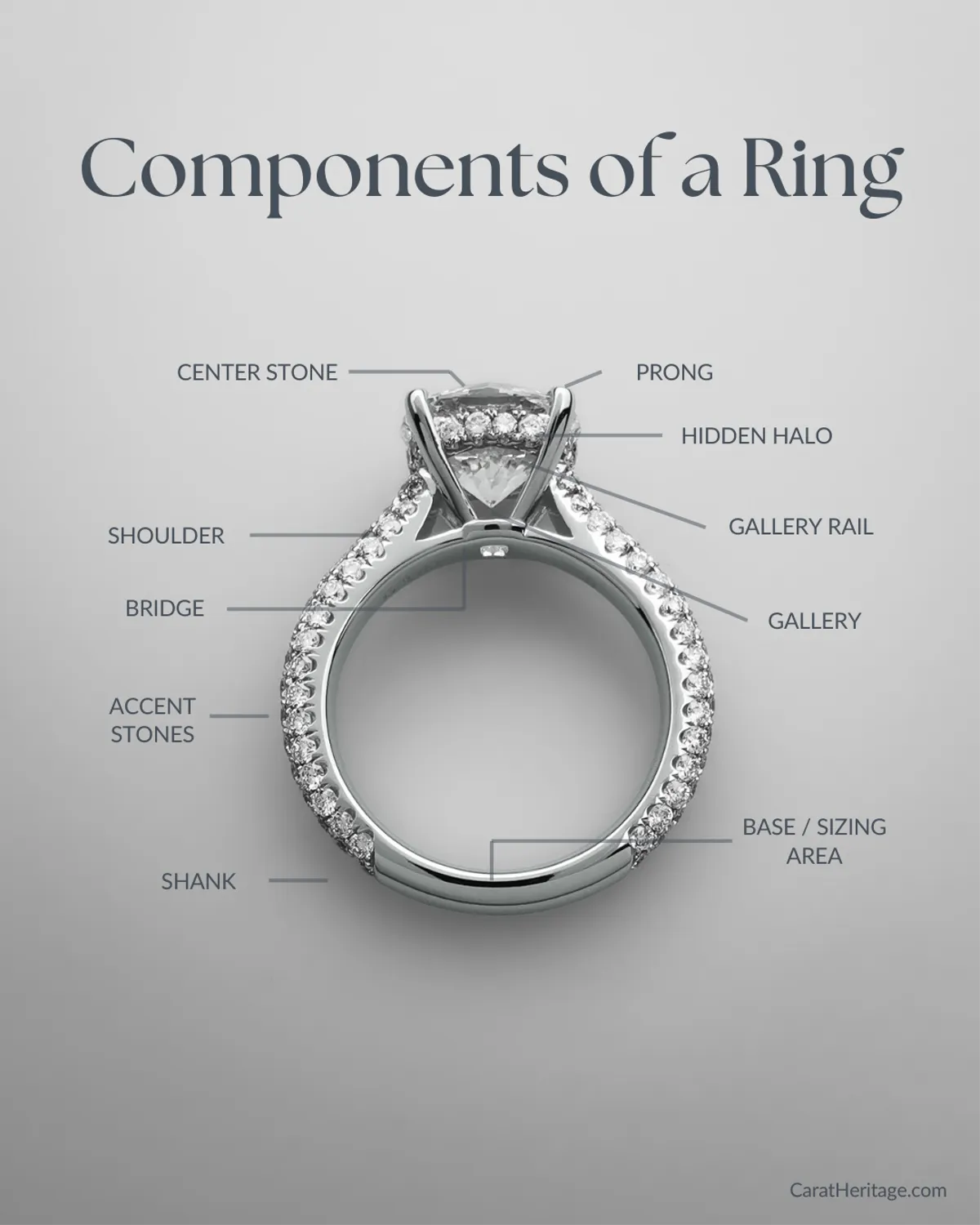
The gallery is the metal framework beneath the center stone.
Well-constructed galleries:
- Provide lateral support
- Prevent stone shifting
- Maintain symmetry
Excessively open or decorative galleries may sacrifice reinforcement for aesthetics.
Structural bars or cross supports enhance durability without increasing bulk.
Even Prongs and Finish Quality
Precision is visible in detail.
Inspect:
- Prong tips evenly shaped and polished
- No sharp edges
- Symmetry when viewed from top and side
Uneven prongs signal rushed finishing. Precision cutting deserves equally precise setting.
Craftsmanship is measurable.
Long-Term Durability Factors
Rings endure:
- Repeated handwashing
- Desk impact
- Temperature changes
- Physical movement
Durable construction includes:
- Solid metal rather than hollow in stress areas
- Secure solder joints
- Reinforced shoulders near the center stone
Weak solder points are common failure zones.
Balance Between Center Stone and Shank
Proportion influences stability.
Large stones require:
- Thicker shanks
- Reinforced shoulders
- Secure multi-prong arrangements
An oversized center stone on a delicate band increases bending risk and prong strain.
Engineering must scale with carat weight.
Daily Comfort as an Indicator
Strong construction also affects comfort.
Check for:
- Smooth interior edges
- Comfort-fit curvature
- Proper weight distribution
If a ring spins excessively or tilts forward, balance may be inadequate.
Comfort reflects structural logic.
Inspection Before Purchase
Before committing:
- View the ring from all angles.
- Press lightly on the center stone to detect movement.
- Inspect prongs under magnification.
- Confirm metal thickness visually and by feel.
A strong ring feels stable without heaviness.
Frequently Asked Questions
Is a thinner band always weaker?
Extremely thin bands wear down faster and may bend over time.
How many prongs are best?
Four to six prongs are common; stability depends on thickness and placement.
Does setting height affect strength?
Higher settings increase leverage and impact risk.
Can delicate designs still be durable?
Yes, if engineered with adequate metal thickness and reinforcement.
What is a weak solder joint?
A poorly fused connection between metal components that may separate under stress.
Should I test the stone for movement?
Yes, gently, before purchase.
Does platinum improve durability?
Platinum is dense and durable but still requires proper construction.
How often should ring construction be inspected?
At least annually for daily wear pieces.