Jewelry that looks beautiful in real life doesn’t always translate well on camera. Pieces can lose sparkle, reflect oddly, or disappear entirely in photos. This is frustrating, especially when jewelry is worn for events where photographs matter as much as the moment itself.
At Carat Culture, we treat photogenic jewelry as a balance of design, proportion, and light behavior. It’s not about choosing flashy pieces. It’s about understanding how cameras see differently than the human eye and choosing jewelry that holds its presence under those conditions.
This guide explains why some jewelry photographs better than others, how to avoid common mistakes, and how to make smart choices for events, social media, and professional photography.
Why Jewelry Looks Different on Camera
Cameras flatten depth. They exaggerate contrast. They catch reflections the eye ignores.
That means jewelry can:
- Lose dimension
- Reflect harsh glare
- Appear darker or duller than expected
- Compete with skin tone or clothing
What looks subtle and refined in person can disappear in photos. What looks dramatic in person can overwhelm the image.
Understanding this gap is the first step to choosing jewelry that photographs well.
Sparkle vs Glare: The Most Important Distinction
Many people assume more sparkle equals better photos. That’s not always true.
Sparkle
Sparkle comes from good cut and controlled light return. It shows as clean flashes and defined brightness.
Glare
Glare comes from flat surfaces, overly polished metal, or very large stones reflecting light directly into the lens. It often appears as white patches or blown-out highlights.
Jewelry with excellent cut and balanced proportions tends to photograph better than jewelry that relies on sheer size or mirror-like polish.
Diamond Cut Matters More Than Diamond Size
Cameras respond strongly to cut quality.
Well-cut diamonds:
- Reflect light evenly
- Maintain contrast in photos
- Look lively even in soft lighting
Poorly cut diamonds, even when large, can look flat or glassy on camera.
If photos matter, prioritize cut over carat weight. The visual return is far more reliable.
Metal Choice and Camera Behavior
Different metals behave very differently under photography lighting.
White Metals
White gold and platinum photograph cleanly but can reflect harsh light. Matte or satin finishes often perform better than high polish.
Yellow Gold
Yellow gold adds warmth but can dominate images if too saturated. Softer gold tones usually photograph more elegantly.
Rose Gold
Rose gold photographs gently and tends to blend well with skin tones, especially in close-up shots.
Highly reflective metal surfaces are more likely to cause glare than diamonds themselves.
Jewelry Scale for Photography
Cameras compress space. Jewelry that feels appropriately sized in person can look smaller in photos.
This doesn’t mean you should always go bigger. It means you should avoid extremes.
Jewelry that photographs well usually:
- Has enough presence to register visually
- Avoids oversized proportions that dominate the frame
- Is balanced relative to face and body
Delicate pieces can work beautifully in close-up portraits. Wider shots often require slightly more visual weight.
Necklines and Framing Matter
Jewelry placement affects how it’s captured.
Necklaces that sit too low may be cropped out of photos. Pieces that sit too high can blend into necklines.
For photography:
- Collarbone-length necklaces frame the face well
- Drop earrings elongate and add movement
- Studs rely heavily on lighting and hair styling
Jewelry should work with how the image is framed, not just how the outfit looks in person.
Earrings: The Most Photogenic Category
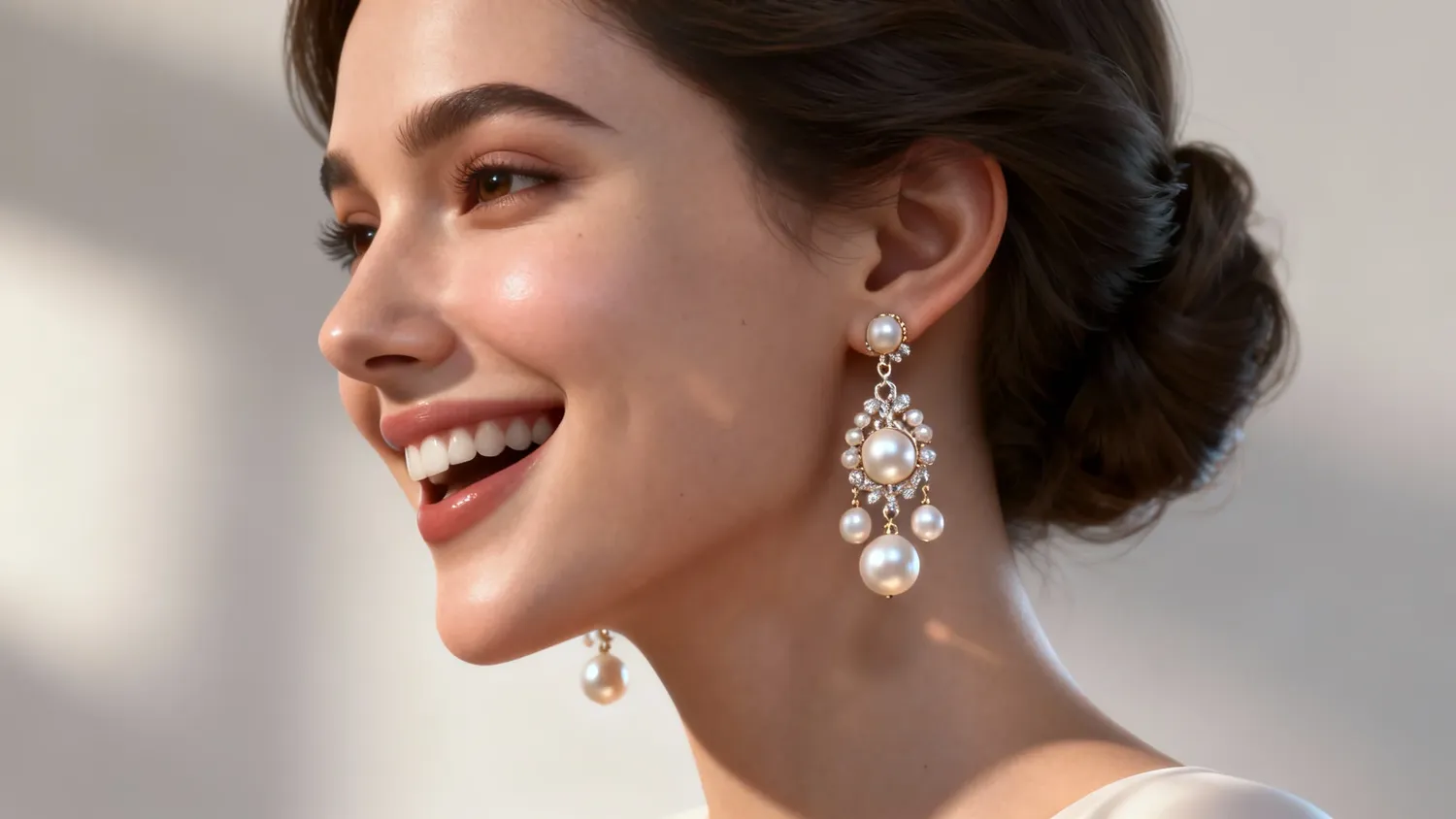
Earrings tend to photograph better than other jewelry because they frame the face and catch light naturally.
Strong photo-friendly choices include:
- Medium-sized hoops
- Structured drop earrings
- Studs with excellent cut quality
Excessive movement can blur in motion shots. Controlled movement reads cleaner.
Rings and Hand Photography
Hands are difficult to photograph well, which makes ring choice important.
For photos:
- Lower-profile rings reduce shadowing
- Balanced proportions photograph more evenly
- Overly tall settings can distort finger proportions
Rings with clean silhouettes tend to look more refined in close-ups than highly intricate designs.
Avoiding Over-Polish and High Shine
Ultra-polished jewelry reflects everything, including cameras, lights, and surroundings.
In photos, this can look distracting or harsh.
Jewelry that photographs best often has:
- Soft polish
- Brushed or satin details
- Defined edges rather than mirror finishes
This creates contrast without glare.
Clothing Color and Jewelry Contrast
Jewelry needs contrast to stand out in photos.
- Light jewelry on light clothing often disappears
- Dark clothing helps diamonds pop
- Busy patterns compete with sparkle
If photography is important, choose solid clothing colors and let jewelry provide the visual interest.
Event Photography vs Social Media Photography
Different photo contexts require different considerations.
Event Photography
Lighting is often unpredictable. Choose jewelry with reliable light return and avoid extreme shine.
Social Media
Images are compressed and viewed on small screens. Slightly more contrast and presence helps jewelry register clearly.
What works for one may not work for the other.
Common Jewelry Photography Mistakes
- Choosing size over cut
- Wearing overly reflective metals
- Ignoring neckline and framing
- Layering too many pieces
- Matching jewelry too closely to outfit color
Most issues come from thinking like a mirror instead of a camera.
How to Test Jewelry Before an Event
If possible:
- Take phone photos in different lighting
- Check how jewelry looks in motion
- View images on a small screen
If the jewelry reads clearly without effort, it will likely photograph well professionally too.
Natural vs Lab Grown in Photos
There is no visible difference in photography.
What affects photos is:
- Cut quality
- Setting design
- Metal finish
Origin does not influence how jewelry appears on camera.
FAQs
Do diamonds always photograph well?
No. Cut and lighting matter more than the material itself.
Is bigger better for photos?
Not always. Balance matters more than size.
Do matte finishes photograph better than polish?
Often yes, especially under strong lighting.
Are earrings more important than necklaces in photos?
Usually, because they frame the face.
Can simple jewelry photograph well?
Yes. Clean design often performs best.
Final Thought
Jewelry that photographs well isn’t louder or trendier. It’s smarter.
When you understand how light, scale, and reflection behave on camera, choosing jewelry becomes intentional instead of guesswork. The best photo-ready jewelry doesn’t steal attention. It holds its presence quietly, letting both the piece and the person come through clearly.
That balance is what makes images last.