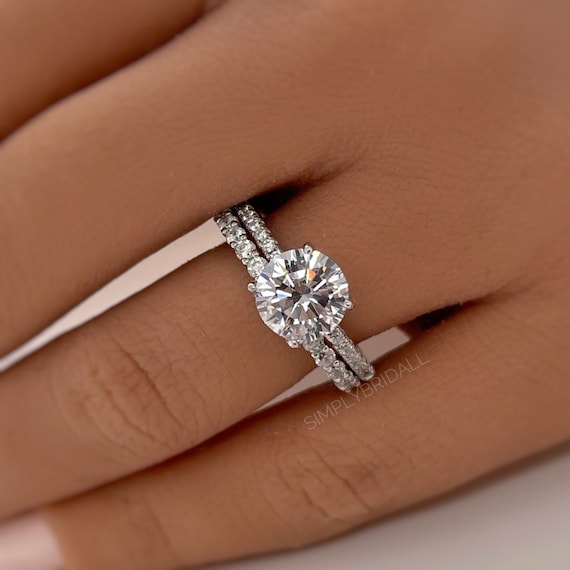
Complexity in a diamond setting often reduces both performance and longevity. Excess metal, crowded halos, and intricate galleries can block light, collect debris, and weaken structural integrity.
Simplicity preserves brilliance.
Overcrowded Halos
Halos can enhance presence when proportioned correctly. However, dense or oversized halos often:
- Obstruct light entry
- Create visual clutter
- Compete with the center stone
If the halo stones overpower the center, the focal hierarchy collapses.
The center diamond should remain dominant.

Light Blockage
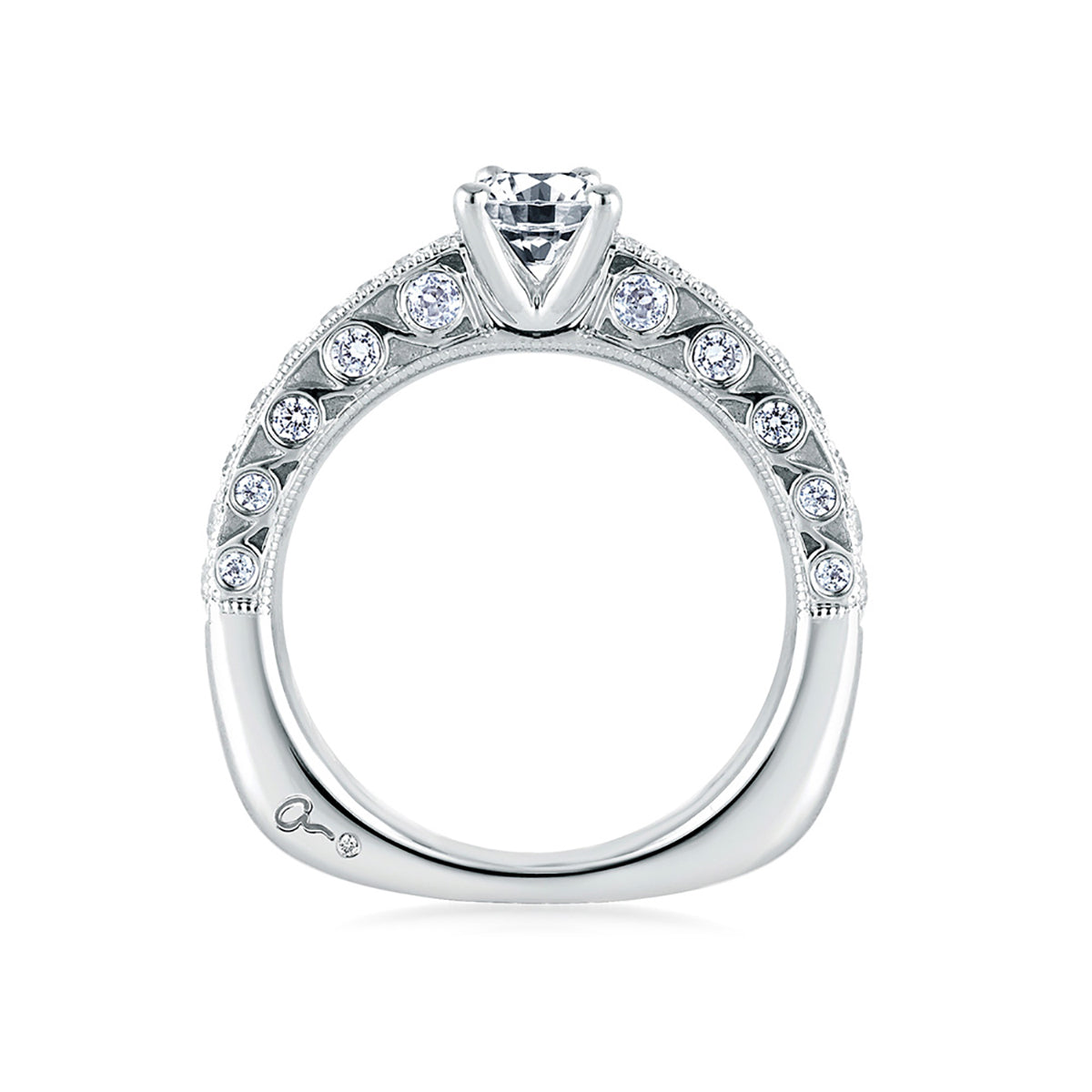
Excessive metal beneath the stone can:
- Restrict pavilion light return
- Reduce contrast clarity
- Increase shadowing
Closed or heavily decorative galleries may look impressive in isolation but diminish optical performance.
Open, reinforced galleries maintain balance between exposure and support.
Cleaning Difficulty
Intricate settings:
- Trap residue beneath pavé
- Accumulate debris in hidden crevices
- Require frequent professional cleaning
Dirt reduces brilliance more quickly in complex designs.
Simple structures are easier to maintain.
Structural Vulnerability
Multiple micro-prongs and delicate detailing increase risk.
Common issues include:
- Prong loosening
- Pavé stone loss
- Metal thinning at connection points
The more components a setting contains, the more potential stress points it introduces.
Durability favors streamlined construction.
Proportion Discipline
Overcomplication often distorts proportion.
Large halos combined with thin shanks create imbalance. Heavy detailing paired with small center stones can feel disproportionate.
Maintain:
- Adequate band thickness
- Clear focal hierarchy
- Balanced stone-to-metal ratio
Visual clarity strengthens longevity.
Long-Term Relevance
Intricate settings may align with short-term trends.
Minimal, well-engineered designs:
- Adapt to evolving style
- Layer easily with additional pieces
- Remain visually stable over decades
Complexity dates faster than restraint.
Practical Evaluation Strategy
Before purchasing:
- View the ring from the side and underside.
- Check for unnecessary metal bulk.
- Assess cleaning access.
- Confirm prong strength and alignment.
If design elements do not enhance structure or sparkle, they likely add complication without benefit.
Frequently Asked Questions
Are halos always overcomplicated?
No. Balanced halos can work when proportioned carefully.
Does more metal mean more security?
Not necessarily. Smart engineering matters more than bulk.
Are intricate galleries less durable?
They may introduce additional stress points.
Can simple settings look substantial?
Yes, when proportion and finish are refined.
Do complex designs reduce sparkle?
Excess metal can block light entry.
Is maintenance harder with detailed settings?
Yes, cleaning becomes more demanding.
Can overcomplicated rings be simplified later?
Modification is possible but may require structural changes.
What is the safest approach?
Choose clarity of design with disciplined proportion.