In recent years, researchers have shown growing interest in molecules that may influence cellular metabolism, energy regulation, and body composition. One compound that has attracted attention in preclinical research is 5-Amino-1MQ. Although it is sometimes discussed online in connection with weight management and metabolic health, its scientific story is more nuanced.
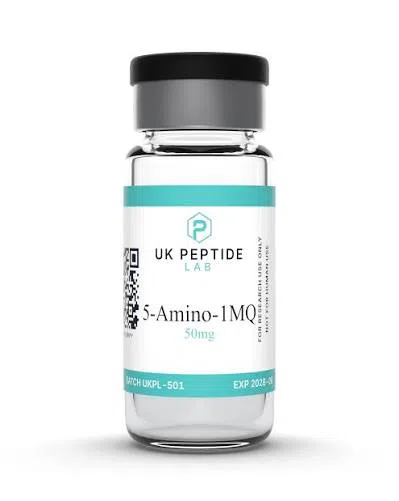
So, what exactly is 5-Amino-1MQ, how does it work in research settings, and what potential applications are scientists investigating? This article explores the compound, its proposed biological mechanism, current research, and important limitations.
What Is 5-Amino-1MQ?
5-Amino-1MQ is a small-molecule research compound studied primarily for its interaction with an enzyme known as nicotinamide N-methyltransferase (NNMT). NNMT is involved in the metabolism of nicotinamide, a form of vitamin B3, and participates in cellular metabolic processes.
Researchers became interested in NNMT because changes in its activity have been associated with metabolic pathways involving energy balance and cellular function. 5-Amino-1MQ has been investigated as an NNMT inhibitor, meaning it is designed to reduce the activity of this enzyme.
The compound is still primarily a subject of laboratory and preclinical research. It should not be confused with an established prescription medication or a proven treatment for obesity, diabetes, or other medical conditions.
How Does 5-Amino-1MQ Work?
To understand the research surrounding 5-Amino-1MQ, it helps to look at NNMT.
NNMT uses a molecule called S-adenosyl-L-methionine (SAM) to transfer a methyl group to nicotinamide. This reaction produces a metabolite called 1-methylnicotinamide. Because this pathway is connected to cellular metabolism, scientists have investigated whether modifying NNMT activity could influence metabolic behavior.
5-Amino-1MQ has been studied because it can inhibit NNMT. In experimental models, researchers have examined whether reducing NNMT activity can alter metabolic pathways, including those associated with energy expenditure and lipid metabolism.
The important point is that a biological mechanism observed in laboratory research does not automatically translate into a proven effect in humans. Human metabolism is complex, and results from cells or animals require carefully controlled clinical studies before they can be considered established.
Why Are Researchers Interested in 5-Amino-1MQ?
One major area of interest is metabolic health. Some preclinical studies have investigated NNMT inhibition in connection with changes in body weight, fat accumulation, and energy metabolism.
Research involving experimental models has suggested that inhibiting NNMT may influence metabolic processes and, under certain conditions, may be associated with reduced fat accumulation or changes in energy expenditure. These findings have made NNMT an interesting target for researchers exploring future approaches to metabolic disorders.
However, these findings should be interpreted in context. Much of the attention surrounding 5-Amino-1MQ comes from preclinical research, rather than large, well-established human clinical trials.
That distinction is essential when evaluating claims made about the compound online.
Potential Research Applications
Scientists have investigated 5-Amino-1MQ in several areas, although its potential applications remain experimental.
1. Metabolic Research
The most prominent area is metabolic research. Researchers are interested in whether NNMT inhibition can influence how cells handle energy and nutrients. This may help scientists better understand pathways involved in metabolic health and body-fat regulation.
2. Obesity Research
Animal and laboratory studies have examined NNMT inhibition in relation to obesity-related characteristics. These investigations are particularly interesting because NNMT expression has been studied in adipose tissue and other metabolically active tissues.
Still, evidence from animal models should not be interpreted as proof that 5-Amino-1MQ produces the same effects in people.
3. Cellular Energy Research
Another area of investigation involves cellular energy metabolism. NNMT interacts with pathways connected to nicotinamide and methyl-group metabolism. By inhibiting the enzyme, researchers can study how these pathways change and how those changes may affect cellular energy balance.
4. Future Therapeutic Research
NNMT itself has become a potential research target for scientists investigating metabolic and other biological conditions. Compounds such as 5-Amino-1MQ can therefore serve as useful research tools for understanding what happens when NNMT activity is reduced.
Whether this research ultimately leads to a clinically useful medicine remains uncertain.
5-Amino-1MQ and Weight Management: What Does the Research Really Say?
Weight management is one of the reasons 5-Amino-1MQ receives considerable attention. Some experimental research has reported changes in body weight and fat-related measures following NNMT inhibition in animal models.
Nevertheless, it is important to avoid turning these findings into definitive human weight-loss claims. A compound producing an effect in laboratory animals does not establish its effectiveness, appropriate dosage, long-term safety, or suitability for human use.
For anyone considering 5-Amino-1MQ for weight management, the current research should therefore be viewed as experimental rather than conclusive.
Safety and Regulatory Considerations
Perhaps the most important consideration is that 5-Amino-1MQ remains a research compound rather than a widely established therapeutic drug.
Online discussions may describe specific doses, cycles, or expected benefits, but such information should not be treated as equivalent to evidence from approved clinical guidelines. The safety profile of a compound can depend on factors such as dosage, duration, formulation, interactions, and an individual's health status.
People should also be cautious about products marketed as containing research chemicals. Product purity, labeling accuracy, and manufacturing standards can vary considerably outside regulated pharmaceutical channels.
Anyone considering an experimental compound should discuss the issue with a qualified healthcare professional rather than relying solely on online claims.
The Future of 5-Amino-1MQ Research
The scientific interest in 5-Amino-1MQ largely reflects a broader effort to understand how metabolic enzymes influence energy regulation. NNMT represents an intriguing biological target, and experimental inhibitors provide researchers with tools for investigating its role.
Future research, particularly well-designed human clinical studies, would be necessary to determine whether findings from laboratory and animal research translate into meaningful benefits for people. Such studies would also need to establish appropriate dosing, safety, pharmacokinetics, potential interactions, and long-term effects.
Final Thoughts
5-Amino-1MQ is an intriguing research compound primarily investigated for its ability to inhibit the enzyme NNMT. Preclinical research has generated interest in its possible relationship with metabolic pathways, energy regulation, and body-fat biology.
However, the difference between promising laboratory research and an established human treatment is significant. At present, 5-Amino-1MQ should be understood primarily as a research subject, not as a proven solution for weight loss or metabolic disease.
As research into NNMT and metabolic regulation continues, future studies may provide a clearer picture of where 5-Amino-1MQ fits within the broader field of metabolic science.