In a week defined by extreme volatility in semiconductor stocks, triggered by the "efficiency shock" from new AI models like DeepSeek, retail investors are scrambling. The narrative that "CapEx is infinite" has broken, leaving many growth portfolios bleeding. However, looking at the holdings of the Bill & Melinda Gates Foundation Trust offers a starkly different perspective. It is a masterclass in boring, unshakeable stability.
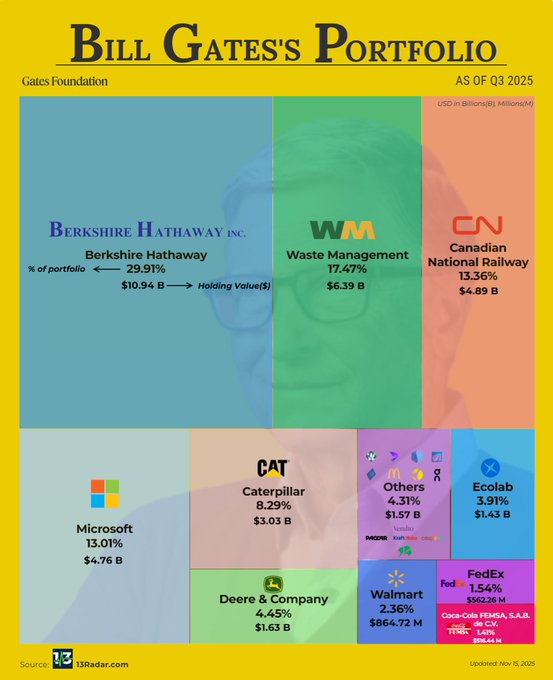
While Bill Gates is synonymous with technology, the bill gates portfolio is surprisingly low-tech. Excluding his legacy Microsoft shares, the trust is heavily weighted toward industries that will exist regardless of whether AI takes over the world or fizzles out: Waste Management, Railways, and Agriculture. This "Barbell Strategy"—owning the biggest tech giant (Microsoft) alongside the most tangible physical assets—is the ultimate hedge for 2026.
1. The "Trash" Moat: Waste Management (WM)
One of the Trust's largest and most consistent holdings is Waste Management (WM). In an era of digital disruption, garbage collection remains undisruptable.
The investment logic here is bulletproof: Inflation Pricing Power. When costs rise, WM passes them on to consumers immediately. There is no "churn" in garbage collection. While tech stocks face margin compression from competition (as seen with Nvidia vs. DeepSeek), Waste Management enjoys a regulatory monopoly in many regions. For Gates, trash is the new gold because it offers predictable, compounding cash flow.
>>> STRATEGY INSIGHT: The "Physical" Internet
Why the heavy bet on Canadian National Railway (CNI)?
- 🚂 Irreplaceable Assets: You cannot build a new railway network today. The land rights alone make it impossible.
- 📉 Efficiency: Rails are 4x more fuel-efficient than trucks. In a decarbonizing world, rails win.
- 🛡️ Defense: Even in a recession, commodities must move. Gates owns the veins of the North American economy.
2. Caterpillar and Deere: Building the Future
Another key theme in recent quarters is the continued confidence in Deere & Co. (DE) and Caterpillar (CAT). This isn't just about farming and construction; it's about the "replacement cycle." The US infrastructure is aging, and the onshoring of manufacturing requires massive earth-moving capabilities.
Furthermore, these companies are quietly becoming robotics leaders. Gates is effectively betting on autonomous farming and construction, a sector where AI improves margins rather than destroying them. It is a play on "Applied AI" rather than "Generative AI."
3. The Lesson for Retail Investors
The biggest takeaway from analyzing the Gates Trust is the rejection of FOMO (Fear Of Missing Out). You don't see the trust chasing the latest hot IPO or crypto token. The strategy is glacial and deliberate. By anchoring the portfolio in essential services that pay dividends, the trust ensures that it survives any market cycle. In 2026, as the "easy money" in tech evaporates, this focus on pricing power and physical moats looks smarter than ever.