If you followed the crowd into the "Magnificent Seven" this quarter, you might be surprised by the latest institutional disclosures. While retail investors continue to pile into mega-cap tech stocks at record valuations, the latest regulatory filings from ARK Invest paint a very different picture. A deep dive into the Cathie Wood 13F reveals a systematic trimming of the market's biggest winners—specifically in the semiconductor and social media spaces—to fund a massive rotation into beaten-down software and biotech names.
This behavior is the hallmark of ARK's "rebalancing" discipline. When a stock like Nvidia or Meta appreciates rapidly, it creates a concentration risk within the ETF wrapper. Wood's team is forced to sell these winners to maintain target weightings. However, the destination of that capital is where the real signal lies. The data shows aggressive accumulation in "Software 2.0" companies—platforms like UiPath ($PATH) and Palantir ($PLTR)—which have lagged the hardware rally but possess significantly higher gross margins and recurring revenue potential.
The "Cash Replacement" Strategy
One of the most misunderstood aspects of these filings is the sale of liquid stocks like Tesla or Zoom. Critics often interpret these sales as a loss of faith. In reality, ARK treats these highly liquid, large-cap holdings as "Cash Equivalents." When the fund manager sees a high-conviction opportunity in an illiquid small-cap stock that has crashed, they sell the liquid large-cap to raise immediate funds. This is a tactical liquidity move, not a fundamental bearish call.
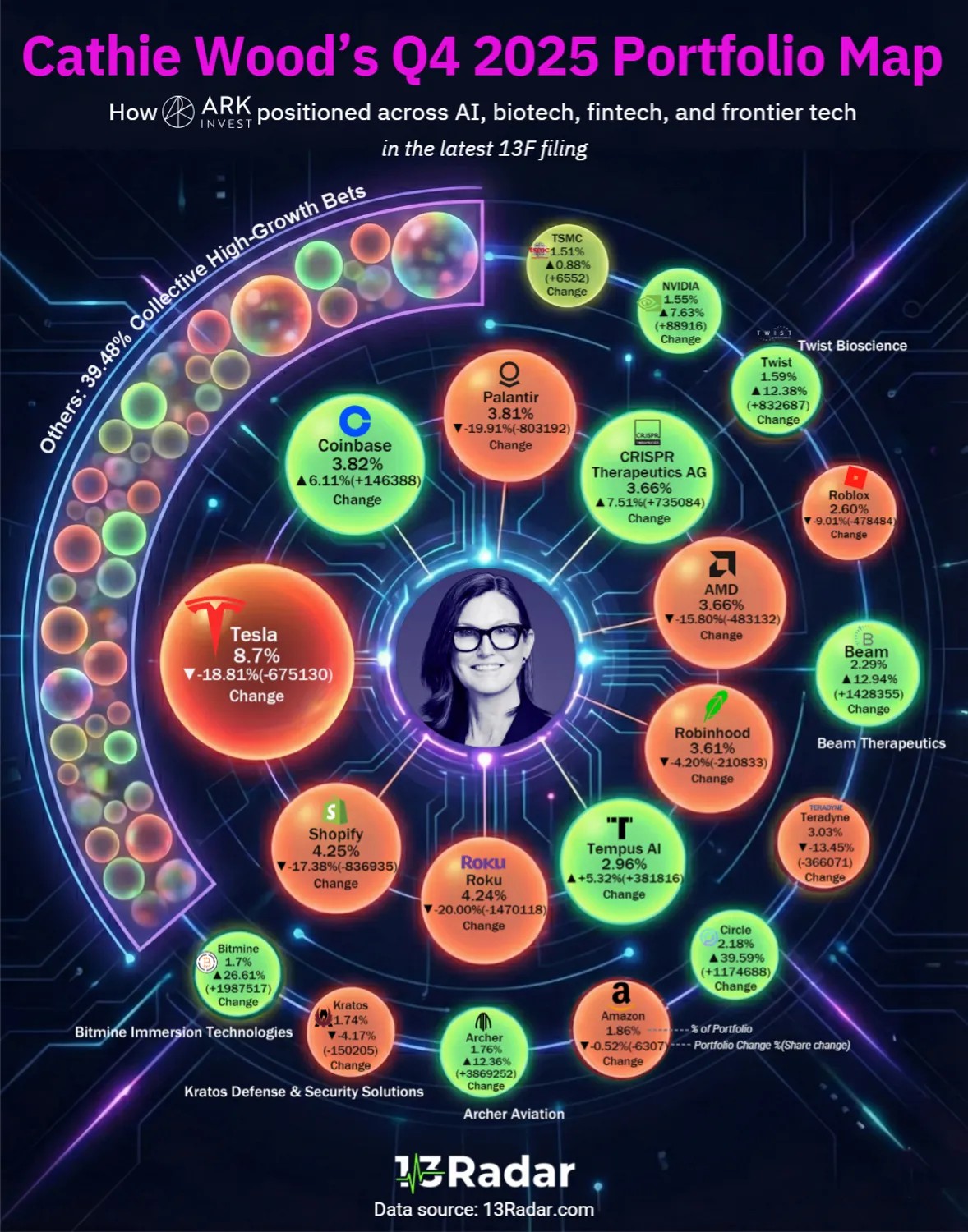
📉 THE ROTATION PLAYBOOK
The filing data highlights a clear divergence from the S&P 500:
- Selling: Semiconductor Capital Equipment (Cyclical peak concerns).
- Buying: Enterprise SaaS (Valuations compressed by rates).
- Holding: Digital Wallet Infrastructure (Block/Coinbase).
Betting on Rate Cuts, Not Earnings Beats
The underlying macro thesis visible in this portfolio is a bet on the yield curve. The holdings that are being added—specifically in the genomic and fintech sectors—are "long duration" assets. Their value is derived from cash flows expected 5-10 years in the future. By loading up on these specific equities now, the strategy is effectively positioning for a deflationary environment where interest rates fall, causing the valuations of these growth stocks to expand rapidly compared to the broader market.
The "Sleeper" AI Plays
While the market obsesses over who builds the AI chips, ARK is buying the companies that use them. The filings show a distinct preference for companies with proprietary data advantages. The thesis is that AI models will become commodities, but the proprietary data used to train them will become the new oil. This explains the continued conviction in companies that dominate niche data sets, from biological sequences to real-world driving data.