In a stock market currently obsessed with the next viral consumer AI application, Peter Thiel stands apart by doubling down on what he calls "Hard Tech." While the rest of the venture capital world chases quick returns in software-as-a-service (SaaS) and social media algorithms, Thiel’s associated portfolios—visible through vehicles like Founders Fund and his personal strategic positions—are pivoting heavily toward tangible, industrial, and defense-critical technologies. The thesis is simple but terrifying: the digital world is saturated, but the physical world is crumbling.
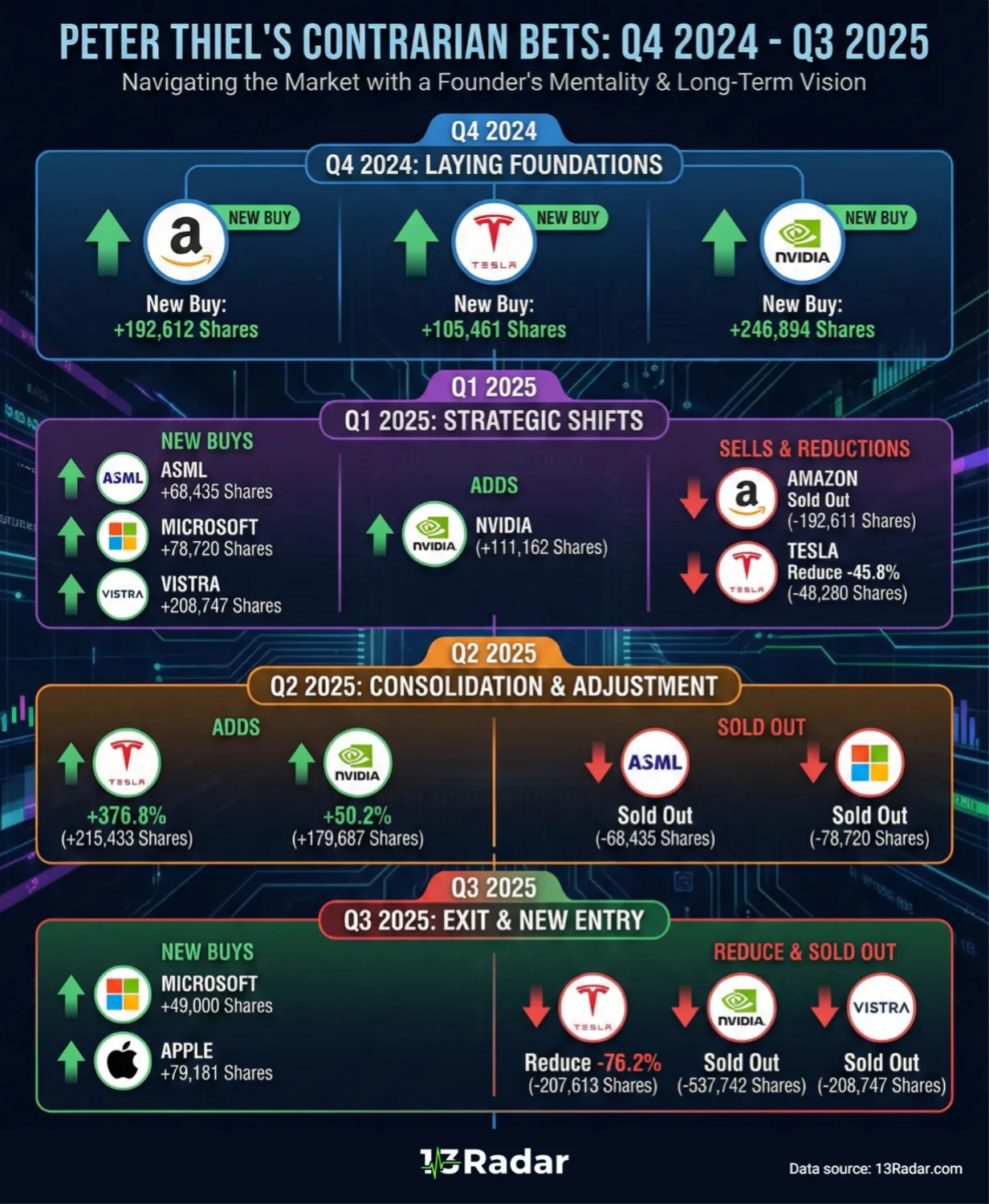
For investors watching the trends in 2026, the signal is clear. The era of "bits" is giving way to the era of "atoms." Examining the peter thiel investments list reveals a distinct lack of exposure to the typical consumer discretionary sectors that dominate the S&P 500. Instead, the focus is locked on companies that solve existential problems: national defense, energy independence, and heavy manufacturing automation. This isn't just investment; it's nation-building disguised as portfolio management.
1. Defense is the New Big Tech
Thiel has long argued that Silicon Valley’s reluctance to work with the Pentagon was a moral and strategic failure. The massive success of Palantir (PLTR) has vindicated this view. Current market movements suggest that smart money is following Thiel’s lead into "Defense Tech." The logic is that as geopolitical instability rises, government contracts become the new "recurring revenue," offering stability that fickle consumer advertising markets cannot match. Investors should look for companies bridging the gap between advanced AI and kinetic military hardware.
>>> The "Zero to One" Sector Rotation
Most investors look for "N to N+1" changes—incremental improvements. Thiel looks for "Zero to One"—creating something entirely new. In 2026, this isn't happening in social media. It is happening in Space Exploration and Nuclear Energy. His portfolio trends suggest a belief that regulatory hurdles in these sectors are lowering, creating a massive opening for private capital to replace public stagnation.
2. The Anti-ESG Energy Play
While the broader market spent years penalizing traditional energy and nuclear power under strict ESG mandates, Thiel’s orbit has quietly accumulated positions in energy resilience. The bet here is pragmatic: AI data centers require massive amounts of baseload power that wind and solar cannot provide alone. Consequently, we are seeing a rotation into nuclear tech and efficient power generation. This is a classic Thiel contrarian trade—buying the unloved asset class just before it becomes an absolute necessity for the survival of the tech ecosystem.
3. Biotech and the "Longevity" Premium
Finally, a consistent theme in Thiel’s long-term outlook is the stagnation of biological progress compared to digital progress. Recent disclosures hint at continued high-conviction bets in biotech firms aiming for radical life extension and personalized medicine. Unlike the volatile biotech index, these bets are often structured around platforms that use computational biology to reduce drug discovery costs. For the retail investor, this signals that the intersection of AI and Biology is likely the next trillion-dollar frontier, far surpassing the current valuation of generative text models.