If you want to understand where the American economy is heading in 2026, stop looking at the Fed dot plot and start looking at Bill Ackman’s lunch receipts. Pershing Square’s heavy allocation to the hospitality and quick-service restaurant (QSR) sectors is a direct wager on a fundamental shift in consumer behavior. While retailers selling physical goods are struggling with inventory gluts and supply chain chaos, the service economy is booming, and Ackman is positioned to capture every dollar of that spend.
The "Chipotle" Effect: Pricing Power
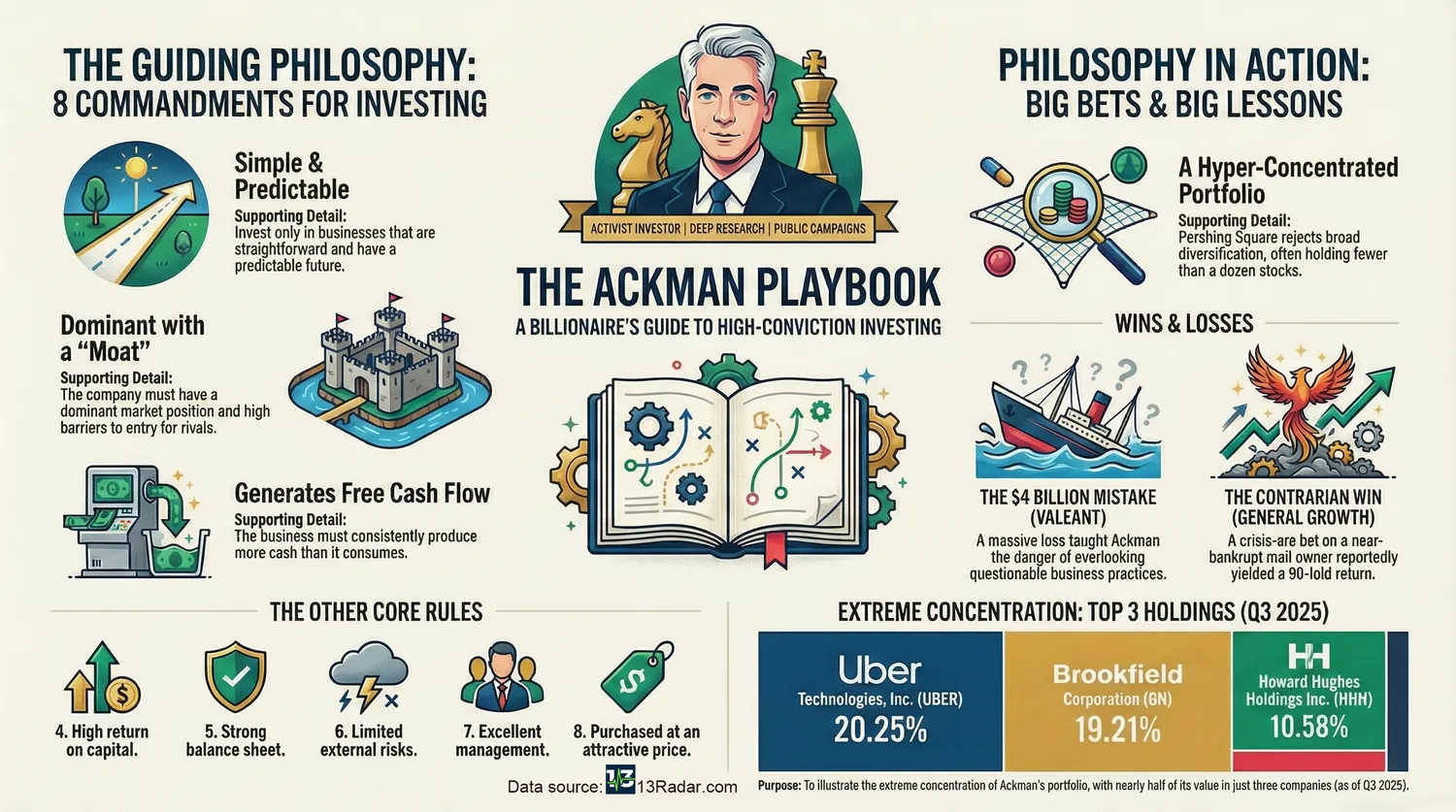
Inflation has been the buzzword for years, but not all companies handle it equally. Ackman’s massive success with Chipotle (CMG) highlights a key differentiator: Pricing Power. When labor and food costs rise, a strong brand can pass those costs to the consumer without losing volume. Looking at the holdings within the bill ackman portfolio, you see a collection of companies that have successfully raised prices above the rate of inflation, effectively turning an economic headwind into a margin-expanding tailwind.
🏨 FRANCHISE ECONOMICS: The Asset-Light Advantage
The genius of Ackman’s structure lies in the business models he selects. He favors the "Franchisor" over the "Operator."
- Hilton Worldwide (HLT): Instead of owning thousands of buildings (asset-heavy), Hilton manages the brand and collects fees (asset-light). This insulates the company from real estate maintenance costs while leveraging global travel growth.
- Howard Hughes Holdings (HHH): The exception that proves the rule—owning entire cities. This is his "real asset" play, controlling the land supply in high-growth zones like Texas and Las Vegas.
Durability in a Recession
Critics argue that a consumer-focused portfolio is risky if a recession hits in 2026. However, Ackman’s picks are often in the "affordable luxury" or "essential service" category. People may skip buying a new car, but they rarely skip a $15 burrito or a needed business trip. This portfolio is built to bend, not break. It targets the habits of the consumer, which are far stickier than their discretionary purchases of electronics or furniture.