Consensus is expensive. When everyone agrees that a stock can only go up, it is usually priced for perfection. We saw this unravel this week as the "AI Infrastructure" trade collapsed under the weight of its own expectations. In this environment, the most valuable portfolio is the one that zigged while the world zagged. The investment philosophy behind Peter Thiel’s macro bets offers a blueprint for surviving the bursting of the bubble.
Historical filings and public statements surrounding thiel macro llc have often reflected a skepticism of the "status quo." Unlike the typical Wall Street bull who chases momentum, Thiel has frequently utilized options strategies (like SPY puts) to hedge against systemic fragility. The current market rotation validates this bearish undertone: the economy is not as robust as the tech indices suggested.
1. The "Fake Growth" Narrative
Much of the recent stock market rally was driven by multiple expansion rather than genuine economic productivity. Thiel has long argued that true technological progress has stalled in the physical world (bits vs. atoms). The portfolio tends to avoid "consumer internet" fluff and focuses on "hard tech." The crash in ad-tech and social media stocks confirms that the market is finally waking up to the stagnation of the consumer economy.
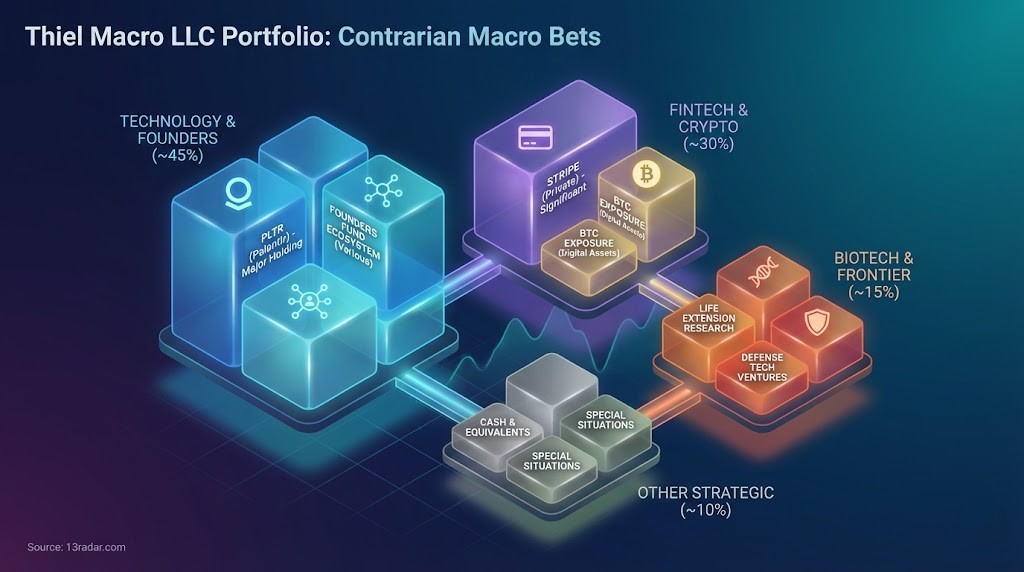
2. Founders Fund DNA: The "Power Law" in Public Markets
The strategy applies venture capital logic to public markets: the Power Law. Most potential returns come from a tiny handful of outlier companies. Instead of diversifying into 500 average companies (the S&P 500 approach), the Thiel methodology favors extreme concentration in high-conviction winners.
⚠️ The "Mimetic" Trap
René Girard’s influence on Thiel’s investing is profound.
When investors copy each other (mimesis), they create bubbles. The "Nvidia Trade" was the ultimate mimetic bubble.
The Thiel Strategy:
Identify the truth that is unpopular.
Buy the asset that is "weird" or "taboo" until it becomes the standard.
3. Cash is a Call Option on Courage
In times of extreme volatility, cash is not a drag; it is a weapon. While fully invested funds are forced to sell their best assets to meet margin calls, macro funds with cash reserves can go on the offensive. The reluctance to chase the "AI Bubble" at its peak means that capital is preserved for the true distressed opportunities emerging in the energy and defense sectors today.